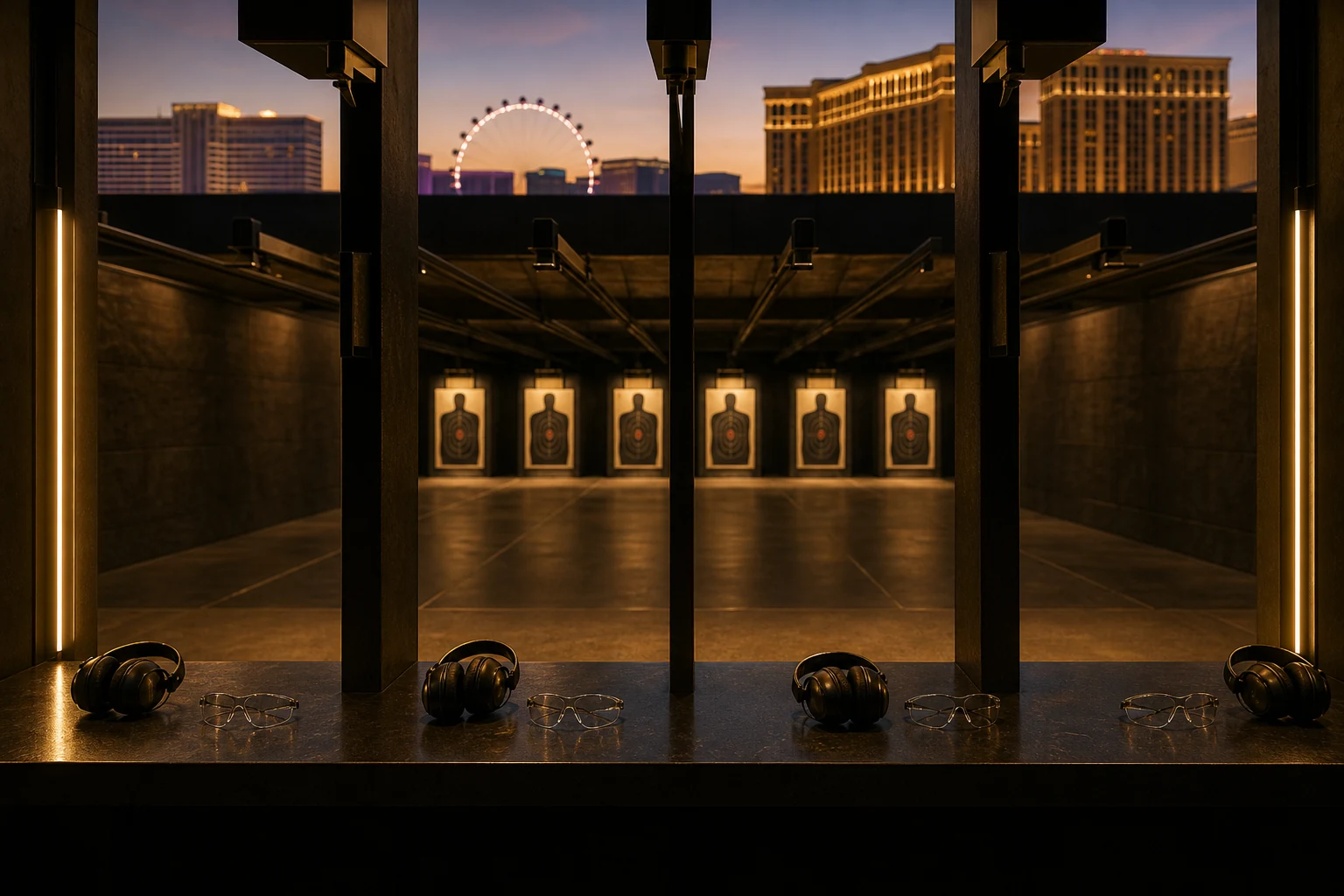
Shooting Range Accident Claims in Las Vegas: Who Is Liable
In This Article
Las Vegas draws millions of visitors a year to its tourist-oriented shooting range attractions, where first-time shooters fire handguns, rifles, and even fully automatic weapons under the supervision of range staff. Most visits end with nothing more than sore ears and a paper target to take home, but shooting range accident claims in Las Vegas arise every year from negligent instruction, malfunctioning firearms, ricocheting fragments, and unsafe range conditions. At Thomas Boley Attorney At Law, we represent clients injured at Las Vegas shooting ranges, and this guide explains who can be held liable, how Nevada's liability waiver rules actually work, and what it takes to bring a successful claim.
- Range operators owe a duty of reasonable care that covers Range Safety Officer staffing and supervision, lane and backstop design, ventilation, and firearm and ammunition maintenance — a duty separate from and broader than ordinary premises liability.
- Nevada liability waivers can bar claims based on ordinary negligence, but they cannot excuse gross negligence, recklessness, or intentional misconduct under well-established Nevada common law.
- Comparative negligence under NRS 41.141 bars recovery only if the injured shooter is found 51% or more at fault, and otherwise reduces the award by the shooter's own percentage of fault.
- Claims can rest on premises liability, negligent instruction or supervision, product liability for a defective firearm or ammunition, or vicarious liability for an instructor's conduct even when the range labels that instructor an independent contractor.
- NRS 11.190 generally gives an injured shooter 2 years from the date of the incident to file a Nevada personal injury lawsuit.
- Because range lane-camera footage, incident reports, and rental-firearm maintenance logs are often overwritten or discarded on a routine schedule, getting an attorney involved quickly helps preserve the evidence a claim depends on.
Shooting Range Accident Claims in Las Vegas: Why These Cases Differ From Ordinary Premises Liability
Free case review
Injured or Facing Charges in Las Vegas?
Thomas Boley offers free consultations — no fees unless we win your case.
A shooting range is not an ordinary retail or hospitality premises, and shooting range accident claims in Las Vegas typically involve a mix of injury mechanisms that don't come up in a standard slip-and-fall case. Ricocheting bullet fragments and jacket material can strike a shooter or bystander even when everyone on the line is following the rules, particularly on older ranges with steel backstops or baffles that were not designed for the ammunition currently in use. Hearing loss and tinnitus claims are common when a range issues worn-out or improperly fitted ear protection, or when a neighboring lane's muzzle blast exceeds what standard protection can absorb. Powder burns and flash injuries can result from a firearm malfunction at close range, and carbon monoxide or airborne lead exposure from inadequate ventilation is a slower-developing but medically serious claim of its own. Slip-and-fall injuries on spent brass casings scattered across a concrete firing line round out the most frequently litigated categories.
The Standard of Care Range Operators Owe Their Customers
A range that opens its doors to walk-in tourists, many of whom have never handled a firearm before, takes on a heightened duty to manage risks a first-time shooter cannot be expected to recognize on their own. That duty generally includes:
- Adequate Range Safety Officer staffing: A trained RSO should be actively watching the firing line, not simply present somewhere in the building, with the ability to see every lane and issue an immediate stop-fire command.
- A real safety briefing before live fire: First-time shooters need instruction on muzzle discipline, trigger discipline, stance, and what to do in the event of a malfunction — not just a waiver to sign and a rushed verbal summary.
- Properly designed lanes, baffles, and backstops: Steel plate, rubber, or sand-trap backstops need to be rated for the calibers actually fired at that range and maintained as they wear down from repeated impacts.
- Functioning ventilation and air-quality controls: Indoor ranges must move lead-contaminated air away from shooters and staff at a rate sufficient to keep airborne lead exposure within recognized safety limits.
- Properly fitted eye and ear protection: Protection that is cracked, undersized, or handed out without checking fit does not meet the standard customers are entitled to expect.
- Routine firearm and equipment inspection: Rental firearms see heavy daily use and need a documented maintenance and inspection schedule to catch wear before it causes a malfunction.
- A working emergency stop system: Every lane should be within reach of a range-wide stop-fire signal that instructors and staff can trigger the moment something goes wrong.
When a Liability Waiver Does (and Doesn't) Protect a Las Vegas Shooting Range
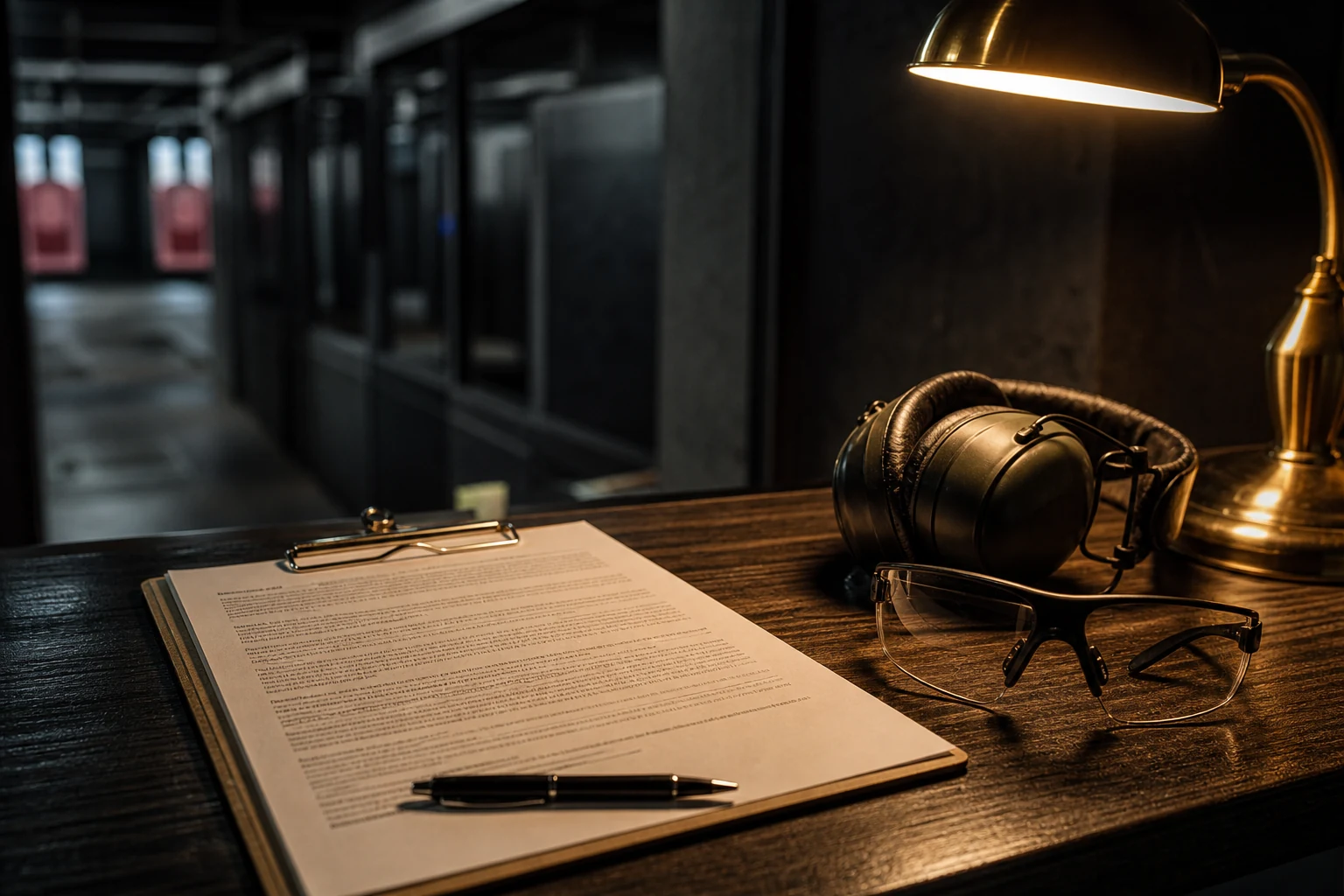
Nearly every Las Vegas shooting range requires customers to sign a liability waiver before stepping onto the firing line, and Nevada courts will generally enforce a clearly written waiver against claims based on ordinary negligence — the kind of everyday carelessness that can happen even when a business is trying to operate safely. What a waiver cannot do under well-established Nevada common law is excuse a range from gross negligence, recklessness, or intentional misconduct, meaning conduct that goes well beyond a simple mistake, such as knowingly sending a customer onto the line with a firearm already flagged as defective, ignoring repeated complaints about a failing backstop, or allowing an untrained employee to run a live-fire session unsupervised. Whether a range's conduct crosses that line from ordinary negligence into gross negligence is a fact-specific question that typically turns on what the range knew, or should have known, about the hazard before the injury occurred.
Negligent Instruction and Inadequate Supervision Claims
Many Las Vegas ranges built around the tourist market pair first-time shooters with an instructor for the duration of the session, and that arrangement creates its own distinct duty of care. An instructor who fails to correct unsafe muzzle direction, allows a customer to handle a firearm they are visibly not ready for, skips a walkthrough of the specific weapon's controls and malfunction procedures, or steps away from an inexperienced shooter to help someone else can be found negligent independent of any defect in the range itself. Range safety officer certification programs used widely across the firearms industry set out baseline expectations for lane supervision, and a large gap between those recognized practices and what actually happened during a session is often central evidence in a negligent instruction or supervision claim.
Defective Firearms, Ammunition, and Equipment: Product Liability Claims
When an injury traces back to the firearm or ammunition itself rather than to how a range was run, a separate product liability claim may apply. A squib load or overpressure round that causes a barrel obstruction or catastrophic failure, a rental firearm with a worn or improperly reassembled part that fires out of battery, or a defectively manufactured magazine that causes a jam-related injury can each support a claim against a manufacturer, distributor, or ammunition maker under Nevada's product liability framework, which allows recovery for a design defect, a manufacturing defect, or a failure to warn of a known hazard, without always requiring proof that the manufacturer was careless. A range that continues renting out a firearm with a known history of malfunctions can also face liability of its own for putting a dangerous instrumentality directly into a customer's hands.
Independent Contractor Instructors and Vicarious Liability
Some Las Vegas ranges staff their guided shooting experiences with instructors classified as independent contractors rather than employees, and that classification can become a contested issue after an accident, because a business is generally not automatically liable for an independent contractor's negligence the way it is for an employee's. That shield is not absolute: courts have long recognized that a business cannot delegate away its responsibility for an inherently dangerous activity, and supervising live-fire instruction for first-time shooters is a strong candidate for that non-delegable-duty exception. A range's own negligence in vetting, training, or continuing to use an instructor with a known safety history can also support direct liability against the range itself, separate from whatever role the instructor's employment classification plays.
Comparative Negligence and How Fault Gets Divided in Nevada
Nevada follows a modified comparative negligence rule under NRS 41.141: an injured shooter can still recover damages as long as they are found less than 51% at fault for their own injury, with the total award reduced by their percentage of fault. A range will often argue the shooter ignored the safety briefing, handled the firearm unsafely after being corrected, or removed required eye or ear protection on their own, while the shooter's attorney counters with evidence about staffing levels, equipment condition, and what the range's own safety protocols actually required in that situation. Because these cases often come down to a swearing contest between what a customer was told and what range staff say they said, contemporaneous evidence — lane-camera footage, the specific waiver and briefing materials used that day, and staffing records — carries outsized weight in resolving fault.
Statute of Limitations for Shooting Range Accident Claims in Nevada
Most shooting range injury claims fall under Nevada's general personal injury statute of limitations, NRS 11.190, which gives an injured person 2 years from the date of the incident to file suit. Product liability claims against a firearm or ammunition manufacturer generally follow the same 2-year window measured from the date of injury, though the manufacturer, distributor, and range may all need to be identified and named individually. Because rental-firearm maintenance logs and lane-camera footage are frequently retained only for a limited period, waiting to consult an attorney can mean losing access to exactly the records a claim needs most.
- I signed a waiver before shooting — can I still sue the range? Yes, if the range's conduct amounted to gross negligence, recklessness, or intentional misconduct rather than an ordinary mistake, since a waiver cannot excuse that level of conduct under Nevada law.
- Who can be held liable after a shooting range accident? Depending on the facts, liability can fall on the range operator, an instructor, the firearm or ammunition manufacturer, or more than one of these parties at the same time.
- Does it matter if the instructor was an independent contractor and not an employee? Not necessarily. Supervising live-fire instruction is widely treated as an inherently dangerous activity a range cannot fully delegate away, and the range's own hiring and oversight decisions can create separate liability.
- What if I was partly at fault for my own injury? Nevada's comparative negligence rule still allows recovery as long as you are found less than 51% at fault, with your award reduced by your own percentage of fault.
- How long do I have to file a shooting range injury claim in Nevada? Generally 2 years from the date of the injury under NRS 11.190, though evidence like lane-camera footage can disappear well before that deadline arrives.
Speak With a Las Vegas Personal Injury Attorney About a Shooting Range Accident
Thomas Boley has represented injury victims throughout Clark County for more than 18 years, including cases that hinge on exactly the kind of waiver, staffing, and equipment-maintenance evidence that decides a shooting range accident claim. Because that evidence is often on a short retention schedule, getting an experienced personal injury attorney involved quickly can make the difference in preserving what a claim needs to succeed.
Call (702) 435-3333 for a free consultation, or contact Thomas Boley online to discuss a shooting range accident in Las Vegas, Henderson, Summerlin, North Las Vegas, or elsewhere in Clark County. Our full personal injury practice and our wrongful death practice handle premises liability, negligent supervision, and product liability claims of every kind, and our guides to skydiving accident claims, negligent security claims, and product liability claims cover closely related ground. This article is informational only and is not legal advice. Every case is unique.
About the Author
Thomas Boley is a Nevada licensed attorney specializing in personal injury law and criminal defense. Since 2008, Thomas has represented thousands of clients in Las Vegas and Clark County, recovering millions of dollars in compensation for injury victims. He is a member of the State Bar of Nevada, the Clark County Bar Association, and the Nevada Justice Association.
Need Legal Help? Contact Thomas Boley for a free consultation: (702) 435-3333