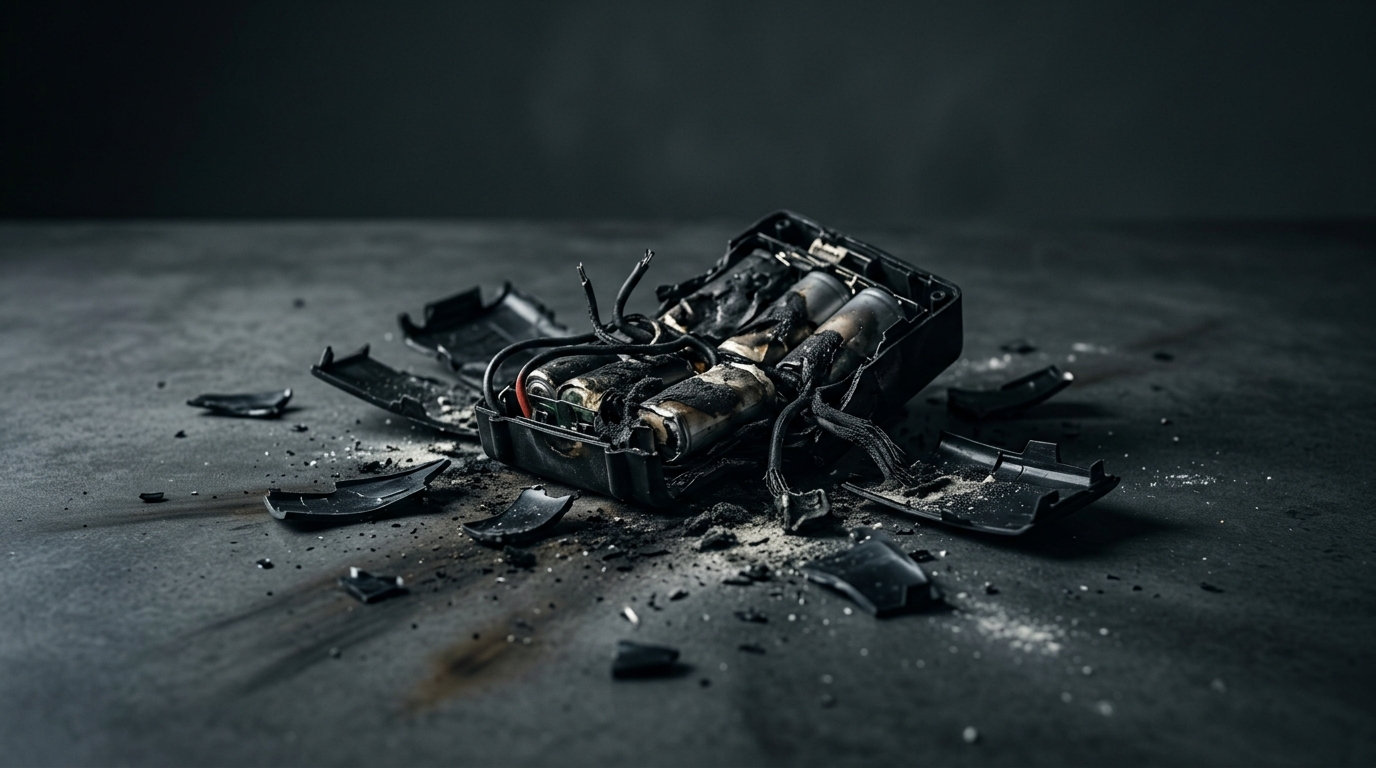
Product Liability in Nevada: When Defective Products Injure You in Las Vegas
In This Article
Every year, defective and dangerous products injure tens of thousands of people across Nevada — from faulty vehicle components causing Las Vegas freeway crashes to defective medical devices, contaminated food, hazardous children's toys, and malfunctioning industrial machinery. Nevada product liability law holds manufacturers, distributors, wholesalers, and retailers strictly accountable when their products cause harm. You do not need to prove the manufacturer was careless — only that the product was defective and that defect caused your injuries. The Law Offices of Thomas Boley handles complex product liability claims throughout Clark County, fighting corporations and their insurers to recover full compensation for catastrophic injuries.
What Is Product Liability in Nevada?
Product liability is the legal doctrine that makes everyone in a product's chain of distribution — manufacturer, component parts supplier, assembler, wholesaler, distributor, and retailer — potentially liable for injuries caused by a defective product. Unlike ordinary negligence claims, Nevada product liability claims are governed by strict liability: a plaintiff need not prove that the defendant was negligent or failed to use reasonable care. The plaintiff must prove only that: (1) the product was defective; (2) the defect existed when the product left the defendant's control; and (3) the defect was a legal cause of the plaintiff's injuries. Nevada adopted strict products liability based on Section 402A of the Restatement (Second) of Torts, and Nevada courts have applied this doctrine consistently since Ginnis v. Mapes Hotel Corp. (1969).
Free case review
Injured or Facing Charges in Las Vegas?
Thomas Boley offers free consultations — no fees unless we win your case.
You may also find what to Do After a Car Accident in Las Vegas and medical Malpractice Claims in Nevada useful.
Three Types of Product Defects Under Nevada Law
1. Manufacturing Defects
A manufacturing defect occurs when a specific unit departs from its intended design during production. Even if the product was properly designed, a flaw introduced during manufacturing — a cracked weld, a missing safety component, a contaminated batch — can render the product unreasonably dangerous. Classic examples include a car with improperly torqued lug nuts, a pharmaceutical tablet with excess active ingredient, or a power tool with a defective blade guard.
2. Design Defects
A design defect exists when the entire product line is unreasonably dangerous as designed — even when manufactured perfectly. Nevada courts apply a consumer expectations test (would an ordinary consumer find the product dangerous beyond what they would reasonably expect?) and, in some cases, a risk-utility test (do the risks of the design outweigh its benefits, and was a reasonable alternative design available?). Examples include vehicles with high rollover propensity, ladder designs that fail to meet weight ratings, or children's products with parts that create choking hazards.
3. Failure to Warn (Marketing Defects)
Even a properly designed and manufactured product can be defective if it lacks adequate warnings about known dangers or instructions for safe use. A pharmaceutical company that fails to warn doctors and patients about a drug's serious side effects, a chemical manufacturer that omits hazardous handling warnings, or a power equipment maker that inadequately instructs users on safe operation can all be held liable under Nevada's failure-to-warn doctrine.
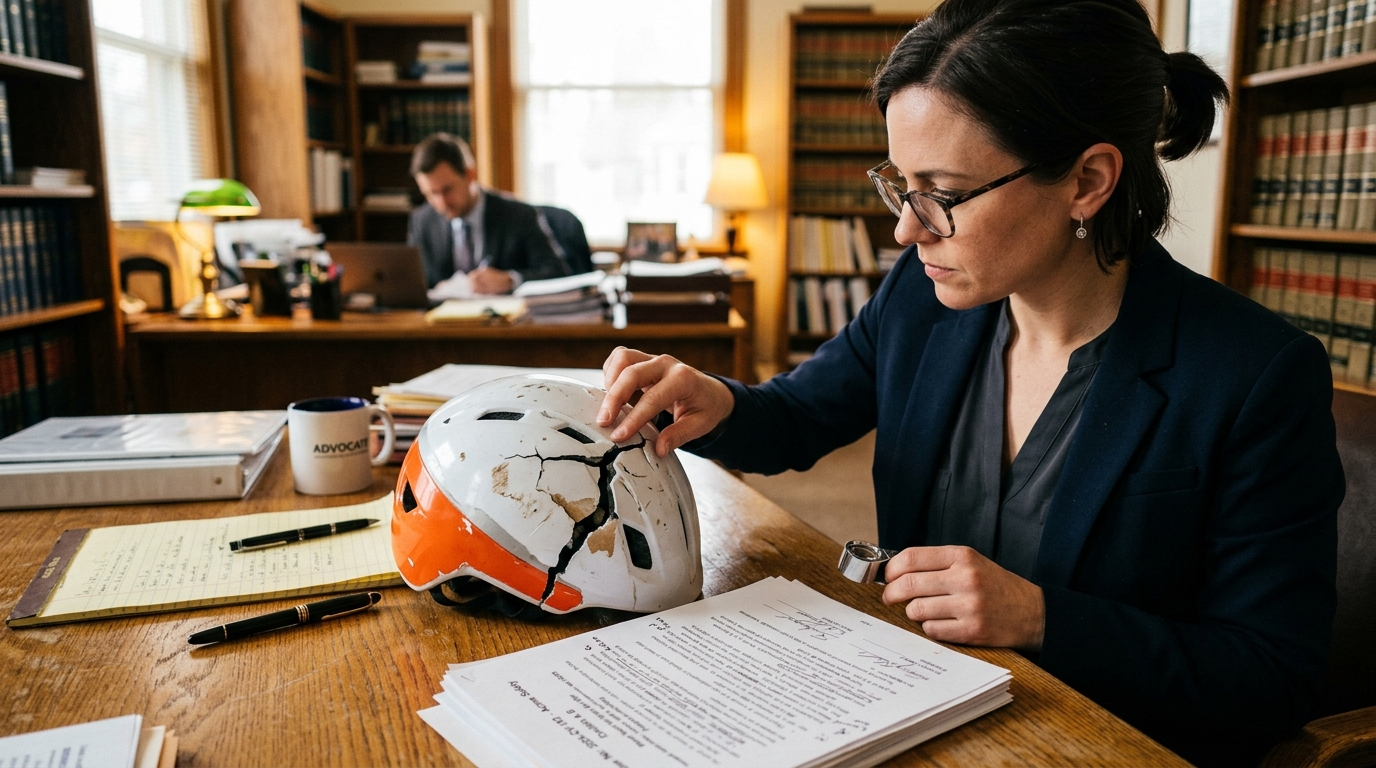
Who Can Be Held Liable in a Nevada Product Liability Case?
Nevada's strict liability doctrine reaches every entity in the commercial chain of distribution: product manufacturers (including foreign manufacturers whose goods are sold in Nevada); component parts manufacturers (a defective tire manufacturer can be separately liable from the vehicle manufacturer); product assemblers; wholesalers and distributors; and retailers — including Las Vegas big-box stores and online marketplaces that fulfill their own orders. This comprehensive reach ensures that injured plaintiffs are not left without a remedy simply because a manufacturer is foreign or has dissolved.
Importantly, Nevada's strict liability does not apply to used products sold by non-commercial sellers. However, commercial refurbishers and resellers who put products back into the stream of commerce can be held strictly liable. Additionally, component part suppliers can raise a bulk supplier defense when they supplied components to a sophisticated manufacturer who was responsible for integrating safety warnings — but this defense has narrow application and is fact-specific.
Nevada's Comparative Fault Rules in Product Liability Cases
Nevada follows modified comparative negligence (NRS 41.141). A product liability plaintiff who is partially responsible for their own injury can still recover — unless their fault exceeds 50%. If you are found 30% at fault for misusing a product, your recovery is reduced by 30%. However, if a court finds you more than 50% at fault, you recover nothing. Insurance defense attorneys frequently argue misuse or assumption of risk to shift fault onto the injured plaintiff. We anticipate and counter these arguments with evidence of foreseeable misuse — manufacturers must design for and warn against reasonably foreseeable misuse, not just intended use.
Common Product Liability Cases We Handle in Las Vegas
Automotive defects: Defective airbags (Takata-style recalls), brake failures, tire separations, defective seatbelts, and rollover-prone SUVs cause hundreds of serious injuries on Nevada roads annually. We coordinate with accident reconstruction experts and automotive engineers to identify defects and connect them causally to collision injuries.
Medical devices: Defective hip and knee implants, hernia mesh products, pacemaker leads, and surgical instruments have generated massive nationwide litigation. Las Vegas residents injured by recalled or defective medical devices may have claims against device manufacturers under both strict liability and negligence theories.
Pharmaceutical drugs: Drug manufacturers must warn of known risks through adequate labeling. When a pharmaceutical company fails to disclose serious side effects — cardiovascular events, suicidality, organ damage — to prescribing physicians, injured patients may have claims under Nevada's failure-to-warn doctrine. These cases require pharmaceutical expert witnesses and detailed review of FDA approval records.
Children's products and toys: Choking hazards, toxic materials, entrapment risks, and flammable clothing have triggered federal recalls, but recalled products continue to injure Nevada children. CPSC recall databases are critical starting points in these cases.
Industrial and construction equipment: Clark County's construction boom means thousands of workers use power tools, scaffolding, heavy equipment, and electrical systems daily. Defective equipment that causes workplace injuries may support both a workers' compensation claim and a separate product liability action against the manufacturer.
Food and consumer products: Contaminated food products, defective household appliances, and dangerous cosmetics injure Nevada consumers regularly. We investigate supply chains and coordinate with food safety experts when necessary.
Damages in Nevada Product Liability Cases
Plaintiffs in Nevada product liability cases can recover: medical expenses (past and future — including surgeries, hospitalization, rehabilitation, and long-term care); lost wages and loss of earning capacity; pain and suffering (no cap in Nevada product liability cases); emotional distress; loss of consortium; and property damage. Where the defendant's conduct was especially egregious — knowingly concealing a defect to avoid recall costs, for example — punitive damages under NRS 42.005 are available to punish the defendant and deter similar conduct. Nevada caps punitive damages at three times the compensatory award (or $300,000 where compensatory damages are under $100,000), with exceptions for products liability cases involving intentional harm or fraud.
Statute of Limitations for Nevada Product Liability Claims
Nevada's statute of limitations for product liability claims is three years from the date of injury (NRS 11.190(3)(a) — personal injury actions based on strict liability and negligence). However, the discovery rule may toll this period when an injury is latent — for example, when toxic exposure causes a disease that does not manifest until years later. Nevada also imposes a 10-year statute of repose (NRS 11.300) for products: regardless of when you discover the injury, claims against product manufacturers must generally be filed within 10 years of the product's first purchase or delivery. Exceptions exist for latent disease cases. Do not wait to consult an attorney — evidence degrades, products are discarded, and witnesses become unavailable.
Why Choose Thomas Boley for Your Product Liability Case
Product liability cases require significant resources: engineering and medical experts, accident reconstruction, product testing, and extensive discovery into corporate knowledge of defects. We have the experience and relationships to build rigorous cases against major manufacturers and their national defense teams. We handle all product liability cases on a contingency fee — no charge unless we recover. Call (702) 435-3333 any time, 24/7, for a free confidential consultation. We serve Las Vegas, Henderson, Summerlin, North Las Vegas, Boulder City, and all of Clark County.
Frequently Asked Questions
Q: The product I was using had a warning label — does that mean I can't sue?
A: Not necessarily. A warning label can protect a manufacturer only if it adequately communicates the specific risk that caused your injury. If the warning was buried in fine print, failed to describe the severity of the danger, or was not translated for foreseeable non-English-speaking users, the warning may be legally inadequate. We evaluate warning adequacy as part of every product liability investigation.
Q: I was hurt by a product at work — can I still file a product liability claim?
A: Yes. Workers' compensation bars claims against your employer, but not against a third-party product manufacturer. If a defective machine, tool, or chemical caused your workplace injury, you may pursue both a workers' comp claim and a separate product liability lawsuit against the manufacturer. Product liability recoveries are often substantially larger than workers' comp benefits alone.
Q: The product was recalled — does that automatically make the manufacturer liable?
A: A recall is strong evidence of a defect, but it does not automatically establish liability in a specific injury case. You still need to show that the recalled defect caused your particular injury. Conversely, the absence of a recall does not mean a product is safe — many dangerous products are never recalled. We build product liability cases with or without recall history.
Q: What if I modified the product or used it in an unusual way?
A: Manufacturers are required to design for and warn against reasonably foreseeable misuse — not just intended use. If the way you used the product was something a manufacturer could reasonably foresee, modification or misuse arguments may not defeat your claim. Nevada's comparative fault rules also allow recovery even if you are partially at fault, as long as your fault does not exceed 50%.
Q: How long does a product liability case take in Nevada?
A: Product liability cases are complex and often take 1–3 years from filing to resolution. Cases involving major manufacturers are frequently litigated through extensive discovery, expert depositions, and pretrial motions before resolving. Some cases, particularly those involving mass tort litigation (e.g., defective pharmaceuticals or medical devices), may be coordinated in MDL proceedings in federal court. We keep clients informed at every stage and pursue early resolution when it achieves full fair value.
For more information, visit our Las Vegas personal injury attorney | schedule a free consultation.
About the Author
Thomas Boley is a Nevada licensed attorney specializing in personal injury law and criminal defense. Since 2008, Thomas has represented thousands of clients in Las Vegas and Clark County, recovering millions of dollars in compensation for injury victims. He is a member of the State Bar of Nevada, the Clark County Bar Association, and the Nevada Justice Association.
Need Legal Help? Contact Thomas Boley for a free consultation: (702) 435-3333