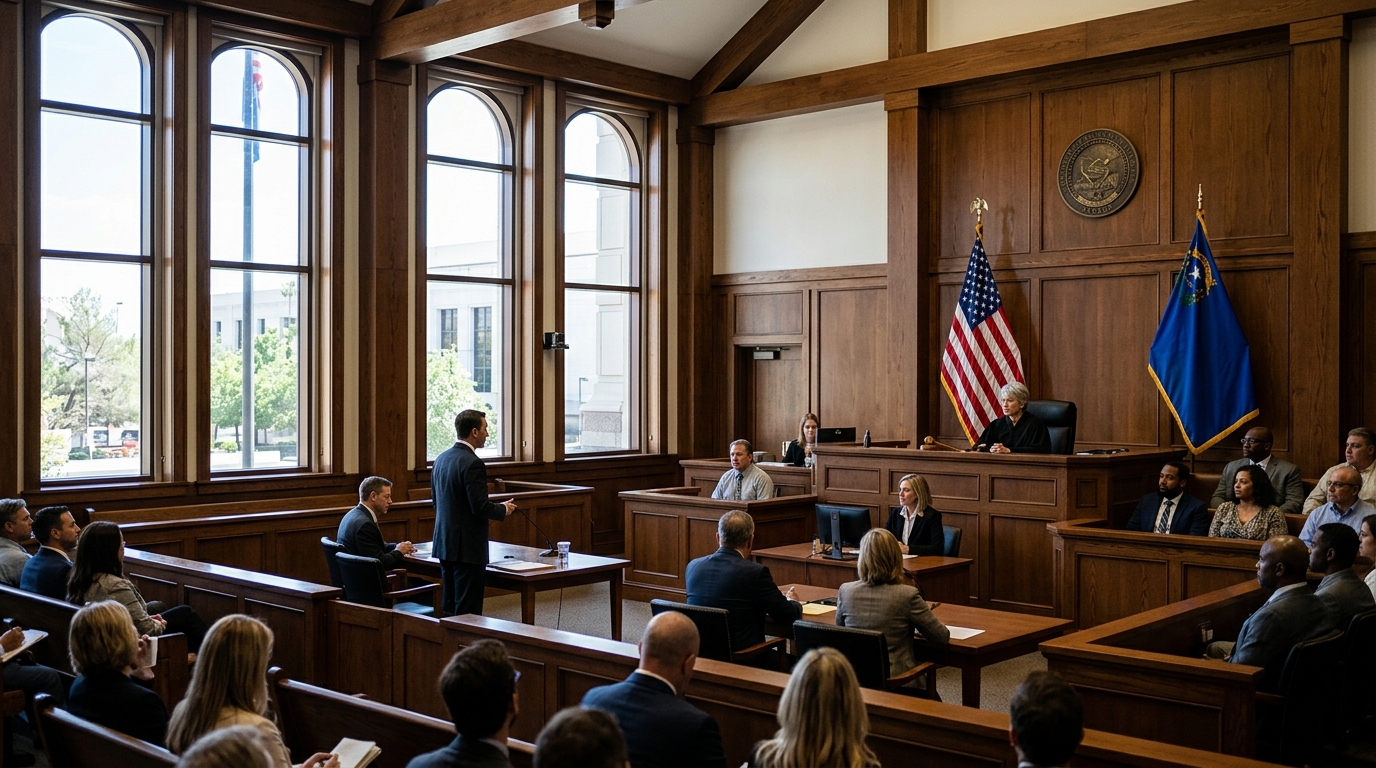
Nevada Weapons Charges: Firearm Laws, Penalties & Defense in Las Vegas
In This Article
Nevada has some of the most complex and consequential firearm laws in the Western United States — especially in Clark County, where Las Vegas's unique environment creates a constant collision between tourism, Second Amendment rights, and state criminal statutes. A weapon charge in Nevada can range from a misdemeanor to a Category B felony carrying years in state prison, and federal charges can stack on top. If you've been arrested for illegal possession of a firearm, a concealed carry violation, use of a deadly weapon in connection with another crime, or any other weapons offense in Las Vegas or Clark County, the Law Offices of Thomas Boley is prepared to mount an aggressive defense — on a contingency-friendly, no-upfront-cost basis for qualifying cases.
Overview of Nevada Firearm Laws
Nevada firearms law is primarily codified in NRS Chapter 202 (Crimes Against Public Health and Safety). Key provisions cover who may possess firearms, where firearms may be carried, what types of weapons are prohibited, and how firearm-related offenses interact with other criminal charges through use-of-a-deadly-weapon sentencing enhancements. Nevada is an open carry state — meaning that adults who are legally permitted to possess a firearm may generally carry a loaded firearm in public without a permit. However, concealed carry requires a valid Nevada Concealed Firearms Permit (CFP), and a wide range of locations, persons, and weapon types fall outside open carry permission regardless of permit status.
Free case review
Injured or Facing Charges in Las Vegas?
Thomas Boley offers free consultations — no fees unless we win your case.
For more background, see our guides on dUI Defense.
Who Cannot Legally Possess a Firearm in Nevada?
Under NRS 202.360, the following persons are prohibited from owning, possessing, or having control of a firearm in Nevada:
Convicted felons: Any person convicted of a felony in Nevada or any other state is permanently prohibited from possessing a firearm under NRS 202.360(1)(a). This prohibition is mirrored by federal law (18 U.S.C. § 922(g)(1)). A felon found in possession faces a Category B felony: 1–6 years in Nevada State Prison.
Persons under domestic violence restraining orders: If you are subject to a qualifying restraining order under NRS 33.031, federal law (18 U.S.C. § 922(g)(8)) prohibits firearm possession. See our post on Nevada Protective Orders for full details.
Persons convicted of domestic violence misdemeanors: Under 18 U.S.C. § 922(g)(9) (the Lautenberg Amendment), misdemeanor domestic violence convictions — even old ones — trigger a lifetime federal firearms prohibition. Many clients don't realize that an old misdemeanor domestic violence conviction eliminates their gun rights permanently.
Persons adjudicated mentally ill or involuntarily committed: Under NRS 202.360(1)(e), persons adjudicated as mentally ill or committed to a mental health facility are prohibited from possessing firearms.
Unlawful users of controlled substances: Federal law (18 U.S.C. § 922(g)(3)) prohibits cannabis users from possessing firearms — even in Nevada where recreational cannabis is legal. This intersection trips up many Nevada residents who assume state legalization equals federal permission.
Concealed Carry Laws and CFP Violations in Nevada
Carrying a concealed firearm in Nevada without a valid Concealed Firearms Permit (CFP) is a crime under NRS 202.350: First offense: Gross misdemeanor — up to 364 days in jail and/or a $2,000 fine. Second or subsequent offense: Category D felony — 1–4 years in Nevada State Prison and a fine up to $5,000.
Nevada recognizes concealed carry permits from states with reciprocity agreements, but the list is limited. Visitors from non-reciprocal states — including California, New York, and Illinois — who carry concealed into Nevada are committing a Nevada crime even with a valid home-state permit. Locations where concealed carry is always prohibited, even with a valid CFP: schools (NRS 202.265), child care facilities, public airports beyond security, legislative buildings, Nevada courthouses, and establishments posting a "No Firearms" notice under NRS 202.3673.
Prohibited Weapons Under Nevada Law
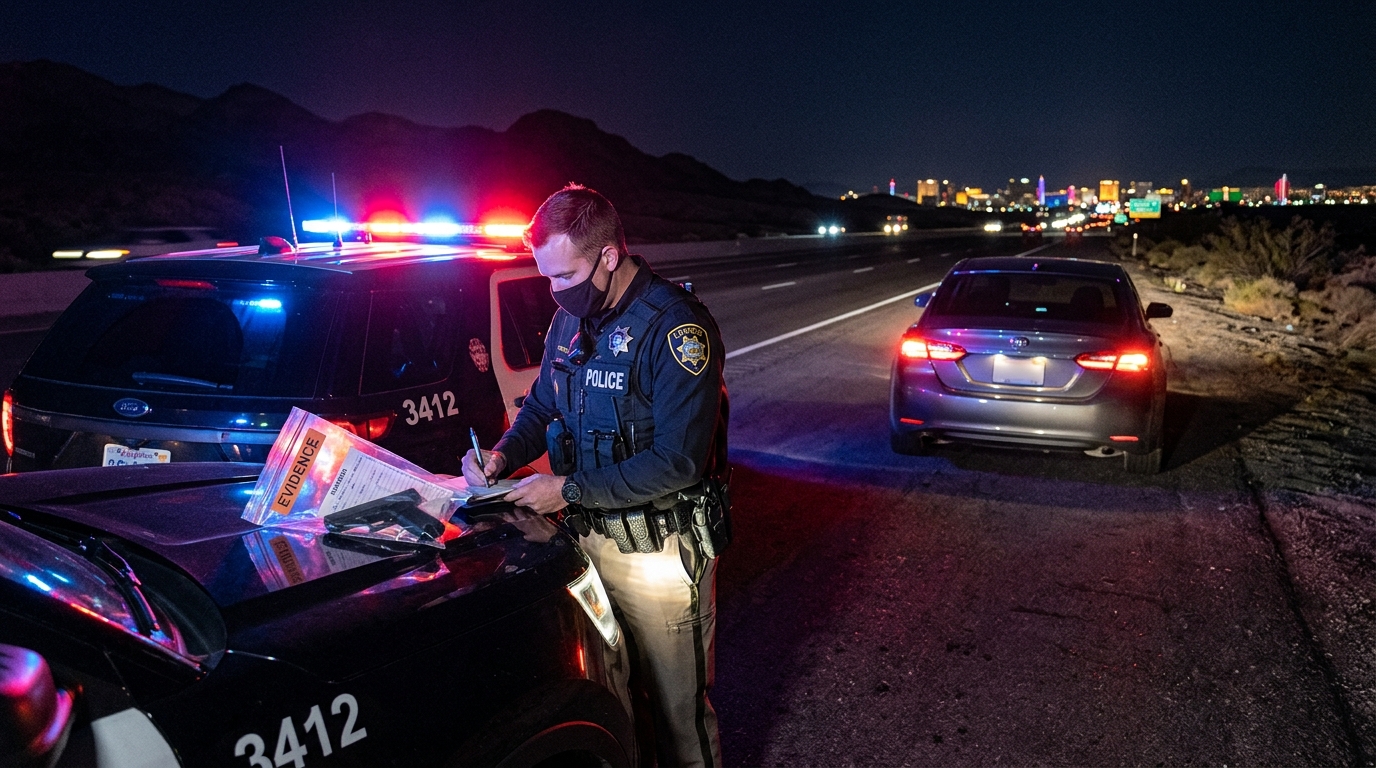
Short-barreled rifles and shotguns (NRS 202.275): Possessing a short-barreled rifle (barrel under 16 inches) or shotgun (barrel under 18 inches) without federal NFA compliance is a Category D felony. Silencers/suppressors (NRS 202.270): Possessing a silencer without NFA compliance is a Category C felony (1–5 years). Bump stocks and rapid-fire devices (NRS 202.274): Following the October 1, 2017 Las Vegas mass shooting, Nevada enacted AB286 (2019) prohibiting bump stocks and rapid-fire devices — possession is a Category C felony.
Use of a Deadly Weapon Sentencing Enhancement
One of the most severe consequences of firearm involvement in a Nevada crime is the use-of-a-deadly-weapon enhancement under NRS 193.165. This statute requires the court to impose an additional prison term equal to and consecutive to the primary offense sentence whenever a deadly weapon is used or displayed in the commission of a felony. This enhancement cannot be suspended or given probation — it is mandatory imprisonment. For example: robbery (NRS 200.380, Category B, 2–15 years) with a firearm adds an additional 1–15 years consecutively. Challenging the enhancement — by disputing use or display, contesting whether the object qualifies as a deadly weapon, or securing a plea to charges that don't trigger the enhancement — is a critical defense focus in Clark County.
Defenses to Nevada Weapons Charges
Unlawful search and seizure (Fourth Amendment): If police stopped your vehicle without reasonable suspicion, searched your person without consent or probable cause, or executed a defective warrant, any firearm discovered may be suppressed. A successful suppression motion often results in dismissal — the prosecution cannot proceed without the firearm as evidence.
Constructive possession challenges: Prosecutors must prove you knowingly possessed the firearm. If the weapon was found in a shared vehicle, hotel room, or residence with multiple occupants, we challenge the prosecution's ability to establish that you — rather than someone else — had knowledge and control.
Status defenses (felon in possession): Prior convictions must be properly established. Expunged or sealed records, out-of-state convictions later reduced, and juvenile adjudications that don't qualify as adult felonies may not trigger the NRS 202.360 prohibition. We audit your criminal history meticulously.
Self-defense and necessity: In limited circumstances where a prohibited person possessed a firearm in response to an immediate threat of death or serious bodily harm, necessity or duress defenses may be available.
Federal Weapons Charges That Can Stack
Many Nevada weapons arrests also trigger federal charges in the U.S. District Court for the District of Nevada. Under the Armed Career Criminal Act (ACCA, 18 U.S.C. § 924(e)), a defendant with three prior qualifying felony convictions convicted of federal felon-in-possession faces a mandatory minimum of 15 years in federal prison. Federal prosecutors also have jurisdiction over firearms used in drug trafficking offenses (18 U.S.C. § 924(c)) and crimes of violence — penalties that dwarf Nevada state charges. If you face both state and federal weapons charges, attorney experience in both Clark County criminal courts and federal practice is essential.
Why Choose Thomas Boley for Your Nevada Weapons Charge Defense
Weapons charges in Nevada move fast — arraignments occur within 72 hours of arrest, and early decisions about bail, preliminary hearings, and evidence preservation shape the entire case. Our office is available 24/7 for new arrests. We file suppression motions aggressively, evaluate every enhancement allegation, and negotiate with Clark County District Attorney prosecutors — while maintaining full readiness for jury trial.
Call (702) 435-3333 for a free consultation. We handle criminal defense and personal injury throughout Las Vegas, Henderson, Summerlin, North Las Vegas, and all of Clark County. Available 24/7 for new arrests. No win, no pay.
Frequently Asked Questions
Q: I have a concealed carry permit from my home state — can I carry in Las Vegas?
A: Only if your state has a valid reciprocity agreement with Nevada. Nevada does not recognize permits from California, New York, Illinois, or several other states. Check Nevada's current reciprocity list before traveling — carrying in a non-reciprocal state is a Nevada criminal offense.
Q: I have a felony conviction from years ago in another state — can I own a gun in Nevada?
A: No. NRS 202.360 and 18 U.S.C. § 922(g)(1) apply to felony convictions from any state. You must have your rights formally restored through a recognized pardon or expungement process before possessing a firearm.
Q: Can I carry a firearm on the Las Vegas Strip?
A: Open carry is technically legal for those lawfully permitted to possess firearms — but virtually all Strip casinos and entertainment venues prohibit firearms on their private property. Entering after being given notice to leave can result in criminal trespass charges. Always check venue policies before carrying.
Q: What happens to my firearm after a weapons arrest in Nevada?
A: Law enforcement seizes the weapon as evidence. If charges are dismissed or you are acquitted, you may petition for return — but only if you remain legally eligible to possess the firearm. We handle post-case firearm retrieval petitions.
Q: Will a weapons charge affect my professional license in Nevada?
A: Almost certainly yes. Nevada licensing boards for nurses, teachers, contractors, real estate agents, and other professionals conduct background checks and may suspend or revoke licenses following weapons-related convictions. Early resolution of the criminal case is critical to protecting your professional standing.
About the Author
Thomas Boley is a Nevada licensed attorney specializing in personal injury law and criminal defense. Since 2008, Thomas has represented thousands of clients in Las Vegas and Clark County, recovering millions of dollars in compensation for injury victims. He is a member of the State Bar of Nevada, the Clark County Bar Association, and the Nevada Justice Association.
Need Legal Help? Contact Thomas Boley for a free consultation: (702) 435-3333