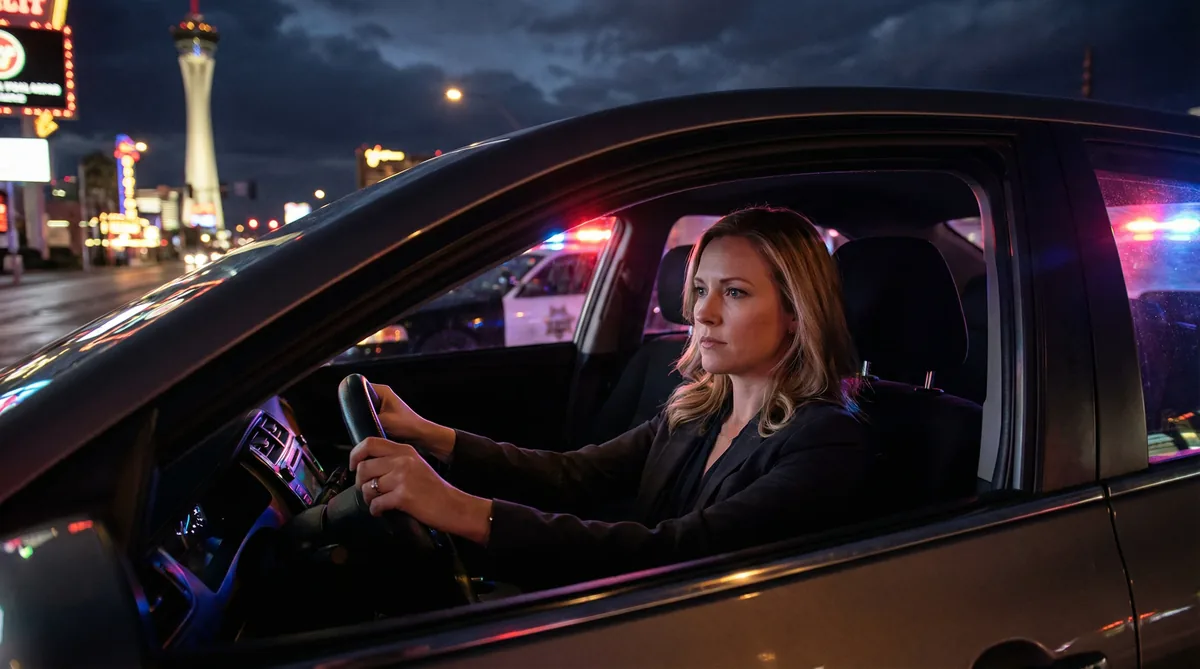
DUI Defense: Your Constitutional Rights During a Traffic Stop in Nevada
In This Article
Being pulled over on suspicion of driving under the influence (DUI) can be one of the most stressful and confusing experiences of your life. The flashing lights in your rearview mirror, the officer's questions, and the field sobriety tests can feel overwhelming, especially if you're unsure of your legal rights. In Nevada, DUI arrests are taken very seriously, with penalties that can include jail time, heavy fines, license suspension, and a permanent criminal record. However, understanding your constitutional rights during a DUI traffic stop is essential to protecting yourself legally and building the strongest possible defense. This comprehensive guide explains exactly what rights you have during a Nevada DUI stop, what you should and shouldn't do, and how to protect your future.
Understanding Nevada's DUI Laws and Penalties
Nevada law prohibits driving or being in actual physical control of a vehicle while under the influence of alcohol or drugs. Under NRS 484C.110, you can be charged with DUI if your blood alcohol concentration (BAC) is 0.08% or higher, or if you're impaired by drugs (including prescription medications and marijuana) to a degree that renders you incapable of safely driving. Nevada also has a per se DUI law, meaning you can be convicted based solely on your BAC level, regardless of whether you appeared impaired. For commercial drivers, the legal limit is 0.04%, and for drivers under 21, Nevada has a zero-tolerance policy with a limit of 0.02%. The penalties for DUI in Nevada escalate with each offense. A first DUI conviction can result in 2 days to 6 months in jail, fines of $400 to $1,000, DUI school, a victim impact panel, a 185-day license suspension, and possible installation of an ignition interlock device. Second and third offenses carry increasingly severe penalties, including mandatory jail time, longer license suspensions, and higher fines. See our detailed guide on second DUI offense penalties in Nevada. A DUI conviction also results in a permanent criminal record that can affect employment, professional licenses, housing, insurance rates, and travel. These serious consequences make it critical to mount a strong defense from the very beginning.
Free case review
Injured or Facing Charges in Las Vegas?
Thomas Boley offers free consultations — no fees unless we win your case.
Your Right to Remain Silent
The Fifth Amendment to the U.S. Constitution protects you from self-incrimination, which means you have the right to remain silent during a traffic stop. While you must provide your driver's license, vehicle registration, and proof of insurance when requested, you are not required to answer incriminating questions. Officers typically ask questions designed to gather evidence against you, such as 'Have you been drinking tonight?' 'How much have you had to drink?' 'Where are you coming from?' or 'Do you know why I pulled you over?' You have the absolute right to politely decline to answer these questions. A simple response like 'I prefer not to answer questions' or 'I'd like to speak with my attorney' is appropriate. Remember that anything you say can and will be used against you in court, so it's better to exercise your right to silence than to provide information that could hurt your case. Even seemingly innocent statements like 'I had one drink' or 'I'm coming from a friend's house' can be used as evidence of impairment.
Field Sobriety Tests: You Have the Right to Refuse
Field sobriety tests (FSTs) are physical tests that officers use to assess whether a driver is impaired. Common tests include the Horizontal Gaze Nystagmus (following a pen or flashlight with your eyes), the Walk-and-Turn test (walking in a straight line heel-to-toe), and the One-Leg Stand test. Here's what many people don't know: in Nevada, field sobriety tests are completely voluntary. You have the legal right to refuse to perform these tests, and your refusal cannot be used against you in court. FSTs are highly subjective and designed to collect evidence of impairment. Even sober individuals can fail these tests due to nervousness, physical conditions, uneven road surfaces, poor lighting, or improper footwear. Officers are trained to look for specific 'clues' of impairment, and they often interpret normal behavior as signs of intoxication. By refusing field sobriety tests, you avoid giving the prosecution additional evidence to use against you. You can politely say: 'I don't consent to field sobriety tests' or 'I'd like to speak with an attorney before performing any tests.'
Preliminary Breath Tests vs. Evidentiary Chemical Tests
It's crucial to understand the difference between preliminary breath tests (PBTs) and evidentiary chemical tests. A preliminary breath test is a roadside screening device that officers use to establish probable cause for arrest. In Nevada, you can refuse a preliminary breath test, and your refusal cannot be used against you in court. However, refusing a PBT may give the officer probable cause to arrest you based on other observations. An evidentiary chemical test (blood or breath test) is administered after arrest and is admissible in court. Under Nevada's implied consent law, by driving on Nevada roads, you're deemed to have consented to an evidentiary chemical test if you're arrested for DUI. However, you still have the right to refuse. If you refuse an evidentiary test, your license will be automatically suspended for one year (or longer for repeat offenses), and your refusal can be used as evidence against you in court. This creates a difficult choice: submit to a test that could provide evidence against you, or refuse and face automatic license suspension and have your refusal used as evidence. This is why consulting with an attorney immediately after arrest is so important.
The Seven-Day DMV Hearing Deadline
One of the most critical deadlines in a Nevada DUI case is the seven-day window to request a DMV administrative hearing. When you're arrested for DUI, the officer will typically confiscate your driver's license and issue you a temporary license valid for seven days. You have only seven days from the date of arrest to request a hearing with the Nevada Department of Motor Vehicles to challenge your license suspension. If you miss this deadline, your license will be automatically suspended, and you'll lose your opportunity to contest the suspension. An experienced DUI attorney can request this hearing on your behalf, represent you at the hearing, and fight to preserve your driving privileges. The DMV hearing is separate from your criminal case and focuses solely on whether there was probable cause for your arrest and whether you were driving with an illegal BAC or refused testing. Winning your DMV hearing doesn't guarantee you'll win your criminal case, but it protects your driving privileges while your case is pending.
Common Mistakes to Avoid During a DUI Stop
Many people unknowingly hurt their DUI defense by making critical mistakes during or after the traffic stop. Avoid admitting to drinking any amount of alcohol, even 'just one or two drinks,' as this admission can be used against you. Don't agree to perform field sobriety tests, as these are voluntary and subjective. Avoid being rude, argumentative, or physically resistant with officers, as this behavior can result in additional charges and makes you appear less credible. Don't discuss your case with anyone except your attorney, as these conversations are not privileged (except with your attorney). Don't post about your arrest on social media, as this can be used against you. Finally, don't miss the seven-day DMV hearing deadline, as this is your only opportunity to challenge your administrative license suspension. Remember that officers are trained to gather evidence against you, and everything you say and do will be documented and potentially used in court.
Potential Defenses to DUI Charges
Even if you've been arrested for DUI, there are numerous potential defenses that an experienced attorney can raise. These include challenging the legality of the traffic stop (officers must have reasonable suspicion to pull you over), questioning the accuracy and calibration of breath or blood testing equipment, challenging the administration of field sobriety tests, arguing that medical conditions or medications affected test results, demonstrating that the officer lacked probable cause for arrest, or showing that your rights were violated during the stop or arrest. Additionally, breath test results can be challenged based on factors like mouth alcohol, GERD, or improper observation periods. Blood test results can be questioned based on chain of custody issues, contamination, or improper storage. An experienced DUI defense attorney knows how to identify weaknesses in the prosecution's case and build a strong defense strategy tailored to your specific circumstances.
Why You Need an Experienced Las Vegas DUI Defense Attorney
DUI cases are highly technical and involve complex scientific evidence, constitutional issues, and strict procedural requirements. An experienced DUI defense attorney can review the circumstances of your stop and arrest, identify violations of your rights, challenge the accuracy of chemical tests, negotiate with prosecutors for reduced charges or alternative sentencing, represent you at DMV hearings to protect your license, and take your case to trial if necessary. At Thomas Boley Attorney At Law, we have extensive experience defending clients against DUI charges throughout Las Vegas and Clark County. We understand Nevada's DUI laws, know how to challenge the prosecution's evidence, and fight aggressively to protect your rights and your future. If you've been arrested for DUI, don't wait. Contact us today at (702) 435-3333 for a free consultation. Time is critical, and we're here to help you navigate this challenging situation and achieve the best possible outcome.
About the Author
Thomas Boley is a Nevada licensed attorney specializing in personal injury law and criminal defense. Since 2008, Thomas has represented thousands of clients in Las Vegas and Clark County, recovering millions of dollars in compensation for injury victims. He is a member of the State Bar of Nevada, the Clark County Bar Association, and the Nevada Justice Association.
Need Legal Help? Contact Thomas Boley for a free consultation: (702) 435-3333
Related Articles
Nevada DUI Second Offense: Penalties, Defenses, and What to Expect
Facing a second DUI in Nevada? Learn the penalties under NRS 484C.400, defense strategies, and how a Las Vegas attorney can help. Free consultation: (702) 435-3333.
Drug Possession Charges in Nevada: Penalties, Defenses, and Your Rights
Facing drug possession charges in Nevada? Understand the Schedule I–V classifications, felony vs. misdemeanor thresholds, diversion programs, and the most effective defense strategies that can protect your future.
Assault and Battery Charges in Nevada: Defense Strategies and Your Rights
Understand Nevada assault and battery laws, potential penalties, and effective defense strategies to protect your rights.