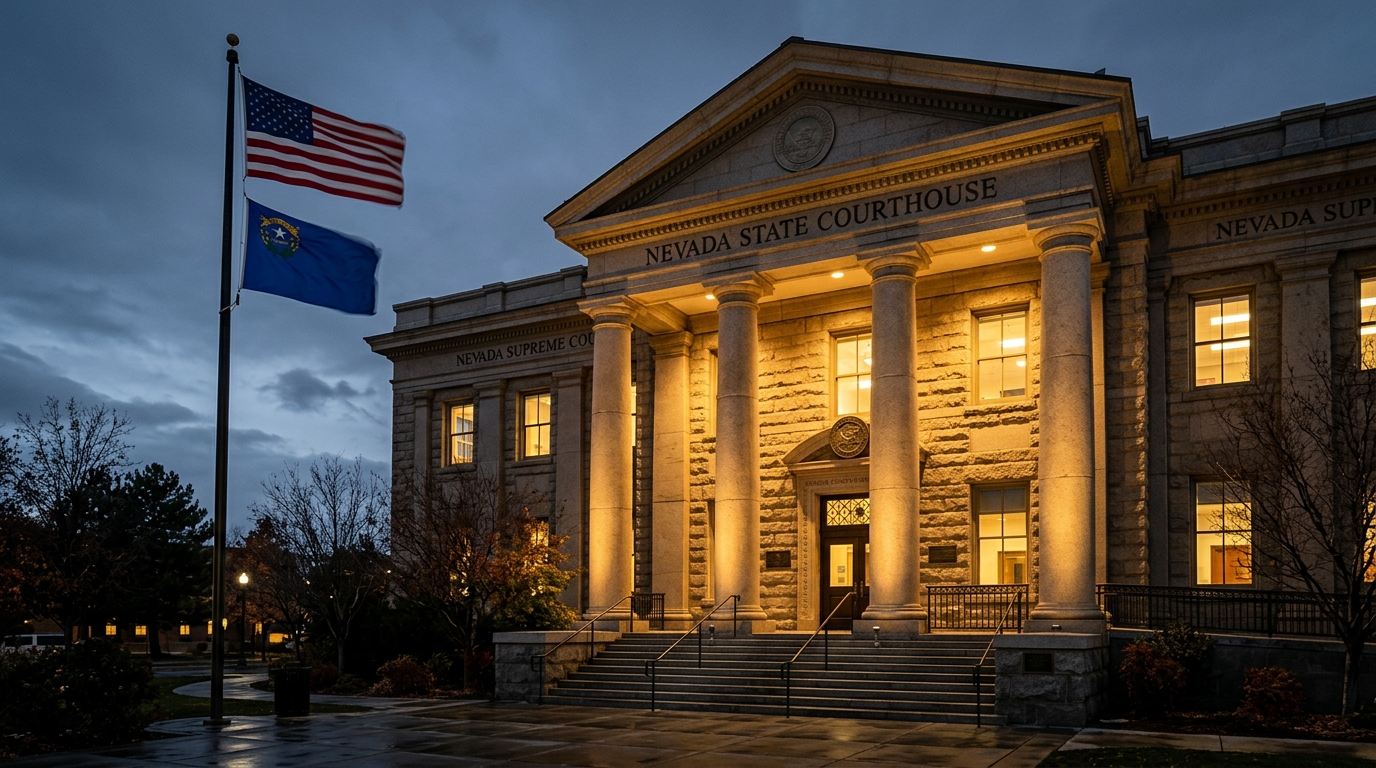
Nevada Protective Orders: How to Get One or Fight One in Las Vegas
In This Article
A protective order — commonly called a restraining order — can change your life in an instant, whether you are seeking one for protection or suddenly find yourself named as the restrained party. In Nevada, protective orders carry serious legal weight: violating one is a criminal offense, and having one issued against you can affect your housing, employment, child custody, and Second Amendment rights. At the Law Offices of Thomas Boley, we represent both petitioners pursuing protection and respondents fighting false or exaggerated orders in Las Vegas, Henderson, Summerlin, and throughout Clark County.
What Is a Protective Order Under Nevada Law?
Nevada law, primarily under NRS Chapter 33, provides for civil orders of protection against harassment, stalking, and domestic violence. A protective order directs a person — the respondent — to stop certain behaviors and, in many cases, to stay away from the petitioner, their home, workplace, and children's schools.
Free case review
Injured or Facing Charges in Las Vegas?
Thomas Boley offers free consultations — no fees unless we win your case.
Nevada issues two primary types: temporary protective orders (TPOs), which a judge can grant the same day based on a petitioner's sworn statement alone, and extended protective orders (EPOs), which require a full court hearing and can last up to two years (and be renewed).
We cover the surrounding issues in more depth in domestic Violence Charges in Las Vegas and in felony DUI in Nevada.
Types of Protective Orders in Nevada
1. Domestic Violence Protective Orders (DVPO) — Issued when the parties share a domestic relationship (spouses, dating partners, cohabitants, parents of a shared child). A DVPO can order the respondent out of a shared home, prohibit contact, and require surrender of firearms.
2. Harassment/Stalking Protective Orders — Available when the petitioner has experienced harassment (NRS 200.571) or stalking (NRS 200.575). Does not require a domestic relationship — neighbors, coworkers, and strangers can seek these orders.
3. Sexual Assault Protective Orders (SAPO) — Under NRS 33.400–33.670. Available to survivors of sexual assault regardless of their relationship to the respondent.
4. Workplace Harassment Protective Orders — Employers can petition on behalf of employees under NRS 33.200 for conduct at or near the workplace.
How to Get a Protective Order in Nevada
To obtain a protective order in Clark County, a petitioner files at the Family Courts and Services Center (601 N. Pecos Road, Las Vegas) or the Regional Justice Center. The process has five steps:
Step 1: File the Petition. The petitioner completes a sworn affidavit describing the abuse, harassment, or stalking in detail. Specific incidents, dates, and any evidence (texts, photos, police reports) should be included.
Step 2: Ex Parte Hearing for Temporary Order. A judge reviews the petition without the respondent present. If the judge finds \"good cause\" — a relatively low threshold — a TPO is issued immediately, effective for up to 30 days.
Step 3: Service on the Respondent. Law enforcement serves the TPO on the respondent, along with a notice of the upcoming extended order hearing.
Step 4: Extended Order Hearing. Both parties appear before a judge, usually within 21 days. The petitioner must prove by a preponderance of the evidence that the alleged conduct occurred. The respondent has the right to contest the order, present witnesses, and challenge evidence.
Step 5: Extended Protective Order. If granted, an EPO can last up to two years, prohibit contact, mandate vacating a shared residence, restrict firearm possession under 18 U.S.C. § 922(g)(8), and include child custody provisions.
Fighting a False or Exaggerated Protective Order
If a TPO has been served on you, you have the right to contest it at the extended order hearing. Courts issue TPOs based solely on the petitioner's statement — being named as a respondent does not mean you are guilty. At the hearing, the burden shifts: the petitioner must prove their allegations. Our attorneys help respondents:
Challenge the sufficiency of the allegations. Vague, conclusory statements without specific incidents often cannot meet the preponderance standard. We examine the petition for hearsay, exaggeration, and omissions.
Present counter-evidence. Text messages, call logs, emails, social media records, and witness testimony can directly contradict the petitioner's narrative. We build a documented timeline that tells the full story.
Expose improper motive. Protective orders are sometimes filed to gain leverage in divorce or custody proceedings. We identify and present evidence of bad faith to the court.
Negotiate a mutual dismissal. In some cases, both parties agree to drop competing claims. We explore negotiated solutions that protect our client without creating an adverse court record.

Consequences of Violating a Protective Order in Nevada
Violating a protective order — even once — is a serious crime under NRS 33.100:
First violation: Misdemeanor — up to 6 months in county jail and/or a $1,000 fine. Second or subsequent: Gross misdemeanor — up to 364 days and/or a $2,000 fine. Violation involving physical force or threat: Category C felony — 1 to 5 years in Nevada State Prison and up to $10,000 in fines.
What constitutes a violation? Any conduct prohibited by the order — sending a text, calling from a blocked number, contacting the petitioner through a third party, driving past their home, or approaching them in public. Even contact initiated by the petitioner does not make it legal for you to respond if the order prohibits contact.
Protective Orders and Child Custody
When a protective order involves children, it intersects with Clark County Family Court custody proceedings. A DVPO can grant temporary custody to the petitioner. In the subsequent custody case, Nevada courts consider domestic violence allegations seriously under NRS 125C.0035, which creates a presumption against awarding custody to a parent who has committed domestic violence. Early legal representation is critical — if a protective order is granted against you and enters the custody record, it can significantly harm your parenting rights.
Protective Orders and Firearms in Nevada
A restraining order can require you to surrender your firearms. Under federal law (18 U.S.C. § 922(g)(8)), it is a federal crime to possess a firearm while subject to a qualifying protective order. Under NRS 33.031, the court may order surrender of all firearms and ammunition to local law enforcement or a licensed firearms dealer. Failure to surrender is a separate criminal offense. If you are a law enforcement officer, security professional, or hold a concealed carry permit, a protective order can end your career. We fight aggressively to prevent wrongful orders from being issued.
How Thomas Boley Can Help
Whether you are seeking protection or have been wrongly served with a TPO, our firm provides experienced, strategic representation. Thomas Boley has spent decades in Las Vegas courtrooms — including Clark County Family Court and the Regional Justice Center — handling both sides of protective order proceedings. For respondents, time is critical: you typically have fewer than 21 days from service to prepare for the hearing. Contact our office immediately.
Call (702) 435-3333 for a free consultation. We handle criminal defense and personal injury throughout Las Vegas, Henderson, Summerlin, North Las Vegas, and all of Clark County — on a no win, no pay basis for injury claims.
Frequently Asked Questions
Q: Can I get a protective order the same day I file?
A: Yes. Nevada judges can issue a TPO on an ex parte basis — without notifying the other party — the same day you file, if the court finds good cause.
Q: Does a protective order show up on a background check?
A: A civil protective order is entered into Nevada's Central Repository for Criminal History Records and is visible to law enforcement. A violation — which is a criminal charge — will appear on a criminal background check.
Q: What if I live with the person who filed against me?
A: A DVPO can include a move-out provision requiring you to vacate a shared residence, even if you are on the lease. You would be ordered to leave and could retrieve belongings at a scheduled time with law enforcement present.
Q: Can a protective order be dropped or modified?
A: Yes. Either party can petition the court to modify or dismiss a protective order. The petitioner can request dismissal if the situation has changed. The respondent can petition based on changed circumstances, such as co-parenting needs.
Q: What is the difference between a temporary and extended protective order?
A: A TPO is issued based solely on the petitioner's statement, lasts up to 30 days, and is a stop-gap measure. An EPO requires a hearing where both sides present evidence, can last up to 2 years (renewable), and has more comprehensive terms.
Q: Can I contact the petitioner if they text or call me first?
A: No. If the order prohibits contact, you cannot respond — even if the petitioner initiates. Document their contact and report it to your attorney.
About the Author
Thomas Boley is a Nevada licensed attorney specializing in personal injury law and criminal defense. Since 2008, Thomas has represented thousands of clients in Las Vegas and Clark County, recovering millions of dollars in compensation for injury victims. He is a member of the State Bar of Nevada, the Clark County Bar Association, and the Nevada Justice Association.
Need Legal Help? Contact Thomas Boley for a free consultation: (702) 435-3333