Vegas Loop Accident Claims in Las Vegas: Your Legal Rights
In This Article
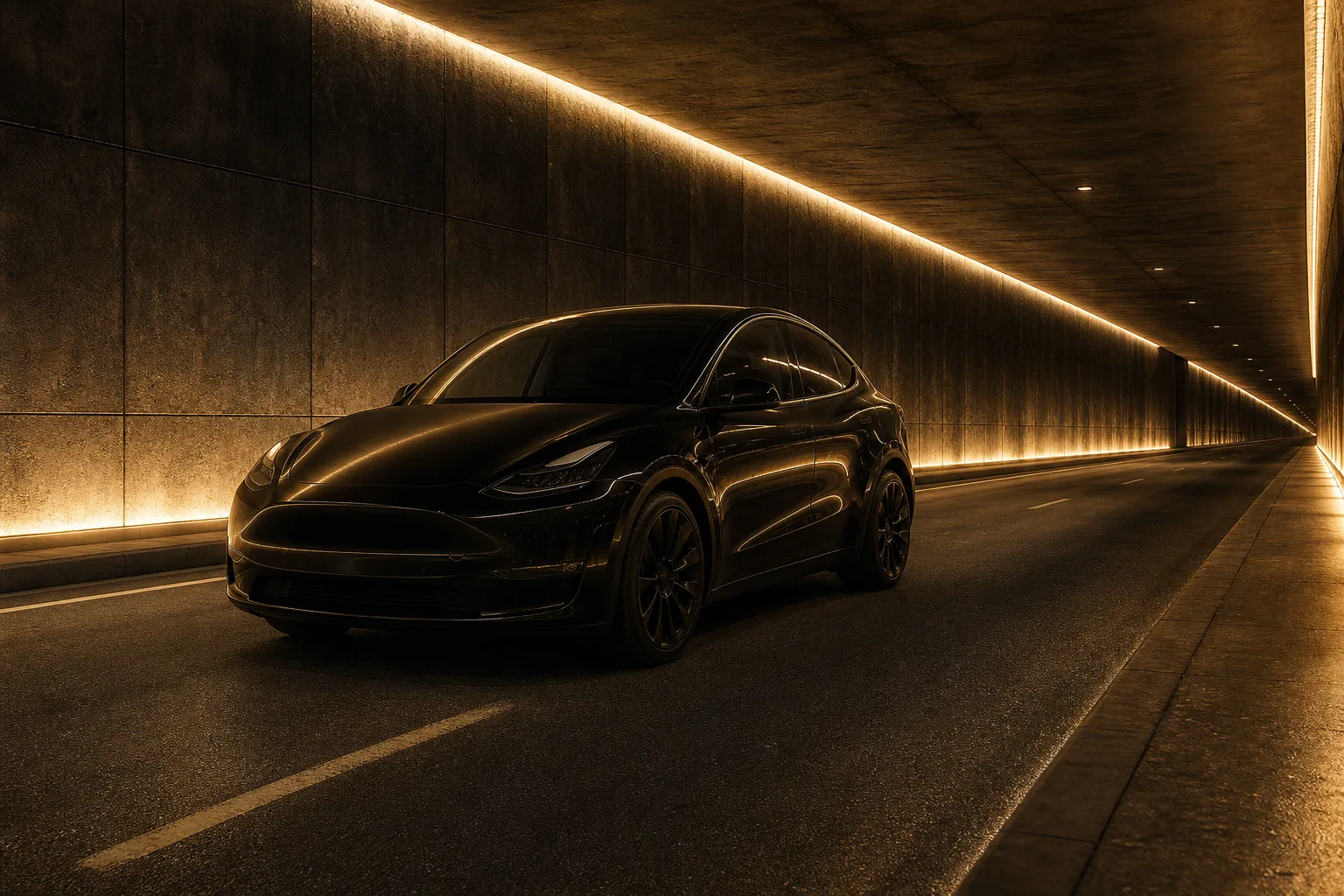
The doors slide open at the LVCC West station and a matte-black Tesla eases into the tunnel, carrying two passengers toward Resorts World on one of the newest ways to get around the Strip corridor: the Vegas Loop. In under four years the system has carried more than four million riders through a growing network of stations connecting the Las Vegas Convention Center campus to nearby resorts, with new stops opening every few months. Most rides end exactly the way they're supposed to — a two-to-eight-minute trip through a quiet, air-conditioned tunnel. When a Vegas Loop accident claim in Las Vegas becomes necessary instead, the legal picture is more complicated than an ordinary car crash, because of exactly who operates the system and who doesn't. At Thomas Boley Attorney At Law, we represent injured passengers throughout Las Vegas, Henderson, Summerlin, North Las Vegas, and the rest of Clark County, and this guide walks through who can actually be held responsible when something goes wrong underground.
- The Vegas Loop tunnel system is privately owned and operated by The Boring Company, not by the Las Vegas Convention and Visitors Authority (LVCVA) — Boring Company owns the vehicles and employs the drivers under a 50-year Clark County tunnel franchise the county approved in October 2021.
- Nevada case law holds that a common carrier of passengers owes riders the highest degree of care that human judgment and foresight are capable of providing, a standard the Nevada Supreme Court applied in First Transit, Inc. v. Chernikoff, 445 P.3d 1253 (2019), limited to hazards of the transportation itself.
- Because Boring Company, not LVCVA, owns the vehicles and employs the drivers, an ordinary negligence claim against the company for a driving or vehicle-related injury generally is not subject to the Nevada Tort Claims Act's damage cap.
- LVCVA's 2026 operating agreement pays Boring Company roughly $25 million over five years, from July 2026 through June 2031, to help fund and manage the public stations on the convention center campus — a funding and premises role, not vehicle ownership.
- If a claim is instead based on LVCVA's own station design, maintenance, or oversight decisions, NRS 41.035 caps a judgment against a political subdivision at $200,000 and bars punitive damages, and NRS 41.036 requires filing a claim with LVCVA's governing body within two years.
- Nevada's modified comparative negligence rule, NRS 41.141, still allows an injured rider to recover damages as long as their own share of fault is 50% or less.
Vegas Loop Accident Claims in Las Vegas: How the Tunnel System Works
Free case review
Injured or Facing Charges in Las Vegas?
Thomas Boley offers free consultations — no fees unless we win your case.
The Vegas Loop is a network of underground tunnels that shuttles passengers between stations in human-driven Tesla vehicles traveling roughly 35 miles per hour, far faster than the walk across a convention hall or a resort parking garage it typically replaces. The system began as the Las Vegas Convention Center Loop, a set of three stations built beneath the convention center itself, and has since expanded under a 50-year tunnel franchise Clark County commissioners approved in October 2021, which lets The Boring Company build beneath public streets in exchange for funding the tunneling and letting individual resorts fund their own station connections. As of this writing, riders can move between LVCC-campus stations and public stops at Resorts World, Westgate, Encore, Fontainebleau, and Sahara, with additional stations and an eventual link toward Harry Reid International Airport and Allegiant Stadium planned as the network grows. None of that changes the basic legal question that matters after a crash, a hard stop, or a fall at a station: who was actually running the vehicle, the tunnel, or the platform at the moment someone got hurt.
Who Actually Operates the Vegas Loop — And Why That Matters
This is where a Vegas Loop accident claim in Las Vegas looks meaningfully different from a claim over the nearby Las Vegas Monorail, even though both are underground or elevated people-movers built to solve the same Strip traffic problem. The Las Vegas Monorail has been wholly owned by LVCVA, a Nevada government agency, since 2020, which pulls most monorail injury claims into the Nevada Tort Claims Act described below. The Vegas Loop is structured differently. Under its public reporting, The Boring Company owns the vehicles, employs and directs the drivers who maneuver them through the narrow tunnels, and sets ticket pricing for the public stations outside the LVCC campus. LVCVA's role, formalized in a five-year agreement the tourism agency approved in 2026 covering July 2026 through June 2031 at roughly $25 million, is closer to a customer and landlord than an owner-operator: the authority pays a monthly management fee plus per-vehicle costs to keep the convention-center system complimentary for delegates, and it helps fund and oversee the campus stations themselves. That distinction is not just corporate trivia. Because the vehicles, the drivers, and the day-to-day operating decisions belong to a private company rather than a government agency, a claim over a driving error, a vehicle malfunction, or an employee's on-the-job negligence ordinarily proceeds as an unlimited private negligence claim, not one capped by the statute that protects Nevada's public entities.
Nevada's Common Carrier Duty of Care
Nevada courts hold that a common carrier of passengers — an entity that transports people for hire, whether by bus, taxi, monorail, or tunnel-based transit system — owes its passengers the highest degree of care that human judgment and foresight are capable of providing. The Nevada Supreme Court applied this standard in First Transit, Inc. v. Chernikoff, 445 P.3d 1253 (2019), a case involving a passenger who died after choking aboard a paratransit bus. The Court held that a common carrier's heightened duty covers the hazards of transportation itself — a sudden stop, a door that closes before a rider clears the threshold, a vehicle that clips a tunnel wall — but does not automatically extend to every injury that merely happens to occur while a passenger is aboard. Applied to the Vegas Loop, a driver who accelerates too quickly out of a station, a vehicle that stalls with passengers trapped in a narrow tunnel, or a malfunctioning door are squarely the kind of hazard this heightened standard exists for. A medical emergency unrelated to the ride itself, or an assault by another rider, is more likely to be judged under ordinary reasonable-care and premises-liability principles instead — a distinction that changes how a claim gets built and against whom.
Could Nevada's Government Tort Claims Act Apply to Your Claim?
Not every Vegas Loop injury stays outside the government-claims framework. Where LVCVA's own decisions cause the harm — a poorly lit or poorly maintained station platform it operates, a boarding gap it failed to fix, a safety inspection its staff skipped — the Nevada Tort Claims Act, NRS Chapter 41, can still come into play for that specific piece of the claim. NRS 41.031 waives Nevada's sovereign immunity so a government entity like LVCVA can be sued in the first place, but NRS 41.035 then caps any resulting tort judgment at $200,000 per claimant and bars punitive damages entirely. NRS 41.036 separately requires filing a claim with LVCVA's governing body within two years of the injury, a step worth taking early rather than waiting until a lawsuit is otherwise ready to file. None of that caps a claim against The Boring Company itself for its own negligence as vehicle owner and employer, or against a parts manufacturer if a defective component caused the harm — Nevada product liability law applies to those claims independently of anything LVCVA did. A single Vegas Loop accident can therefore involve one claim capped by government tort rules and a second, uncapped claim against a private company, running side by side against different defendants for the same incident.
Common Causes of Vegas Loop Accidents and Injuries
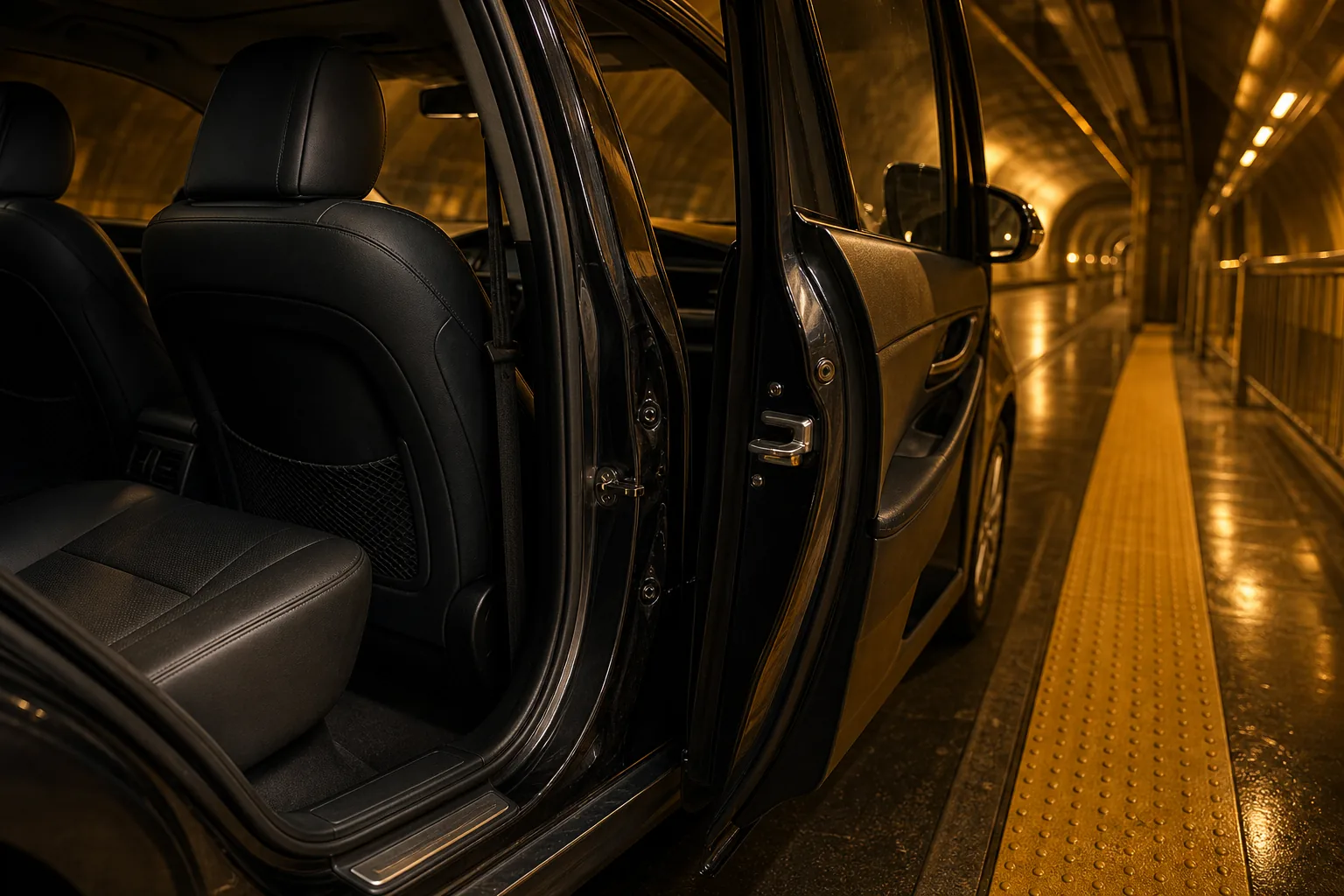
Most Vegas Loop injury claims we'd expect to see fall into a handful of recurring patterns. A driver following too closely or braking hard in the narrow tunnel can throw an unbelted passenger against the interior of the vehicle. A vehicle door closing on a rider's arm, bag strap, or clothing before they've fully boarded or exited is a variation on the same platform-gap hazard that shows up on the monorail and on Strip escalators alike. Tunnel walls and station curbs sit close to the vehicle path, and a driving error or a mechanical steering issue can bring a vehicle into contact with a tunnel surface at speed. Station platforms themselves create a more ordinary premises-liability risk — a wet floor near an entrance during a summer monsoon, uneven transition strips where a station meets a resort corridor, or inadequate lighting at a boarding queue. Because the system is still expanding, active construction zones near above-ground station entrances add a further layer of risk for anyone walking to or from a stop, separate from anything that happens inside a vehicle.
Who Can Be Held Liable After a Vegas Loop Accident
More than one party can end up sharing responsibility for a single Vegas Loop accident, and sorting out which is central to building the claim correctly. The Boring Company is the starting point for any injury tied to how a vehicle was driven, maintained, or dispatched, since it owns the fleet and employs the drivers. The individual driver can be named directly alongside the company under Nevada's respondeat superior rules for an employee acting within the scope of the job. LVCVA can be a defendant for harm traceable to its own station design, maintenance, or oversight role on the convention-center campus, subject to the tort-claims-act limits described above. A resort property — Resorts World, Westgate, Encore, Fontainebleau, or Sahara, depending on where the incident happened — can be independently liable for a hazard on its own station approach or connecting corridor under ordinary premises liability principles, the same theory that applies to hotel and resort injury claims generally. And if a defective part, such as a brake system or door sensor, caused the harm rather than anyone's driving or maintenance decision, the vehicle manufacturer or a parts supplier can face a separate Nevada product liability claim. On the other side of the ledger, Nevada's modified comparative negligence rule, NRS 41.141, still lets an injured rider recover damages, reduced by their own percentage of fault, as long as that share is 50% or less — so an insurer arguing a rider ignored a boarding instruction or ran to catch a closing door will only reduce, not automatically eliminate, a valid claim.
- Get medical attention first, even for what feels like a minor jolt or bump — soft-tissue injuries and concussions from a sudden stop can worsen over the following days.
- Report the incident to the driver or station attendant before you leave, and ask for a copy of any incident report or reference number.
- Note the exact station, vehicle, and approximate time of the ride, since Vegas Loop vehicles aren't individually marked the way a taxi medallion or bus number is.
- Photograph the vehicle interior, the door or restraint area involved, the tunnel or platform surface, and any visible damage before conditions change.
- Get names and contact information for any other passengers or witnesses at the station.
- Do not sign anything beyond what's necessary for medical treatment, and avoid giving a recorded statement to an insurer before speaking with an attorney.
- Contact a Las Vegas personal injury attorney promptly — if LVCVA's own conduct may be involved, the two-year NRS 41.036 notice deadline runs from the date of injury, and early evidence preservation matters for a fast-moving, camera-heavy transit system.
Speak With a Las Vegas Personal Injury Attorney About Your Vegas Loop Claim
Thomas Boley has represented injured clients throughout Clark County for more than 18 years, including cases involving Strip transit systems, resort premises liability, and claims that cross between private companies and government agencies. A Vegas Loop accident claim often turns on evidence that changes quickly — vehicle telemetry, station camera footage, and driver dispatch records among them — which makes early legal involvement especially valuable.
Call (702) 435-3333 for a free consultation, or contact Thomas Boley online to discuss a Vegas Loop accident in Las Vegas, Henderson, Summerlin, North Las Vegas, or elsewhere in Clark County. Our full personal injury practice handles Strip transit and vehicle-collision claims, including cases similar to our guides to Las Vegas Monorail accident claims and taxi accidents in Las Vegas, as well as ordinary auto accident claims. This article is informational only and is not legal advice. Every case is unique.
About the Author
Thomas Boley is a Nevada licensed attorney specializing in personal injury law and criminal defense. Since 2008, Thomas has represented thousands of clients in Las Vegas and Clark County, recovering millions of dollars in compensation for injury victims. He is a member of the State Bar of Nevada, the Clark County Bar Association, and the Nevada Justice Association.
Need Legal Help? Contact Thomas Boley for a free consultation: (702) 435-3333