
Tire Blowout Accident Claims Las Vegas: Legal Guide
In This Article
Tire blowout accident claims Las Vegas drivers bring usually start with a sound: a sharp bang on I-15 or the 215 Beltway, then a vehicle pulling toward a lane it was never meant to enter. Summer pavement in the Mojave can far exceed air temperature, and sustained heat punishes underinflated, aged, overloaded, and previously repaired tires. Many people treat a blowout as bad luck. Nevada law asks a narrower question: did a manufacturer, installer, shop, fleet, or vehicle owner fail a duty connected to that tire? At Thomas Boley Attorney At Law, we investigate blowout crashes for clients in Las Vegas, Henderson, Summerlin, North Las Vegas, and throughout Clark County.
- A blowout is an event, not a legal conclusion; responsibility depends on why the tire failed.
- Tread separation, sidewall failure, aged rubber, improper repair, and underinflation each point to different potential defendants.
- NRS 484D.505 sets Nevada standards for pneumatic tires and prohibits use of a nonconforming tire.
- The failed tire, wheel, and vehicle are the central evidence and must be preserved before repair or salvage.
- Commercial and fleet vehicles carry federal inspection and recordkeeping duties that create a documentary trail.
- Nevada uses modified comparative negligence under NRS 41.141, and most injury suits carry a two-year deadline.
Tire Blowout Accident Claims Las Vegas: Why Tires Fail Here
Free case review
Injured or Facing Charges in Las Vegas?
Thomas Boley offers free consultations — no fees unless we win your case.
A pneumatic tire carries load through air pressure, not rubber alone. When pressure runs low, the sidewall flexes further with every rotation, and that flexing generates heat. Add desert road temperatures, a fully loaded vehicle, sustained freeway speed between Las Vegas and the state line, and the internal temperature can reach the point where the bond between rubber and the steel belt package begins to break down. The result may be a sudden sidewall rupture or a tread separation in which the outer tread peels away from the casing while the tire is still holding air.
Age matters independently of tread depth. Rubber compounds oxidize and lose flexibility over years, and a tire stored or driven in intense ultraviolet exposure can look serviceable while its internal structure has degraded. Spare tires, trailer tires, and low-mileage vehicles are common examples. Other contributors include impact damage from a pothole or debris strike, an improper plug repair placed in the shoulder rather than the tread, mismatched or overloaded tires, and manufacturing problems such as contamination or inadequate adhesion between belts. Each of those causes leaves different physical evidence.
Nevada Tire Standards and the Duty to Maintain Safe Equipment
NRS 484D.505 addresses pneumatic tires, directing that standards be adopted covering matters such as minimum tread depth and regrooved tires, and prohibiting the sale or highway use of a tire that does not comply. Nevada also places broader equipment obligations on vehicles operated on public highways. These provisions matter in a civil claim because they help establish the standard of care a reasonable owner, shop, or fleet was expected to meet before a vehicle entered traffic.
A statutory violation does not automatically win a case. The injured person must still connect the violation to the crash and to the harm claimed. If a worn tire was replaced weeks before the failure, its condition may be irrelevant. If a shop mounted a tire rated below the vehicle load requirement, or returned a vehicle after noting belt separation without advising replacement, that documentation becomes central. Federal safety guidance published by the National Highway Traffic Safety Administration, including recall and load-rating information, often supports the analysis.
Who May Be Responsible After a Blowout Crash
More than one party can be involved. The tire manufacturer may face a product claim if a design or manufacturing defect made the tire unreasonably dangerous. A tire retailer or service shop may be responsible for improper mounting, an unsafe repair, ignoring visible separation, or installing the wrong specification. A vehicle owner or employer may be responsible for skipping inspections, running known-bald tires, or overloading a vehicle. Where a public entity created a hazardous road condition that destroyed an otherwise sound tire, that avenue may also require review under separate notice rules.
The driver whose tire failed is not automatically at fault, and is not automatically excused either. Nevada drivers must maintain control, but a genuinely sudden and unforeseeable mechanical failure is treated differently from a failure the driver knew about and ignored. Insurers frequently argue the opposite: that the blowout was an unavoidable event nobody caused, which conveniently ends the inquiry before anyone examines the tire. Our Las Vegas personal injury practice treats that assertion as the beginning of an investigation rather than a conclusion.
Preserving the Failed Tire and the Crash Record
The single most damaging thing that happens in these cases is routine: the vehicle is towed, the insurer declares a total loss, salvage sells the vehicle, and the failed tire disappears within weeks. Once the tire is gone, a defect theory usually goes with it. The tire, the wheel it was mounted on, the remaining tires, and where possible the vehicle itself should be preserved intact. Do not let anyone cut, clean, remount, or discard the failed tire, and do not authorize salvage disposal before counsel sends a written preservation request.
Beyond the tire, the record includes the crash report, scene photographs showing debris and yaw marks, roadway measurements, vehicle event data where available, tow and storage documentation, purchase receipts, installation and rotation invoices, alignment records, tire pressure monitoring history, and any recall notice. Photograph the sidewall markings before the tire leaves your control, including the manufacturer identification and date code. Those markings identify the plant, the week of manufacture, and the specification, and they drive both the recall check and the expert analysis.
Defect or Neglect: How Tire Failure Is Actually Proven
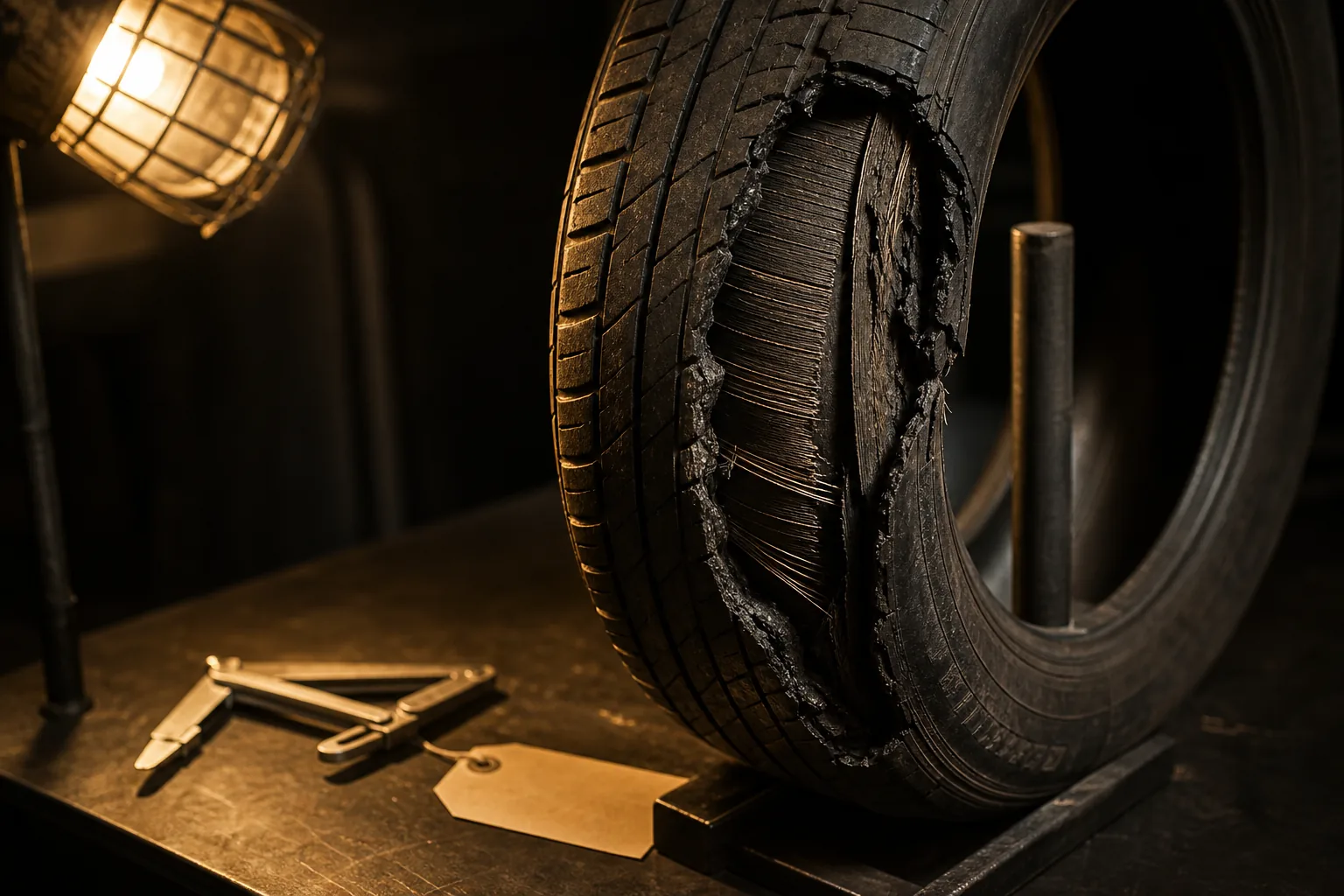
A qualified tire failure analyst examines the carcass for patterns that separate causes. Even, symmetrical wear across the tread suggests different history than shoulder wear from chronic underinflation or center wear from overinflation. A run-low condition typically leaves distinctive sidewall creasing and heat signatures on the inner liner. An improper repair unit placed outside the crown area, a puncture path, or an object still embedded in the tread tells its own story. Belt-edge separation with clean rubber-to-steel release patterns points toward an adhesion problem rather than road hazard damage.
The analysis is comparative and disciplined. Counsel and the expert reconcile the physical tire evidence with the vehicle damage, the debris field, the reported speed, the load, the maintenance record, and the manufacturing data. A defect opinion that ignores twelve years of service and a plug in the sidewall will not survive scrutiny, and neither will an insurer position that blames the driver while refusing to examine the tire. Related principles appear in our overview of defective product liability claims in Nevada.
Commercial Trucks, Fleet Vehicles, and Rental Cars
Commercial vehicles change the evidence landscape substantially. Federal regulation 49 CFR 393.75 sets tire condition requirements for commercial motor vehicles, including limits on tread depth and prohibitions on operating with specified defects such as exposed fabric or visible body ply. Carriers also generate driver vehicle inspection reports, maintenance files, and repair invoices. Those documents can show whether a known condition was reported and left uncorrected before the tire came apart on a Las Vegas freeway.
Rental cars, rideshare vehicles, delivery fleets, and employer-owned vehicles raise similar questions with different paperwork and different insurance layers. A large truck tire that separates at highway speed also produces a secondary hazard: heavy tread carcass in a live traffic lane that other drivers strike or swerve to avoid. Those secondary collisions are frequently serious, and they may involve both the tire-related defendant and the driver who reacted. Our guide to Las Vegas truck accident representation explains how those layers are approached.
Damages, Comparative Negligence, and Nevada Deadlines
A blowout at freeway speed can produce a rollover, a rapid lane departure, or a barrier impact, and the injuries follow that severity: spinal trauma, fractures, head injuries, and lasting functional loss. Recoverable damages may include medical expenses already incurred, reasonably necessary future care, lost income, reduced earning capacity, property loss, and pain and suffering. Documentation drives value. Treatment records, employment evidence, and credible testimony about daily limitations carry more weight than a general description of hardship. Rollover mechanics are covered further in our Las Vegas rollover accident guide.
Nevada follows modified comparative negligence under NRS 41.141. An injured person may recover if their share of fault does not exceed the combined fault of the defendants, with any award reduced by their percentage. Expect an argument that you neglected tire pressure or delayed replacement. Timing also matters: under NRS 11.190, personal injury actions generally carry a two-year limit, and other deadlines can apply to particular defendants.
What to Do After a Tire Blowout Crash in Las Vegas
Get medical evaluation promptly, even when adrenaline masks symptoms; spinal and head injuries frequently present later. Report the crash and obtain the report number. Photograph the failed tire from multiple angles, the debris path, the final rest positions, and the roadway. Identify the tow yard and the storage location in writing. Collect the purchase and service history for the tires, including any recent rotation, repair, or pressure warning. Preserve the vehicle and all four tires until they have been inspected by someone qualified to evaluate them.
Be careful with early insurer contact. A recorded statement taken before the tire is examined often locks in a guess about what happened, and a quick total-loss settlement can hand the vehicle and its evidence to salvage. Do not authorize disposal, do not accept a repair that discards the failed tire, and do not agree to a valuation that transfers ownership before preservation is addressed. Speak with counsel first so a written preservation demand reaches the tow yard, the insurer, and any shop or fleet involved.
- Is a blowout always the driver's fault? No. Fault depends on why the tire failed and whether anyone knew or should have known about the condition beforehand.
- What if the tire was never recalled? A recall helps but is not required. Many defect claims proceed on physical examination of the failed tire itself.
- The insurer wants to total my car. Should I agree? Not before preservation is arranged. Once salvage takes the vehicle, the key evidence is usually unrecoverable.
- Can I still have a claim if my tires were old? Possibly. Age is one factor among installation, repair history, load, and manufacturing evidence, and fault may be shared.
- How long do I have to file? Nevada personal injury claims generally carry a two-year limit, but other deadlines may apply. Get case-specific advice early.
Speak With a Las Vegas Personal Injury Attorney
A tire that comes apart at seventy miles per hour turns an ordinary drive into surgery, rehabilitation, missed work, and insurance calls about an event that lasted two seconds. Thomas Boley has represented injured people in Clark County for more than 18 years. He moves quickly to preserve the tire and vehicle, obtains the maintenance and manufacturing record, works with appropriate analysts, identifies every applicable coverage layer, and prepares the claim for negotiation or litigation based on what the evidence shows rather than a generic formula.
Call (702) 435-3333 for a free consultation, or contact Thomas Boley online to discuss a tire blowout crash in Las Vegas or elsewhere in Clark County. Bring the report number, photographs, tow and storage information, tire purchase and service records, insurance correspondence, and your medical records. This article is informational only and is not legal advice. Every case is unique.
About the Author
Thomas Boley is a Nevada licensed attorney specializing in personal injury law and criminal defense. Since 2008, Thomas has represented thousands of clients in Las Vegas and Clark County, recovering millions of dollars in compensation for injury victims. He is a member of the State Bar of Nevada, the Clark County Bar Association, and the Nevada Justice Association.
Need Legal Help? Contact Thomas Boley for a free consultation: (702) 435-3333