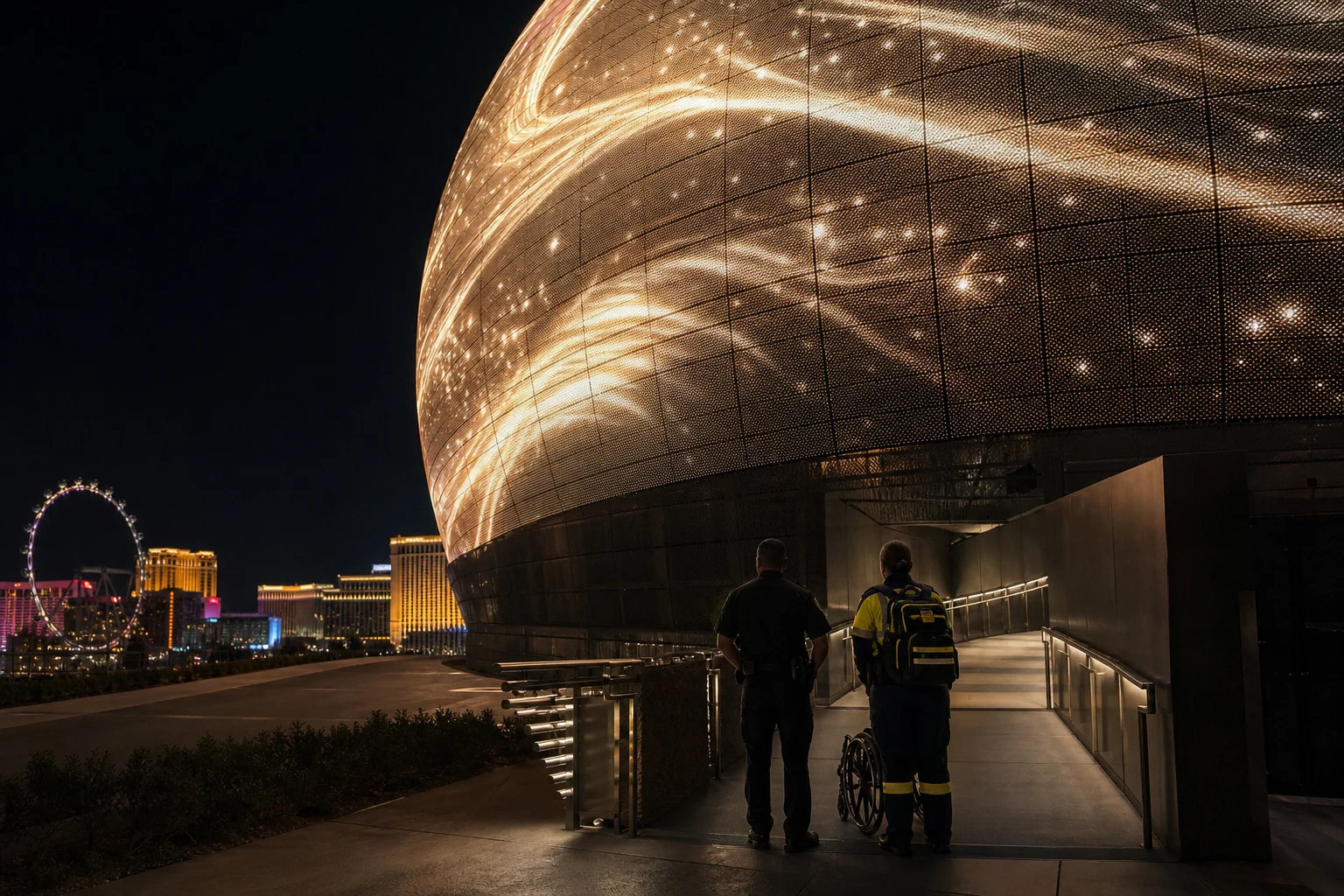
Sphere Las Vegas Injury Claims: Venue Liability Guide
In This Article
A crowded entrance ramp, a dim transition tunnel, or a packed standing-room floor inside one of the Strip's newest immersive entertainment venues can turn a night out into a fall, a crush injury, or worse. Sphere Las Vegas injury claims are a newer category of premises liability case, but the underlying legal questions are familiar: who controlled the space where the injury happened, what hazard caused it, and whether the venue did enough to prevent it. At Thomas Boley Attorney At Law, we represent people hurt at large entertainment venues, arenas, and immersive attractions throughout Clark County, and this guide explains how Nevada premises liability law applies when the venue is one of the Strip's newest and most crowded attractions.
- Large immersive venues owe guests a duty of reasonable care to keep ramps, walkways, stairs, and standing-room floors safe for foreseeable crowd conditions.
- Liability can fall on the venue operator, a third-party security or crowd-control contractor, or a maintenance vendor, depending on who controlled the hazard that caused the injury.
- Common hazards at high-capacity entertainment venues include poorly lit transition tunnels, slick or uneven ramp surfaces, inadequate crowd-flow management, and failure to stop overcrowding in standing-room areas.
- Nevada's modified comparative negligence rule under NRS 41.141 can reduce, but does not automatically bar, a claim even if the injured guest is found partly at fault.
- A personal injury claim must generally be filed within two years under Nevada's statute of limitations, NRS 11.190.
- Evidence preservation matters quickly at a high-traffic venue, since surveillance footage retention windows and physical conditions can change within days.
Sphere Las Vegas Injury Claims: How Nevada Premises Liability Applies
Free case review
Injured or Facing Charges in Las Vegas?
Thomas Boley offers free consultations — no fees unless we win your case.
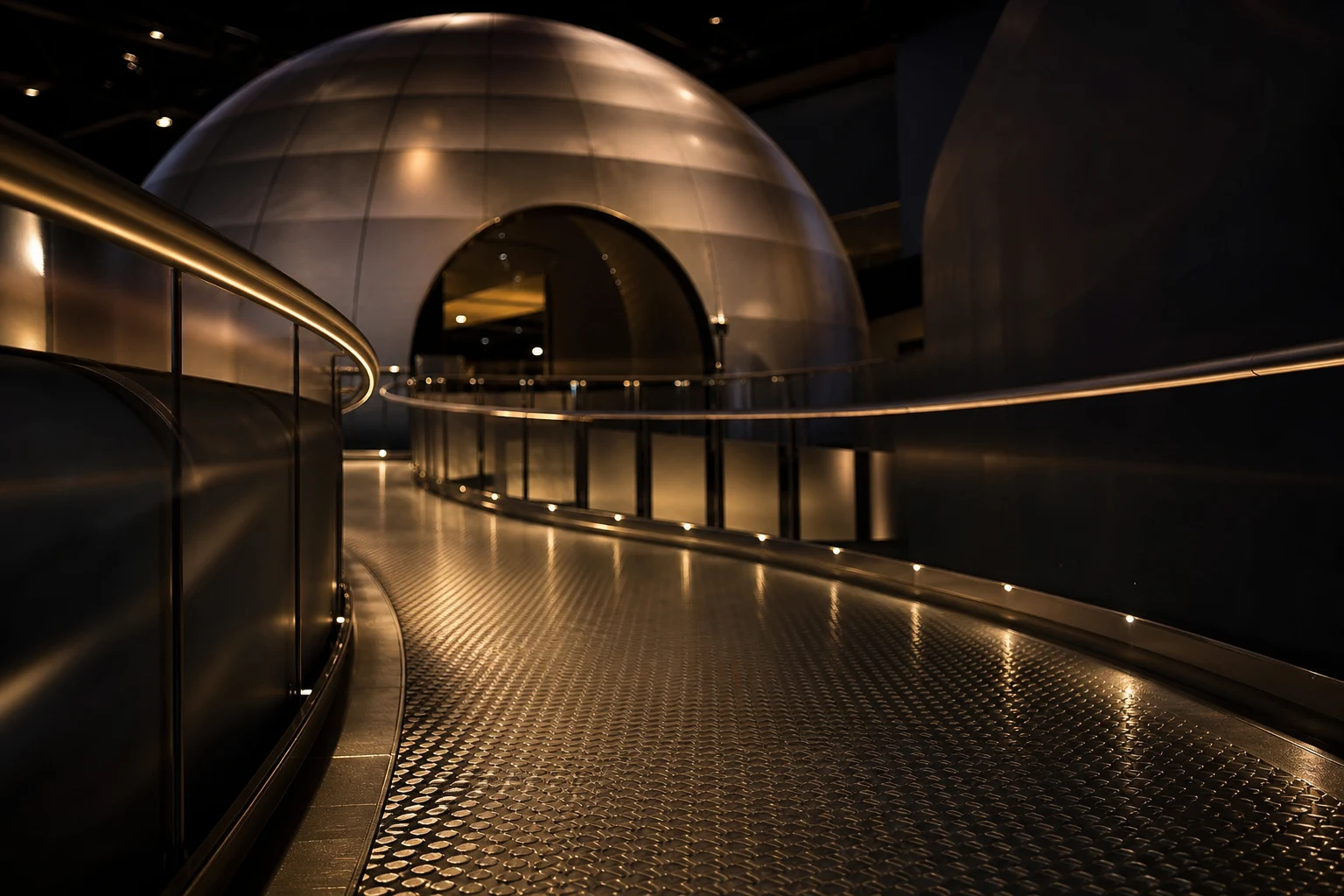
Nevada premises liability law requires a property owner or operator to exercise reasonable care to keep a venue reasonably safe for guests who are lawfully present. That duty does not disappear because a building is architecturally unusual or because it draws tens of thousands of visitors a week; if anything, a venue that knowingly hosts large, continuous crowds takes on a heightened obligation to manage the predictable risks that come with high density. Sphere Las Vegas injury claims typically center on one of a handful of locations: the curved entrance ramps and accessibility routes, the dim interior transition tunnels between the exterior plaza and the theater bowl, the standing-room and general-admission floor areas, and the stairs and handrails connecting multiple levels. Because the space was purpose-built for immersive media and crowd movement, the design itself — low ambient lighting, curved sightlines, and dense standing areas — becomes part of the foreseeability analysis: an operator cannot claim a fall or crush injury was unforeseeable in a layout built specifically to channel large crowds through tight, dim spaces.
Who Can Be Held Liable at the Sphere and Similar Immersive Venues
More than one party can share responsibility for an injury at a large immersive venue, and identifying all of them often changes the outcome of a claim. The venue operator can be liable for failing to maintain ramps, flooring, lighting, and handrails, and for failing to staff and manage crowd flow at capacity. A third-party security or crowd-control contractor can be liable if its staff failed to control a bottleneck, ignored an obvious overcrowding condition, or used excessive force during an ejection. A maintenance or janitorial vendor can be liable for a spill, a wet ramp surface, or a tripping hazard left uncorrected. A concert promoter or event producer operating under a lease with the venue can share liability when the event itself, rather than the building, created the hazardous condition. Our related article on hotel and resort injury claims in Las Vegas walks through a similar multi-party liability analysis that applies whenever a large commercial property hosts guests at scale.
Common Causes of Injuries at Large Entertainment Venues
- Poorly lit transition tunnels and ramps where a step-down, uneven seam, or metal tread plate is difficult to see in low ambient light.
- Slick or worn ramp and walkway surfaces, especially after a spill, condensation, or heavy foot traffic that was not promptly addressed.
- Overcrowded standing-room floors that exceed a safe occupancy density for the space, increasing the risk of a crowd crush or trampling injury.
- Inadequate crowd-flow management at entrances, exits, and restroom corridors during ingress, intermission, or egress after a show.
- Malfunctioning or unmarked stairs, escalators, and accessibility ramps that were not inspected or repaired on a reasonable schedule.
- Failure to respond promptly to a medical emergency or a reported hazard inside a dark, high-noise theater environment where staff response can be delayed.
Negligent Security and Crowd-Control Failures
When an injury at a large venue results from a crowd surge, an altercation, or an inadequately staffed checkpoint rather than a physical defect, the claim often shifts from a pure premises-defect theory toward negligent security. Nevada law has long recognized that a property owner who invites large crowds onto its premises, especially in a venue serving alcohol and operating late into the night, has a duty to provide security and crowd-control measures reasonably calibrated to the foreseeable risk. A venue with a documented history of overcrowding complaints, prior altercations, or known bottlenecks at specific chokepoints is in a weaker position to argue an incident was unforeseeable. Our guide on negligent security claims in Las Vegas covers how these cases are built and what venues are generally expected to do to keep high-traffic crowds safe.
Comparative Negligence and What It Means for Your Claim
A venue operator facing an injury claim will often argue the guest contributed to the accident, for example by using a phone while walking through a dim corridor, ignoring a posted sign, or pushing through a crowded area against staff direction. Nevada follows a modified comparative negligence rule under NRS 41.141: a jury can reduce the injured person's recovery by their percentage of fault, and the claim is barred only if that fault reaches 51 percent or more. A guest who trips over a hazard that was difficult to see in deliberately low lighting, or who is caught in a crowd surge the venue failed to manage, is in a materially different position than one who ignored a clearly marked warning. Our article on concert and festival event injuries in Las Vegas covers the same comparative fault framework as it applies to other large-crowd event venues.
Evidence That Can Strengthen a Venue Injury Claim
- Incident reports filed with venue security or guest services at the time of the injury, along with a copy for your own records.
- Photos and video of the hazard — the ramp, tread plate, flooring, or chokepoint — taken as close to the time of injury as possible.
- Surveillance footage requests sent promptly in writing, since large venues often retain footage for a limited window before it is overwritten.
- Witness contact information from anyone nearby who saw the hazard, the crowd condition, or the injury occur.
- Ticket stubs, show schedules, and timestamps establishing exactly when and where inside the venue the injury happened.
- Medical records documenting the injury and connecting it directly to the fall, crush, or impact at the venue.
What to Do After an Injury at the Sphere or Another Las Vegas Venue
- Get medical attention right away, even if the injury seems minor at first, and ask venue staff to call for on-site medical assistance if needed.
- Report the injury to venue security or guest services before you leave, and request a copy of the written incident report.
- Photograph the hazard and the surrounding area from multiple angles before the condition is corrected or the crowd disperses.
- Get names and contact information for anyone who witnessed the fall, crowd surge, or hazard.
- Keep your ticket, parking receipt, and any photos or videos taken during the show that might show the condition of the area.
- Contact a premises liability attorney before giving a recorded statement to the venue's insurance representative, since an early statement can be used to minimize your claim later.
- Who is liable if I'm hurt at the Sphere or a similar immersive venue? It depends on the cause. The venue operator, a security or crowd-control contractor, a maintenance vendor, or an event promoter can each be liable depending on who controlled the hazard that caused the injury.
- Can I still recover damages if I was partly at fault for my fall? Often yes. Nevada's comparative negligence rule under NRS 41.141 only bars recovery if you are found 51 percent or more at fault for the incident.
- What if my injury happened because of a crowd surge rather than a physical hazard? That can support a negligent security or inadequate crowd-control claim against the venue or its security contractor, separate from a standard premises-defect claim.
- How long do I have to file a claim in Nevada? Nevada's statute of limitations for a personal injury claim is generally two years from the date of the incident under NRS 11.190, though exceptions can apply, so it is best to speak with an attorney promptly.
- Why does surveillance footage matter so much in these cases? High-traffic venues often retain footage for only a limited window before it is automatically overwritten, so requesting it in writing soon after the injury can be critical.
- Should I talk to the venue's insurance adjuster first? It is best to speak with an attorney before giving a recorded statement, since early statements to an adjuster can later be used to argue you were partly at fault.
Speak With a Las Vegas Premises Liability Attorney
Thomas Boley has represented injury victims throughout Clark County for more than 18 years, including guests hurt at large hotels, arenas, and entertainment venues across the Strip. These claims move quickly, since venue conditions can be corrected and surveillance footage can be overwritten within days, so early evidence preservation matters. Call (702) 435-3333 for a free consultation, or contact Thomas Boley online to discuss an injury at the Sphere or any other Las Vegas venue. Our premises liability practice handles falls and venue-injury claims of every kind. This article is informational only and is not legal advice. Every case is unique.
About the Author
Thomas Boley is a Nevada licensed attorney specializing in personal injury law and criminal defense. Since 2008, Thomas has represented thousands of clients in Las Vegas and Clark County, recovering millions of dollars in compensation for injury victims. He is a member of the State Bar of Nevada, the Clark County Bar Association, and the Nevada Justice Association.
Need Legal Help? Contact Thomas Boley for a free consultation: (702) 435-3333