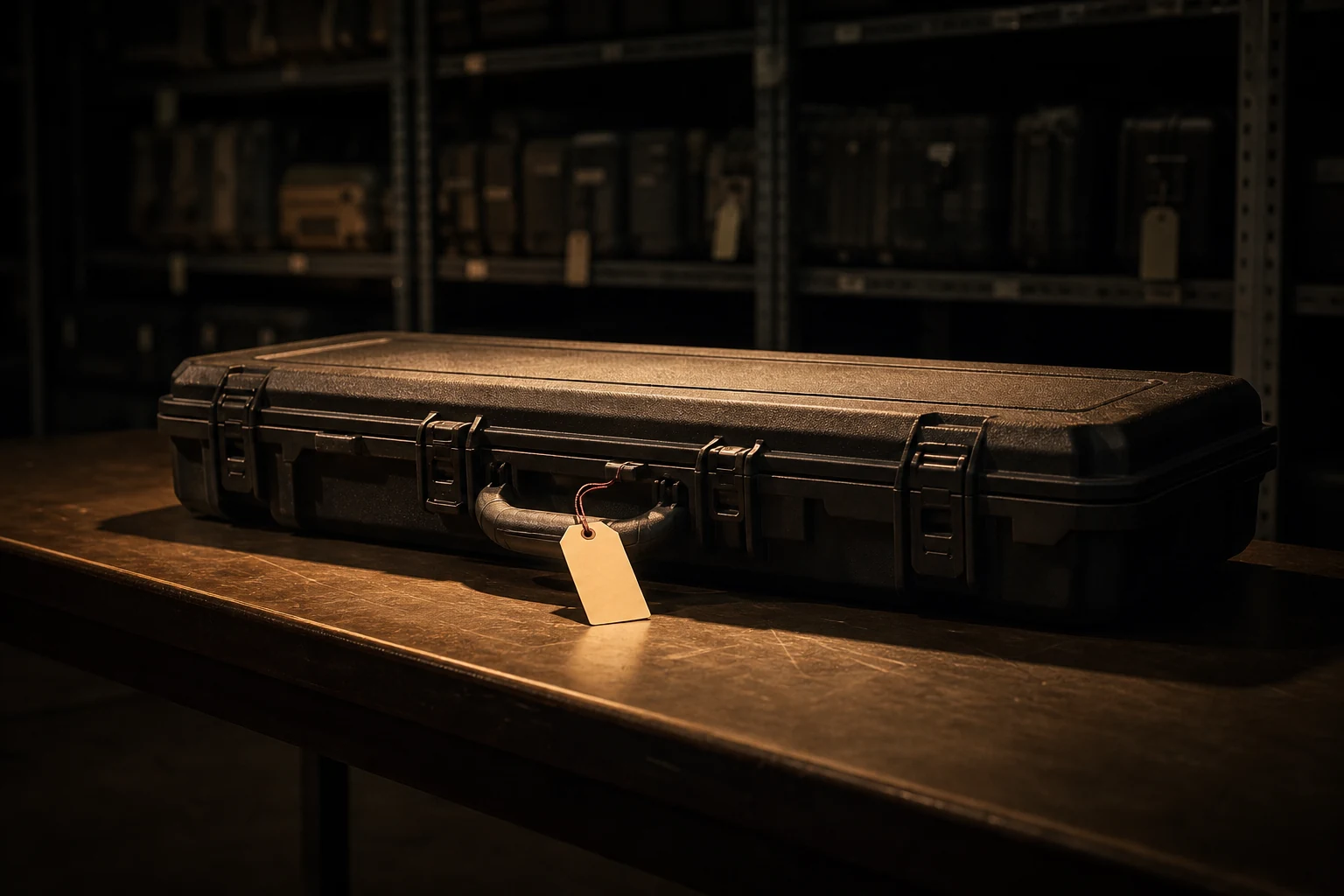
Nevada Red Flag Law: Extreme Risk Orders in Las Vegas
In This Article
A family member's phone call or a single police report can trigger Nevada's red flag law and put your firearms in a property room before you ever set foot in front of a judge. Formally called an Order for Protection Against High-Risk Behavior, and often shortened to an Extreme Risk Protection Order (ERPO), this civil process lets a court restrict a person's access to guns based on a petition alone — no criminal charge required. At Thomas Boley Attorney At Law, we represent respondents facing red flag petitions throughout Las Vegas, Henderson, Summerlin, North Las Vegas, and Clark County, and we move quickly because these cases move quickly.
- Nevada's red flag law (NRS 33.500–33.670) lets a family or household member, or a law enforcement officer, petition a court to restrict a person's access to firearms.
- An emergency order can be issued without notice to the respondent and can be heard by phone within 1 judicial day when law enforcement files in a populous county like Clark County.
- An extended order requires notice, a hearing within 45 days, and "substantial and credible evidence" — and it can last up to a year.
- Anyone subject to an order must surrender existing firearms and is barred from purchasing or possessing new ones for as long as it remains in effect.
- Respondents have the right to retain an attorney and to contest the petition at the extended-order hearing.
- Intentionally violating an order is itself a crime under NRS 33.670.
Nevada Red Flag Law: What It Means for Gun Owners in Las Vegas
Free case review
Injured or Facing Charges in Las Vegas?
Thomas Boley offers free consultations — no fees unless we win your case.
Nevada's red flag law took effect on January 1, 2020, after the 2019 Legislature passed Assembly Bill 291, and it is codified at NRS 33.500 through NRS 33.670. Its formal name, an Order for Protection Against High-Risk Behavior, describes what makes it different from the harassment and domestic violence protective orders we cover in Nevada Protective Orders: How to Get One or Fight One. Those orders are built around a relationship between two people and a pattern of contact or abuse. A red flag petition is built around a single question: does this person, in this moment, pose a danger to themselves or others while they have access to a firearm? A judge can answer yes without any criminal charge ever being filed, which is exactly why the process moves so fast and why an early, aggressive defense matters.
Who Can Petition for an Extreme Risk Protection Order in Nevada
Nevada limits who can file for a high-risk protection order to two categories: a family or household member of the respondent, or a law enforcement officer. Unlike Nevada's harassment protective orders, a coworker, neighbor, or former business partner cannot petition on their own. Under NRS 33.550, the petitioner must point to "high-risk behavior" — generally a recent act or credible threat of violence, or a documented pattern of behavior, that shows the respondent poses a danger to themselves or someone else while in possession of, or attempting to acquire, a firearm. A single heated argument, a divorce filing, or an unfounded suspicion is not enough on its own, but petitions filed by an anxious family member or an officer responding to a welfare check can still move forward on thin evidence if no one challenges them.
Emergency vs. Extended Orders: How the Process Works in Clark County
Nevada's red flag law creates two distinct orders, and the difference matters enormously to a respondent. An emergency order is issued ex parte — without notice to the respondent — based solely on the petitioner's sworn application. In a populous county like Clark County, a judge can hold that initial hearing by telephone, 24 hours a day, and when law enforcement is the petitioner, the law requires a decision within one judicial day. An emergency order typically remains in effect for up to seven days while an extended order is sought. An extended order requires the court to notify the respondent and hold a hearing within 45 days of the application, and the petitioner must present "substantial and credible evidence" that the respondent's high-risk behavior continues. If granted, an extended order can remain in effect for up to one year and can be renewed. That 45-day window is the respondent's real opportunity to be heard — and it is also the entire runway available to build a defense.

What Happens to Your Firearms If a Red Flag Order Is Issued
Once an emergency or extended order is in effect, the respondent is prohibited from purchasing or possessing any firearm and must surrender any firearms already owned to local law enforcement or a licensed firearms dealer within the timeframe the order specifies. The order is transmitted to Nevada's Central Repository for Criminal History Records, which feeds the background check system used for future purchase attempts, so a violation surfaces automatically rather than depending on someone noticing. Concealed carry permit holders, security professionals, and law enforcement officers face additional fallout, since an active order can suspend a permit or threaten a career that depends on lawful firearm possession. Failing to surrender firearms on schedule is treated as a separate violation on top of the order itself, which is one more reason self-help — hiding, storing with a friend, or "forgetting" a firearm — is never the right response.
Defending Against a Nevada Red Flag Law Petition in Las Vegas
Because an emergency order can be issued without you present, your first real chance to respond is the extended-order hearing — and Nevada law gives you the right to retain an attorney for it. An effective defense usually attacks the "substantial and credible evidence" standard directly: was the alleged incident recent, or is the petition built on something months or years old? Is the claimed threat specific, or vague and interpreted through fear rather than fact? We cross-examine the petitioner, gather counter-evidence such as text messages, witness statements, and mental health or medical records that contradict the narrative, and where appropriate negotiate a voluntary, time-limited surrender that avoids a full order on the public record. Every case we handle in criminal defense starts from the same premise: a petition is an accusation, not a finding, and it has to be proven.
Criminal Penalties for Violating a High-Risk Protection Order
Intentionally violating an order issued under Nevada's red flag law is itself a crime under NRS 33.670. Consistent with how Nevada treats other Chapter 33 protection orders, a violation is generally charged as a misdemeanor unless the specific conduct — attempting to buy a firearm, refusing to surrender one, or committing a separate offense while doing it — supports a more serious charge on its own. A violation conviction becomes part of a permanent criminal record on top of the civil order, which is exactly the outcome an aggressive early defense is meant to prevent.
How a Red Flag Petition Can Affect a Pending Criminal or Family Case
Red flag petitions rarely arrive in isolation. We frequently see them filed alongside, or shortly after, a domestic violence charge or a request for a standard domestic violence protective order, since a family member who calls police about one often raises the other in the same conversation. An active order can also surface in a Clark County Family Court custody dispute as evidence of instability, and it can jeopardize a concealed carry permit or a job in security or law enforcement long before any underlying criminal case is resolved. Handling the red flag petition, the protective order, and any criminal charge as a single, coordinated defense — rather than three separate fires — is usually the only way to protect your firearm rights, your record, and your family relationships at the same time.
- Do not ignore the paperwork — deadlines to respond and to surrender firearms run fast, often within days.
- Do not hide, transfer, or "forget about" a firearm to avoid surrender; that can become its own separate charge.
- Comply with the surrender instructions exactly as written, and keep your own receipt or documentation.
- Start collecting evidence immediately — texts, witnesses, and treatment records that contradict the petition.
- Call a Las Vegas criminal defense attorney the same day you are served, since the extended-order hearing must happen within 45 days.
- Can I be served with an emergency order without knowing it was filed? Yes. Emergency orders are issued ex parte, meaning the judge can grant one without notifying you first.
- Do I get a hearing before my guns are taken permanently? Yes. An extended order requires notice and a hearing within 45 days, where you can contest the petition with the help of an attorney.
- Does a red flag order show up on a background check? Yes. It is transmitted to Nevada's Central Repository for Criminal History Records and will block a firearm purchase for as long as it remains active.
- Can a red flag order be issued if I've never been charged with a crime? Yes. The process is civil, not criminal, so no arrest or conviction is required for a petition to succeed.
- How long does an extended order last? Up to one year, and it can be renewed if the petitioner shows the high-risk behavior continues.
Speak With a Las Vegas Criminal Defense Attorney About a Red Flag Order
A red flag petition can strip you of your firearms, your concealed carry permit, and even your career on the strength of one sworn statement — and the 45-day countdown to your hearing starts the moment you're served. Thomas Boley has represented respondents throughout Clark County for more than 18 years and moves immediately to gather evidence and prepare a defense before that window closes.
Call (702) 435-3333 for a free consultation, or contact Thomas Boley online to discuss a red flag petition or extreme risk protection order in Las Vegas, Henderson, Summerlin, North Las Vegas, or elsewhere in Clark County. Bring any paperwork you were served, the name of the petitioner, and details about what firearms were involved. This article is informational only and is not legal advice. Every case is unique.
About the Author
Thomas Boley is a Nevada licensed attorney specializing in personal injury law and criminal defense. Since 2008, Thomas has represented thousands of clients in Las Vegas and Clark County, recovering millions of dollars in compensation for injury victims. He is a member of the State Bar of Nevada, the Clark County Bar Association, and the Nevada Justice Association.
Need Legal Help? Contact Thomas Boley for a free consultation: (702) 435-3333