Las Vegas Grand Prix Accident Claims: Your Legal Rights
In This Article
A Henderson nurse heading home after a night shift finds her usual route blocked by fencing and detour signs, so she cuts down an unfamiliar side street — and a disoriented tourist backs a rental SUV directly into her path. A few blocks away, a fan leans against a temporary grandstand rail for a better view of the cars, and the rail gives way. Every November, the Las Vegas Grand Prix closes miles of the Strip into a street circuit, and along with the spectacle comes a real spike in Las Vegas Grand Prix accident claims — from grandstand falls and barrier failures to collisions caused by weeks of detours. At Thomas Boley Attorney At Law, we represent injury victims throughout Las Vegas, Henderson, Summerlin, North Las Vegas, and the rest of Clark County, and this guide explains who can be held liable and how to protect your right to compensation.
- The Las Vegas Grand Prix closes miles of the Strip and surrounding streets every November, and the resulting spectator crowding, temporary grandstand structures, and detoured traffic create a distinct wave of Las Vegas Grand Prix accident claims each year.
- Potential defendants include the race promoter and venue operators, grandstand and barrier contractors, private security firms, trackside bars and hospitality suites, rideshare and taxi drivers, and in some cases government entities responsible for road-closure signage.
- Nevada premises liability law (NRS 41.130) requires venue operators and event organizers to keep spectator areas reasonably safe; general negligence principles govern accidents caused by confusing detours and barricades.
- Nevada is a modified comparative negligence state (NRS 41.141): you can still recover damages as long as you are not more than 50% at fault, though your recovery is reduced by your share of fault.
- Ticket waivers and "assumption of risk" language on Grand Prix credentials do not eliminate your right to sue for gross negligence, and Nevada courts closely scrutinize whether such waivers were clear and conspicuous.
- You generally have two years from the date of injury to file a Nevada personal injury lawsuit (NRS 11.190), but claims against a government entity may require a notice of claim within a much shorter window.
Las Vegas Grand Prix Accident Claims: Why Race Week Creates Unique Injury Risks
Free case review
Injured or Facing Charges in Las Vegas?
Thomas Boley offers free consultations — no fees unless we win your case.
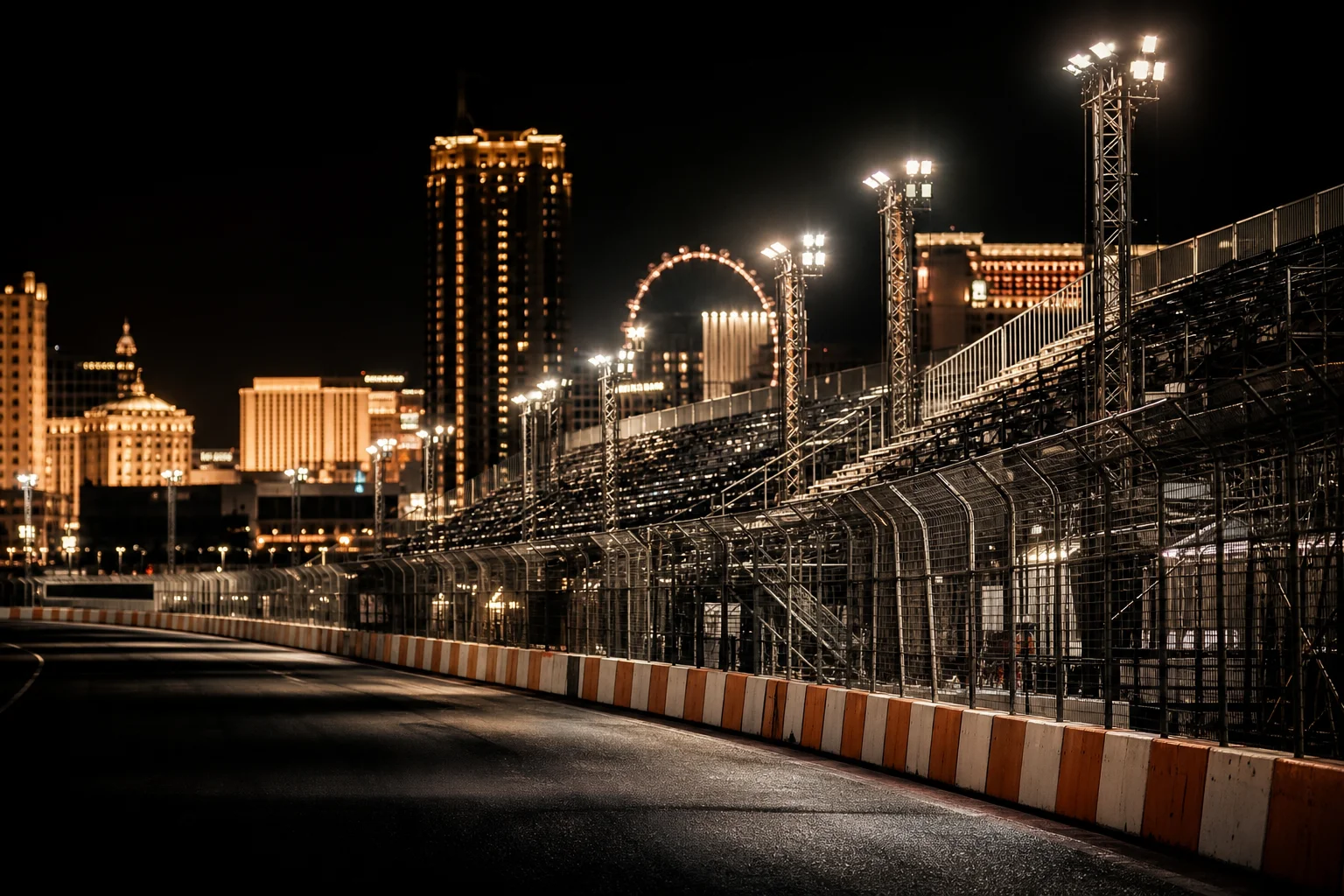
Grand Prix week reshapes the Strip in ways no other Las Vegas event does. For roughly a month, contractors erect miles of catch-fencing and multi-story temporary grandstands over sidewalks, parking areas, and portions of Las Vegas Boulevard, while Koval Lane, Harmon Avenue, and other cross-streets close or reroute for days at a time. Heavy crowds funneled through narrow credential checkpoints, tourists and rideshare drivers navigating unfamiliar detours, and trackside bars serving alcohol late into race night combine to produce a genuinely different injury profile than an ordinary Strip visit. Most Las Vegas Grand Prix accident claims trace back to one of three failures: improperly engineered or inspected temporary infrastructure, poorly managed crowds and alcohol service, or road closures and detours that were not made safe for drivers and pedestrians.
Who Can Be Held Liable for a Las Vegas Grand Prix Accident
Identifying every responsible party is often the hardest part of a Grand Prix injury claim, because race week involves far more overlapping contractors and operators than a typical premises liability case:
- The race promoter and venue operator: The entity that organizes the Grand Prix owes a duty of care to ticketholders and, in public areas, to pedestrians and spectators generally, under Nevada premises liability law (NRS 41.130).
- Grandstand and infrastructure contractors: The companies that engineer, build, and inspect temporary grandstands, catch-fencing, and viewing platforms are liable when a structural failure, such as a collapsed rail or a buckled stair, causes injury.
- Private security and crowd-control firms: Security contractors hired to manage checkpoints and hospitality areas owe attendees a duty to prevent foreseeable crowd-crush situations and to avoid excessive force.
- Trackside bars and hospitality suites: Venues that over-serve visibly intoxicated guests can face liability when an overserved patron causes an assault, a fall, or a collision after leaving the event.
- Rideshare, taxi, and limousine drivers: A driver who causes a collision while navigating an unfamiliar detour or a congested pickup zone is liable under ordinary Nevada negligence law.
- Government entities responsible for road closures: The Nevada Department of Transportation, Clark County, and the City of Las Vegas coordinate closure signage and barricades. Inadequate signage causing a crash can support a claim against the responsible public entity, subject to Nevada's sovereign immunity notice rules.
Common Injuries From Grand Prix Accidents in Las Vegas
The injuries we see from Grand Prix week accidents range widely depending on where and how they occur:
- Grandstand and platform falls: Fractures, spinal injuries, and traumatic brain injuries from collapsed railings or unstable stairs.
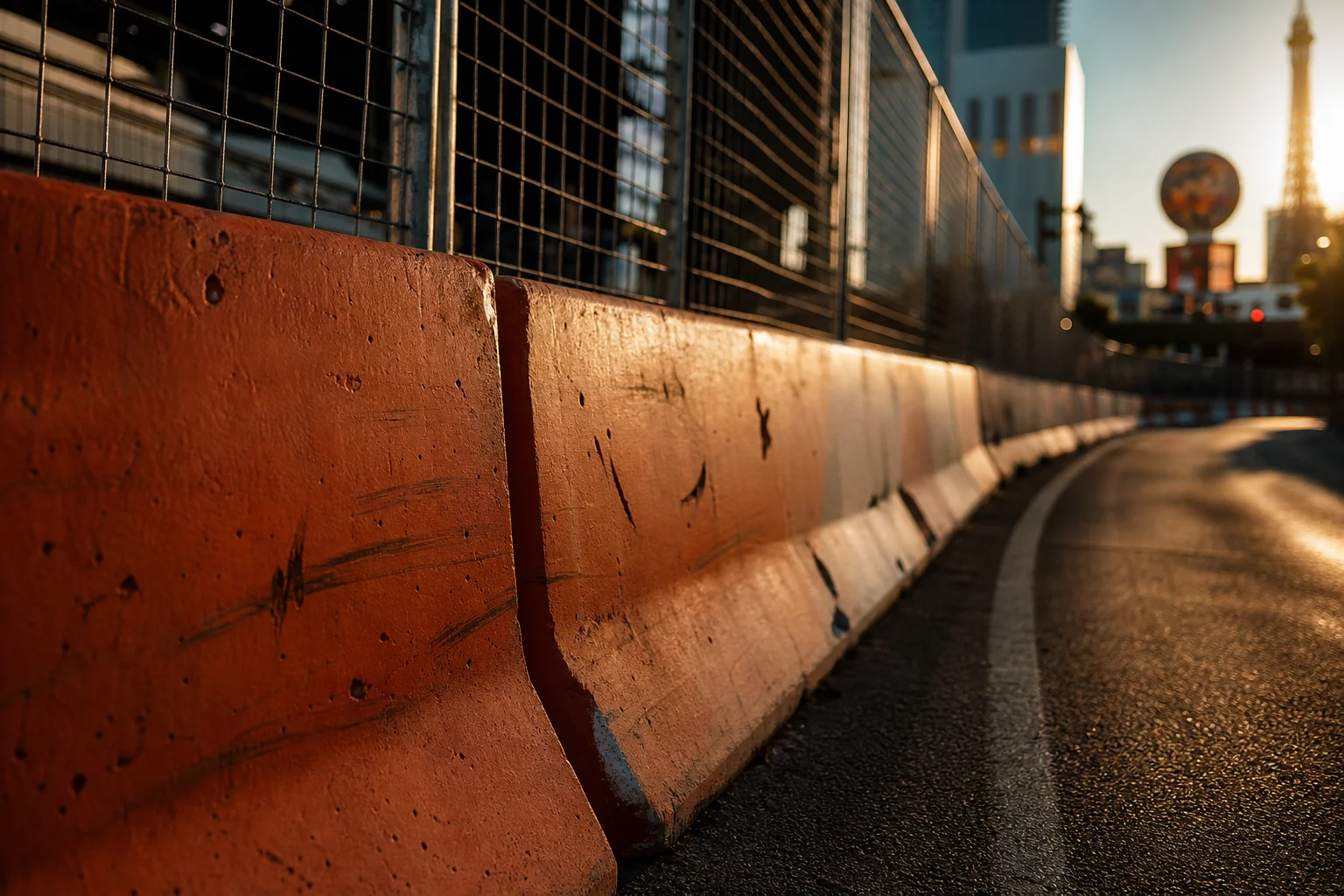
- Barrier and catch-fence failures: Lacerations, crush injuries, and blunt-force trauma when temporary fencing is improperly anchored or damaged.
- Crowd-crush injuries at checkpoints: Compression injuries and fractured ribs where credential checks or narrow walkways create bottlenecks.
- Pedestrian and vehicle collisions near closures: Serious injuries caused by confusing detours or drivers unfamiliar with rerouted intersections.
- Rideshare pickup and drop-off zone collisions: Crowded, poorly lit temporary pickup zones create a foreseeable risk of vehicle-pedestrian accidents.
- Slip and fall injuries at trackside venues: Spilled drinks and uneven temporary flooring at hospitality suites and viewing lounges.
- Assault and negligent security claims: Overserved guests and understaffed security can lead to negligent security claims against the venue.
Nevada Legal Theories That Apply to Grand Prix Accident Claims
Premises Liability (NRS 41.130): Venue operators and grandstand owners must maintain reasonably safe conditions and warn of hazards that are not open and obvious. As a ticketholder, you are generally an invitee, triggering the highest duty of care Nevada law recognizes. General Negligence: Contractors, security firms, and traffic-control personnel each owe a duty of reasonable care in planning and executing their piece of race week; negligent scheduling, inadequate signage, and deficient emergency planning can each constitute a breach.
Comparative Negligence (NRS 41.141): Nevada follows a modified comparative negligence system. You can recover compensation as long as your own fault does not exceed 50 percent, though your damages are reduced by your percentage of fault. Government Claims and Sovereign Immunity (NRS 41.036): Nevada waives sovereign immunity for negligent government employees acting within the scope of their duties, but claims against NDOT, Clark County, or the City of Las Vegas require strict, short notice-of-claim deadlines and cap available damages.
What About Grand Prix Ticket Waivers and Liability Releases?
Grand Prix tickets, paddock club credentials, and hospitality-suite agreements frequently include liability waivers or "assumption of risk" language. Many attendees assume signing these documents forfeits their right to sue. In Nevada, that assumption is wrong.
Nevada courts generally enforce liability waivers only when they are clear, unambiguous, and conspicuous — and even a valid waiver cannot release a party from liability for gross negligence, willful misconduct, or intentional acts. A waiver buried in fine print on the back of a credential, or in a lengthy online agreement no reasonable attendee would read in full, may be unenforceable. Waivers that attempt to excuse violations of fire codes, building codes, or structural safety standards are typically void as against public policy. Do not assume a waiver bars your Grand Prix accident claim — have it reviewed before you accept that conclusion.
Damages You Can Recover After a Grand Prix Accident
If you were injured during Las Vegas Grand Prix week because of another party's negligence, Nevada law may entitle you to recover:
- Medical expenses: Emergency treatment, hospitalization, surgery, and future medical care related to your injury.
- Lost wages and earning capacity: Income lost during recovery and any long-term reduction in your ability to earn.
- Pain and suffering: Compensation for physical pain, emotional distress, and diminished quality of life.
- Scarring and disfigurement: Additional compensation for visible injuries from lacerations or crush injuries.
- Wrongful death damages: If a loved one was killed in a grandstand collapse or road-closure collision, survivors may recover funeral expenses, lost financial support, and loss of companionship under NRS 41.085.
- Get medical attention immediately, even if the injury feels minor — race-week medical tents document injuries, but a full ER or urgent care evaluation still matters.
- Report the incident to venue staff or security and request a written report with a report number.
- Photograph the hazard, your injuries, and the surrounding area before it is repaired or removed.
- Collect contact information from witnesses — fellow spectators are often the only ones who saw a barrier fail or a sign go missing.
- Keep your ticket, credential, and any confirmation emails as proof of your status on the property.
- Do not sign anything from venue staff or an adjuster before speaking with an attorney.
- Contact a Las Vegas personal injury attorney promptly — race-week footage and temporary structures disappear within days.
Statute of Limitations for Grand Prix Accident Claims in Nevada
Under NRS 11.190, you generally have two years from the date of your injury to file a personal injury lawsuit in Nevada. If a government entity is involved, for example a claim tied to NDOT signage or a Clark County-managed closure, you may be required to file a formal notice of claim within a much shorter window, sometimes just months, under NRS 41.036. Missing either deadline can permanently bar your claim, so do not wait to get legal advice.
- Can I file a claim if I was hurt outside the racetrack itself? Yes. Many Las Vegas Grand Prix accident claims involve pedestrians and drivers injured near road closures rather than inside the venue.
- Does my Grand Prix ticket waiver stop me from suing? Not automatically. Nevada courts will not enforce a waiver against gross negligence or code violations, and many waivers fail if they are not clear and conspicuous.
- What if a government road closure caused my accident? You may still have a claim against NDOT, Clark County, or the City of Las Vegas, but you must generally file a notice of claim within a short statutory window, far shorter than the standard two-year deadline.
- What if I was partly at fault for my own accident? Under Nevada's comparative negligence rule, you can still recover as long as your fault does not exceed 50 percent; your damages are reduced by your share of fault.
- How long do I have to file a Grand Prix injury claim? Generally two years from the date of injury under NRS 11.190, though government-entity claims require much faster action.
Speak With a Las Vegas Grand Prix Accident Attorney
Thomas Boley has represented injury victims throughout Clark County for more than 18 years, including spectators, pedestrians, and drivers hurt during major Strip events. Race-week cases move fast, since structures come down and footage gets overwritten, which makes early investigation critical to a successful Las Vegas Grand Prix accident claim.
Call (702) 435-3333 for a free consultation, or contact Thomas Boley online to discuss a Grand Prix accident in Las Vegas, Henderson, Summerlin, North Las Vegas, or elsewhere in Clark County. Our full personal injury practice, including our pedestrian accident team, handles Strip event injuries of every kind, and our guides to concert and festival injuries and comparative negligence in Nevada cover closely related issues. This article is informational only and is not legal advice. Every case is unique.
About the Author
Thomas Boley is a Nevada licensed attorney specializing in personal injury law and criminal defense. Since 2008, Thomas has represented thousands of clients in Las Vegas and Clark County, recovering millions of dollars in compensation for injury victims. He is a member of the State Bar of Nevada, the Clark County Bar Association, and the Nevada Justice Association.
Need Legal Help? Contact Thomas Boley for a free consultation: (702) 435-3333