Injured by Casino or Bar Security in Las Vegas? Your Rights After Excessive Force
In This Article
Security guards and bouncers in Las Vegas casinos, bars, and nightclubs are hired to de-escalate conflict and keep patrons safe — not to put guests in chokeholds, slam them face-first onto concrete, or continue a beating in a back hallway long after any threat has passed. Yet every year, patrons across Clark County suffer broken bones, traumatic brain injuries, and lasting psychological harm at the hands of the very people paid to protect them. If that happened to you, Nevada law gives you the right to hold the guard, the security company, and the venue itself financially accountable. At Thomas Boley Attorney At Law, we have taken these cases through trial and judgment — including a $2,001,780 judgment and a $495,000 jury verdict in security guard assault and battery cases. Call (702) 435-3333 for a free consultation.
- Security guards and bouncers may use only reasonable force — anything beyond what the situation requires is civil battery, and often a crime.
- The casino or bar is usually liable for its guards' conduct under respondeat superior and for negligent hiring, training, or supervision.
- Casinos overwrite surveillance footage within days — a preservation (spoliation) letter must go out immediately.
- Punitive damages are available for intentional misconduct under NRS 42.005.
- You generally have two years to file under NRS 11.190 — but the evidence window is far shorter.
When Does Force by Security Become Unlawful in Nevada?
Free case review
Injured or Facing Charges in Las Vegas?
Thomas Boley offers free consultations — no fees unless we win your case.
Private security guards and bouncers are not police officers, and Nevada law gives them no special immunity. Legally, they stand in the same shoes as any other private citizen: they may use reasonable force — force proportional to an actual threat — to eject a disruptive patron, break up a fight, defend themselves or others, or briefly detain a suspected thief. The moment force exceeds what is reasonably necessary, it becomes battery. Striking someone who is already restrained, applying a chokehold to a patron who is not resisting, tackling a guest who is voluntarily walking toward the exit, or continuing to punch and kick after the person is on the ground are all classic examples of excessive force that Nevada juries routinely punish.
Detention has limits too. Under NRS 171.1235, a merchant or its agent may detain a person suspected of theft — but only in a reasonable manner and for a reasonable length of time, essentially long enough for police to arrive. Dragging a guest to a windowless back room for hours, handcuffing someone to a fixture, confiscating a phone so the detention cannot be recorded, or using pain to extract a 'confession' all blow past that privilege. When the detention itself becomes abusive, claims for false imprisonment and battery follow.
Excessive Force vs. Negligent Security: Two Different Claims
These two case types are frequently confused, and the distinction matters. A negligent security claim says the venue failed to protect you from someone else — a third-party attacker assaulted you because the property had too few guards, broken cameras, or dark parking areas. We cover that claim in depth in our guide to negligent security claims in Las Vegas. An excessive force claim is the mirror image: the security staff itself is the attacker. Instead of arguing the venue did too little, you are proving its own people did far too much. That changes the legal theory — the core claims are intentional torts (assault, battery, false imprisonment) layered with negligence claims against the employer — and it changes the stakes, because intentional misconduct opens the door to punitive damages. Some cases involve both theories at once, such as when an undertrained guard escalates a minor dispute into a brawl that injures bystanders.
Who Is Liable When a Casino Guard or Bouncer Injures You?
One of the most important strategic questions in these cases is identifying every responsible party and every available insurance policy. Depending on the facts, liability can reach:
- The guard or bouncer personally: The individual who committed the battery is always a proper defendant, though rarely the deepest pocket.
- The security contractor: Many Strip properties and nightclubs outsource security to third-party companies, which are liable for their employees' on-duty conduct and carry commercial liability insurance.
- The casino, bar, or nightclub itself: Under respondeat superior, an employer is responsible for torts its employees commit within the scope of employment — and ejecting, restraining, or detaining patrons is exactly what guards are employed to do.
- Negligent hiring, training, supervision, or retention: If the venue hired a guard with a violent history, skipped use-of-force training, ignored prior complaints, or kept a known problem employee on the floor, the venue faces direct liability for its own negligence.
Venues and their insurers fight hard to shift blame between the property and the security contractor, hoping the victim gets lost in the finger-pointing. An experienced Las Vegas casino security assault lawyer names every viable defendant from the start so no one escapes through the gaps.
NRS 651.015 and NRS 648: The Statutes That Frame These Cases
Two Nevada statutes come up constantly in security misconduct litigation. First, NRS 651.015 — Nevada's innkeeper statute — defines when hotels and casinos are civilly liable for injuries on their property. Casinos lean on it to limit liability for third-party crimes, but it offers no shelter when the attacker is the casino's own staff or its hired security contractor. Second, Chapter NRS 648 requires private patrol officers and security companies to be licensed and regulated in Nevada. When a venue puts an unlicensed, unregistered, or untrained guard on the floor — something we see more often than you would expect — that regulatory failure becomes powerful evidence of negligence in hiring and supervision, and it undermines the defense's claim that the guard acted professionally.
Surveillance Footage Disappears in Days — Move Fast
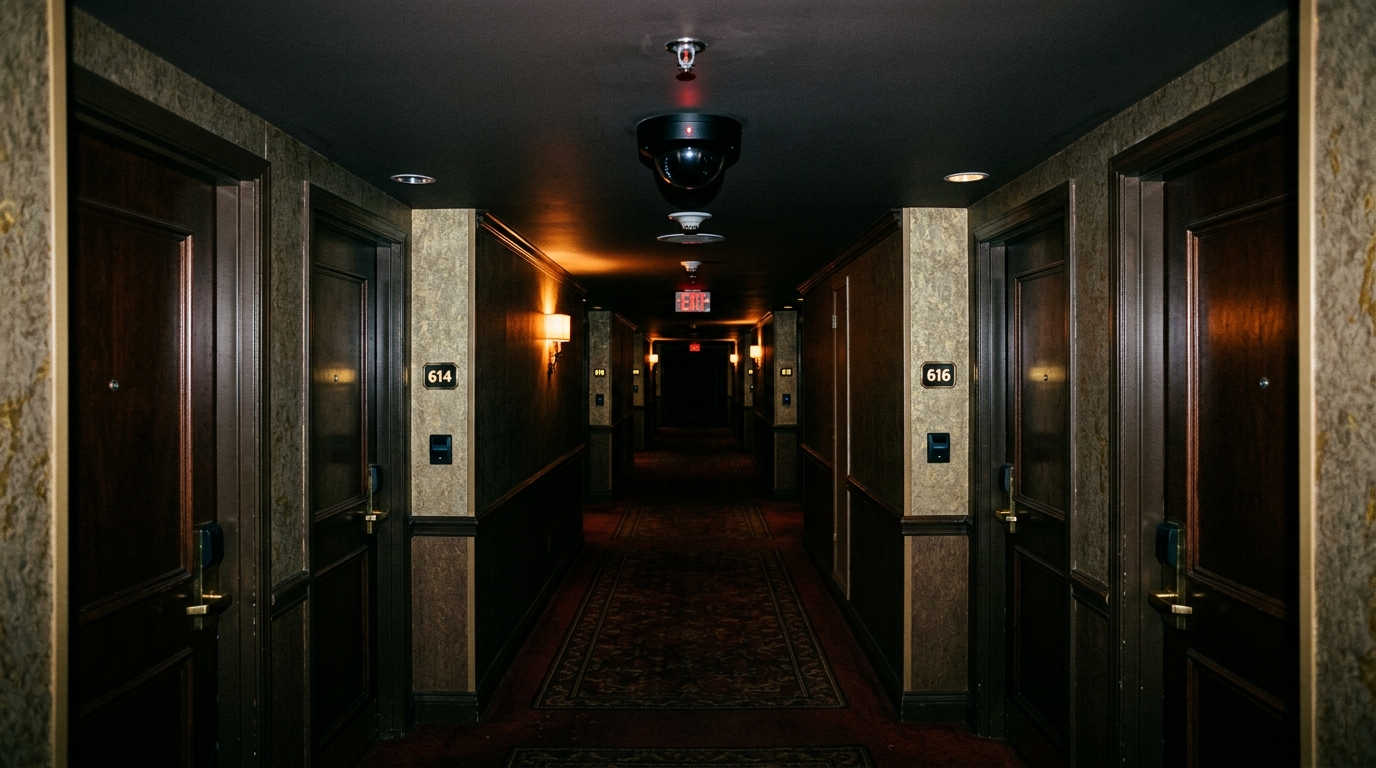
Las Vegas casinos are among the most heavily surveilled buildings on earth. Somewhere, there is almost certainly video of what security did to you — from overhead cameras, body cameras, or bystander phones. The problem is retention: most properties overwrite surveillance footage on a rolling cycle, sometimes within 72 hours and rarely longer than 30 days. The single most important step your attorney takes is sending a spoliation letter — a formal evidence-preservation demand — to the venue and its security contractor immediately. Once that letter is received, destroying the footage exposes the defense to court sanctions and an adverse-inference instruction telling the jury to assume the video showed exactly what the venue feared it showed. Incident reports, guard schedules, use-of-force logs, dispatch recordings, and the guard's personnel and training file should all be locked down in the same demand.
Do not assume the venue's footage is the only footage. Bystander phone video, a friend's recording, ride-share dashcams outside the entrance, and neighboring businesses' exterior cameras have all turned cases for our clients. If anyone recorded any part of the incident, get a copy that night and back it up in more than one place. Video transforms these cases — it converts a swearing match between a patron and three uniformed guards into objective proof of exactly how much force was used and when it should have stopped.
What to Do in the First 48 Hours
- Get medical care immediately. Head strikes, chokeholds, and takedowns cause injuries — concussions, internal bleeding — that are not always obvious at the scene. Medical records also anchor your timeline.
- Photograph everything. Bruising, cuts, torn clothing, handcuff marks. Re-photograph bruises daily as they develop.
- Identify witnesses. Names and cell numbers of anyone who saw the incident — tourists scatter and are hard to find later.
- File a police report. Excessive force is a crime as well as a tort. A contemporaneous report locks in the date, location, and your account.
- Say nothing to risk management. Do not give a recorded statement, sign any document, or accept comped rooms or chips in exchange for a release.
- Write down your own account while details are fresh — what was said, who did what, how long it lasted.
- Call a lawyer the same day. The preservation letter has to beat the overwrite cycle. Send us the details through our contact form or call (702) 435-3333 — the consultation is free.
Damages — Including Punitive Damages for Intentional Misconduct
Victims of excessive force by security can recover all medical expenses (past and future), lost wages and diminished earning capacity, pain and suffering (Nevada places no cap on non-economic damages in these cases), emotional distress — including PTSD, anxiety, and humiliation, which are very real after a public beating — and disfigurement or scarring. Because battery is an intentional tort, punitive damages under NRS 42.005 are also on the table where the conduct involved malice or oppression: a guard who beats a restrained patron, or a venue that kept him on staff despite prior complaints, fits that description. These are not theoretical numbers. Our firm obtained a $2,001,780 judgment in one security guard assault and battery case and a $495,000 jury verdict in another — both published on our case results pages.
"I Was Drinking" Does Not License a Beating: Comparative Fault Under NRS 41.141
The defense playbook in these cases is predictable: the patron was drunk, belligerent, and brought it on himself. Nevada law does not work that way. Under the modified comparative fault rule in NRS 41.141, you can recover as long as your share of fault does not exceed 50%, with your award reduced by your percentage. More fundamentally, comparative fault never authorizes disproportionate force — even a patron who threw the first shove is not fair game for a beating that continues after he is subdued. And venues that profit from selling alcohol all night must anticipate intoxicated patrons and train staff to handle them without violence; that is the business they chose. For a broader look at how casinos answer for guest injuries of all kinds, see our guide to casino accident injuries in Las Vegas.
The Two-Year Deadline Under NRS 11.190
Nevada's statute of limitations for assault, battery, and personal injury claims is two years from the date of the incident under NRS 11.190. Miss it and the claim is gone, no matter how strong the evidence. In practice, the real deadline is much shorter: footage gets overwritten, guards quit and leave the state, and witnesses become unreachable within weeks. We handle every security assault case on a contingency fee — you pay nothing unless we recover — and we serve Las Vegas, Henderson, Summerlin, North Las Vegas, Boulder City, and all of Clark County. Call (702) 435-3333 any time, 24/7.
For more information, visit our Las Vegas personal injury attorney page | schedule a free consultation.
About the Author
Thomas Boley is a Nevada licensed attorney specializing in personal injury law and criminal defense. Since 2008, Thomas has represented thousands of clients in Las Vegas and Clark County, recovering millions of dollars in compensation for injury victims. He is a member of the State Bar of Nevada, the Clark County Bar Association, and the Nevada Justice Association.
Need Legal Help? Contact Thomas Boley for a free consultation: (702) 435-3333