
How to File a Car Accident Claim in Nevada
In This Article
To file a car accident claim in Nevada, you notify the insurer whose policy may cover your loss and give it the facts, bills and records that prove your loss. That is usually the at-fault driver's insurer for injuries and damage they caused, or your own insurer for coverage you bought. A Las Vegas car accident lawyer can help you choose the right route. Most injury lawsuits must be filed within two years.
Key takeaways
- Which company you file with depends on the coverage: the at-fault driver's liability policy, or your own uninsured/underinsured motorist, medical payments or collision coverage.
- Nevada's claims regulations set response deadlines for insurers, such as acknowledging a claim within 20 working days (NAC 686A.665).
- Opening an insurance claim does not stop the lawsuit clock. Most injury lawsuits must be filed within two years, and property damage suits within three (NRS 11.190).
- A signed release usually ends your claim, so be careful with early offers while you are still treating.
- Nevada law bars an insurer from advising a claimant not to seek legal counsel (NRS 686A.310).
Free case review
Injured or Facing Charges in Las Vegas?
Thomas Boley offers free consultations — no fees unless we win your case.
Which insurance company do you file a car accident claim with?
You file with the insurer whose policy covers the loss you are claiming. In Nevada that can mean more than one claim from the same crash, each with a different company and different rules.
Swipe or scroll horizontally to read all columns. →
| Claim | Who you file with | What it can cover | Where the rule comes from |
|---|---|---|---|
| Injury claim against the at-fault driver | The at-fault driver's insurer (third-party claim) | Your injuries, up to the policy's bodily injury limits; minimums are $25,000 per person and $50,000 per crash | NRS 485.185 |
| Vehicle and property damage claim against the at-fault driver | The at-fault driver's insurer (third-party claim) | Your repairs or vehicle value, up to the property damage limit; the minimum is $20,000 | NRS 485.185 |
| Uninsured/underinsured motorist or medical payments claim | Your own insurer (first-party claim) | Losses above the other driver's limits, or medical bills, only if you bought the coverage | NRS 687B.145 |
| Collision claim | Your own insurer (first-party claim) | Repairs to your car under your own policy, less your deductible | Your policy terms |
The minimum limits are only the legal floor. If the other driver carried more, more may be available. Our guides to bodily injury liability coverage in Nevada and uninsured and underinsured motorist claims explain how those limits work.
What should you do before you file the claim?
Before you file, get medical care, collect the crash records, and tell your own insurer about the accident. Read your policy’s notice and cooperation terms to find out what it requires and when.
Gather these items so that the claim starts with facts rather than guesses:
- the police report number, if officers came to the scene
- the other driver's name, insurer and policy number
- photos of the vehicles, the scene and your injuries
- your medical records and bills as they come in
- repair estimates or your repair invoice
- proof of lost income, such as pay stubs or a letter from your employer
Our step-by-step guide on what to do after a car accident in Las Vegas covers the first hours at the scene in more detail.
How do you file a car accident claim in Nevada with the other driver's insurer?
You open the claim by contacting the other driver's insurer, giving the date, place and basic facts of the crash, and getting a claim number and the name of the adjuster. Keep what you say to facts you know, and keep copies of everything you send.
A few habits help:
- Put important requests in writing so there is a dated record, and send documents with a cover note that lists what is attached.
- Do not guess about injuries, fault or how you feel. Early injuries can turn out to be worse than they seemed.
- Note every call: the date, the person you spoke with and what they said.
You are allowed to ask for legal advice at any point. Under NRS 686A.310(1)(o), advising an insured or a claimant not to seek legal counsel is an unfair practice in settling claims.
How long does an insurer have to respond to a claim in Nevada?
Nevada's claims regulations set response periods for insurers, rather than one deadline for settling every claim. The key times come from the Nevada Administrative Code, chapter 686A:
Swipe or scroll horizontally to read all columns. →
| Step | Time set by the regulation | Rule |
|---|---|---|
| Acknowledge a claim notice | Within 20 working days, unless the claim is paid sooner | NAC 686A.665(1) |
| Reply to a pertinent communication from a claimant | Within 20 working days, if it reasonably suggests a response is expected | NAC 686A.665(3) |
| Begin an investigation and send a list of items, statements and forms needed | Within 20 working days of notice of the claim | NAC 686A.670(1) |
| Finish the investigation | Within 30 days of notice, unless it cannot reasonably be completed in that time | NAC 686A.670(2) |
| Accept or deny a first-party claim | Within 30 working days after receiving properly completed proofs of loss, or explain in writing why more time is needed | NAC 686A.675(1), (3) |
| Pay an accepted first-party claim | Within 30 days after it is accepted, with interest if it is late | NAC 686A.675(1) |
The last two rows apply specifically to first-party claims under your own policy. The acknowledgment, communication and investigation rules use broader claimant language (NAC 686A.620, 686A.665 and 686A.670). If more investigation time is needed on a first-party claim, NAC 686A.675(3) also requires a further explanation every 30 days. NRS 686A.310(1) also lists unfair claim practices that apply more broadly, such as failing to act reasonably promptly on communications about a claim. Its damages remedy in subsection 2 runs to the insurer's own insured, so if you are claiming against someone else's policy, ask a lawyer which remedies apply to you.
A late reply does not pause your lawsuit deadline. Keep the date of every contact so that you can show a pattern if delays continue.
What happens with vehicle damage and a total loss?

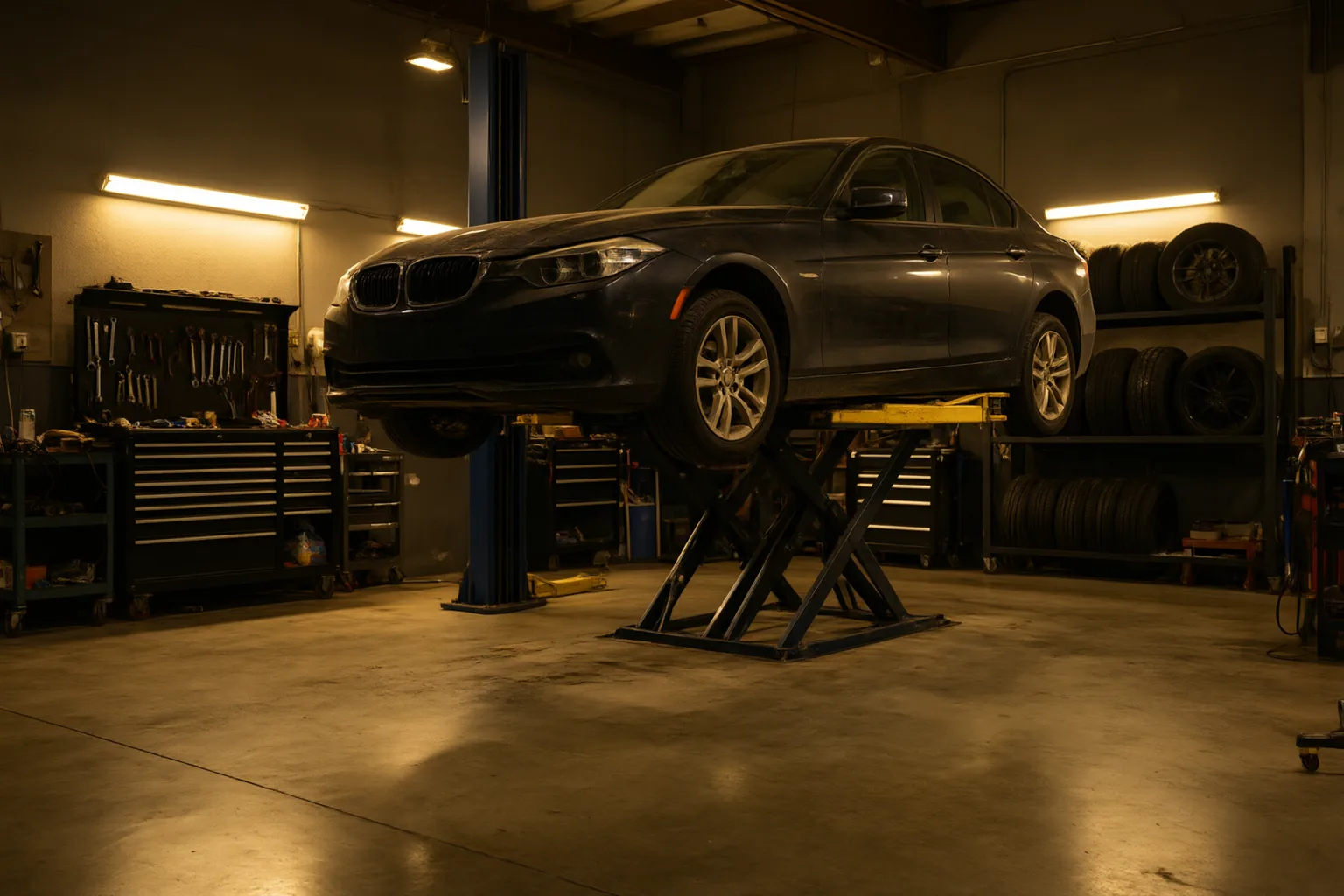
AI illustrations; not a real case or location.
If your car is repaired, you generally get an estimate and a repair. If it is a total loss, Nevada's regulation lets the insurer either offer a comparable replacement vehicle or pay a cash settlement based on what it costs to buy a comparable car, including applicable taxes and transfer fees, less any deductible under the policy (NAC 686A.680(1)).
Other parts of NAC 686A.680 are useful if you are negotiating:
- The cash value must come from one of the valuation methods in the regulation, such as the average of two or more comparable cars in your local market (NAC 686A.680(1)(b)).
- Deductions for salvage, betterment or depreciation must be itemized, specified by amount and explained to you in writing (NAC 686A.680(2), (7)).
- An insurer may not require you to travel unreasonably to inspect a replacement car, get an estimate or have repairs done at a specific shop (NAC 686A.680(4)).
- Where liability and damages are reasonably clear, an insurer may not recommend that you claim under your own policy solely to avoid paying under its policy (NAC 686A.680(3)).
Vehicle damage and injuries are different losses, but a release may affect more than one claim. Check exactly which claims it releases before signing; NAC 686A.660(5)–(6) restricts certain overbroad releases and partial-payment checks.
Should you accept the first settlement offer?
Understand the losses and the scope of any release before deciding. Ask a lawyer how signing would affect your remaining claims, future medical expenses and other available coverage.
Before you sign, think through these questions:
- Have you finished treatment, or at least learned what future care your doctors expect?
- Do the offer and the release cover only the claim you meant to settle?
- Is the offer at or near the at-fault driver's policy limit? If so, other coverage may matter, including your own underinsured motorist coverage.
Nevada's regulations add one protection if you are negotiating on your own. An insurer may not delay settlement talks with an unrepresented claimant until a limitations deadline is close, unless it gives the claimant written notice 60 days before the date a time limit may expire (NAC 686A.675(5)). NRS 686A.310(1)(p) also lists misleading a claimant about the statute of limitations as an unfair practice. You should still track the deadline yourself.
What is the deadline to file a car accident lawsuit in Nevada?
Most lawsuits for injury must be filed within two years under NRS 11.190(4)(e), and a suit over damaged property must be filed within three years under NRS 11.190(3)(c). Exceptions and other deadlines can apply, so have a Nevada lawyer check the dates and facts of your case.
The insurance claim and the lawsuit are two separate tracks. A claim that is still open, or an adjuster who is still "reviewing," does not extend the time to file. For the full picture, read our guide to the Nevada statute of limitations for personal injury.
Fault also affects the claim: under NRS 41.141, your award is reduced by your percentage of fault, and you cannot recover if your share is greater than the combined negligence of the defendants against whom you seek recovery.
Help with a car accident claim in Las Vegas, Henderson and North Las Vegas
Thomas Boley Attorney At Law handles injury claims for people across Las Vegas, Henderson, North Las Vegas and Clark County. If an adjuster is asking for a recorded statement, a medical release or a quick signature, a short conversation with a lawyer first can help you see what you are agreeing to.
The firm offers a free consultation. To talk about your claim, request a free consultation or call (702) 435-3333.
Frequently asked questions
Do I have to report a car accident to my own insurance company?
Check your policy’s notice and cooperation terms to find out what you must report and when, even if the other driver was at fault. Reporting to your insurer is separate from filing a claim against the other driver's insurer.
Can I file a claim if I was partly at fault?
Yes, in many cases. Under NRS 41.141, you can recover if your fault is not greater than the combined negligence of the defendants against whom you seek recovery, and your recovery is reduced by your percentage of fault. If your fault is greater, you cannot recover.
Can an insurance company tell me not to hire a lawyer?
No. NRS 686A.310(1)(o) lists advising an insured or a claimant not to seek legal counsel as an unfair practice in settling claims. You can talk with a lawyer before you give statements or sign anything.
This article provides general information about Nevada law and is not legal advice. Reading it does not create an attorney-client relationship. Insurance policies and laws change, and every claim depends on its facts, so speak with a licensed Nevada attorney about your situation.
Sources
- NAC 686A.600–.650, scope and claimant definitions
- NAC 686A.660, policy disclosures and releases
- NRS 686A.310, unfair practices in settling claims; liability of insurer for damages
- NAC 686A.665, insurer to acknowledge receipt of claim notice
- NAC 686A.670, investigation of claims
- NAC 686A.675, standards applicable to all insurers
- NAC 686A.680, standards applicable to insurers under automobile policies
- NRS 485.185, minimum liability coverage
- NRS 687B.145, uninsured/underinsured motorist and medical payments coverage
- NRS 41.141, comparative negligence
- NRS 11.190, limitation of actions
About the Author
Thomas Boley is a Nevada licensed attorney specializing in personal injury law and criminal defense. Since 2008, Thomas has represented thousands of clients in Las Vegas and Clark County, recovering millions of dollars in compensation for injury victims. He is a member of the State Bar of Nevada, the Clark County Bar Association, and the Nevada Justice Association.
Need Legal Help? Contact Thomas Boley for a free consultation: (702) 435-3333