
BUI Charges on Lake Mead: What Nevada Boaters Should Know
In This Article
Lake Mead draws boaters from across the Las Vegas Valley every weekend, from Boulder City marinas to the coves near Callville Bay, and law enforcement treats the water much like the Strip after midnight. BUI charges on Lake Mead are not rare, especially on holiday weekends when rangers and marine patrol units run visible, saturation-style enforcement. At Thomas Boley Attorney At Law, we defend boaters accused of operating a vessel under the influence, and this guide explains how Nevada's boating-under-the-influence law works, what separates a misdemeanor from a felony, and what to do if you are stopped or arrested on the water.
- Nevada's boating under the influence law, NRS 488.400 through NRS 488.410, makes it unlawful to operate a vessel with a blood or breath alcohol concentration of 0.08 or higher, or while under the influence.
- A first BUI conviction is a misdemeanor carrying up to six months in jail and a fine of up to $1,000, separate from any case tied to a motor vehicle.
- A BUI becomes a felony under NRS 488.420 when the operation causes death or substantial bodily harm, or under NRS 488.427 with a prior felony BUI conviction.
- Lake Mead National Recreation Area is federal land patrolled by National Park Service rangers, so a BUI arrest there can involve federal citations alongside Nevada state charges.
- Field sobriety evidence gathered on a moving or anchored boat is often weaker than evidence gathered on dry land, which can open real defense opportunities.
- A charge is an accusation, not a conviction, and the prosecution carries the burden of proof.
BUI Charges on Lake Mead: How Nevada Defines Boating Under the Influence
Free case review
Injured or Facing Charges in Las Vegas?
Thomas Boley offers free consultations — no fees unless we win your case.
Nevada regulates impaired boating through NRS Chapter 488, the state's watercraft code, rather than the vehicle DUI statute most people already know. NRS 488.400 makes it unlawful to operate a vessel, or to manipulate water skis or a surfboard, while under the influence of intoxicating liquor or a controlled substance, or while that substance has impaired safe operation. NRS 488.405 sets the per se threshold at a blood or breath alcohol concentration of 0.08 or more, the same number used in Nevada's vehicle DUI law, and NRS 488.410 sets the criminal penalty for a basic violation. The statute reaches more than powerboats: personal watercraft, houseboats, and a water-skier towed behind a boat can all fall within it. Because Lake Mead sits inside a national recreation area, more than one agency can issue a citation, and most BUI stops look like the vehicle version — erratic steering, excessive wake near a no-wake zone, a near-collision, or the odor of alcohol during a safety check.
Who Patrols Lake Mead for BUI
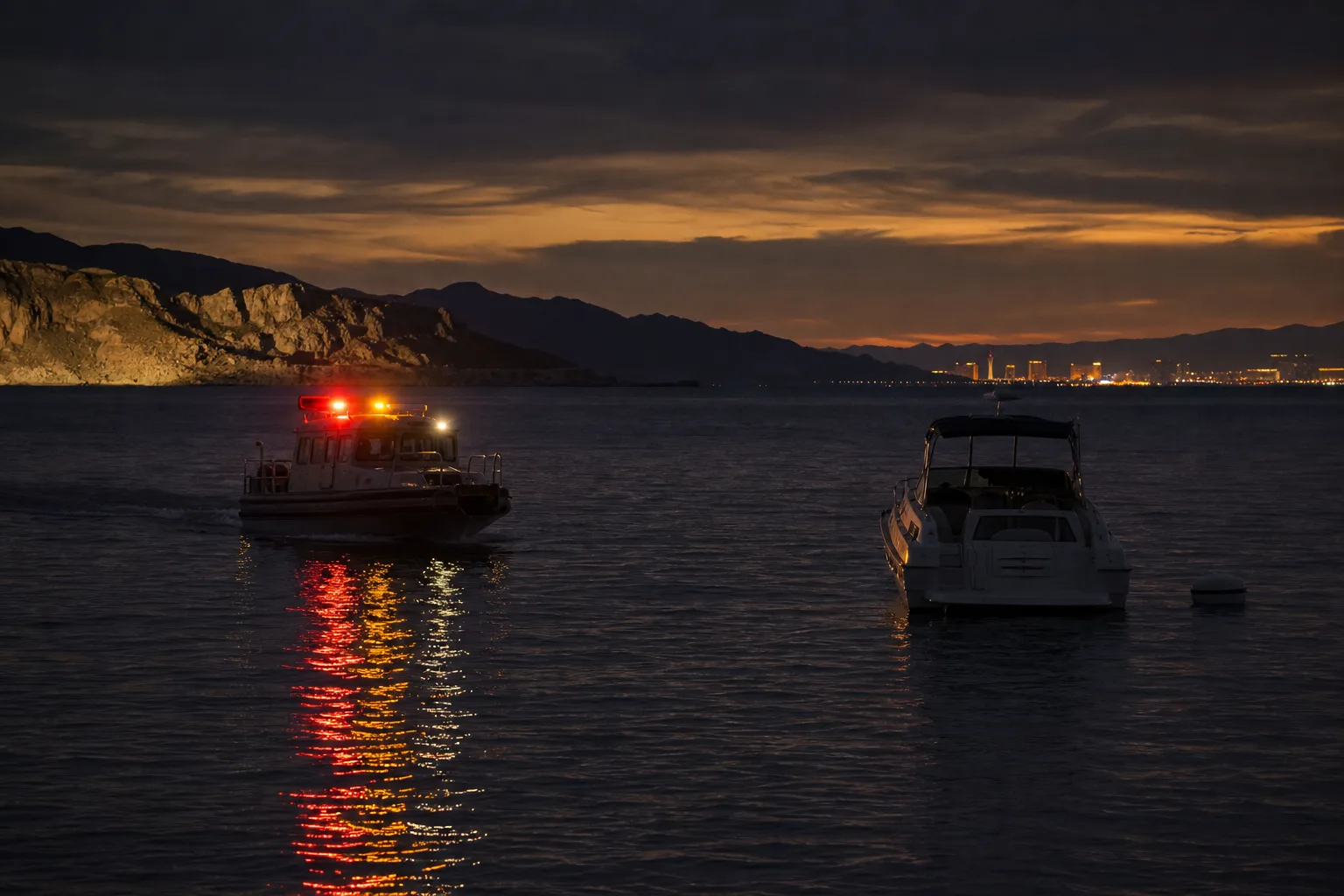
Lake Mead National Recreation Area is managed by the National Park Service, so NPS rangers are often the first officers a boater encounters. Nevada Department of Wildlife game wardens, Metro's marine patrol unit, and Boulder City Police also work the water, and enforcement coordinates across agencies. Patrols intensify on Memorial Day, the Fourth of July, Labor Day, and other high-traffic weekends, when the park service and partner agencies typically announce saturation patrols in advance. A stop usually starts as a routine safety or registration check — life jackets, fire extinguishers, navigation lights — and shifts into a BUI investigation once an officer develops independent suspicion of impairment. A Lake Mead stop can bring a Nevada state charge, a separate federal citation, or both, depending on which agency responded.
Penalties for a First BUI Conviction
A first-offense BUI under NRS 488.410 is a misdemeanor, carrying up to six months in jail and a fine of up to $1,000. Courts frequently also require a boating safety course, and probation can restrict operating a vessel while the case is pending. A misdemeanor BUI is separate from a vehicle DUI, so it does not automatically trigger the license consequences of a car or motorcycle DUI, though a related vehicle charge from the same incident is evaluated under its own statute. Our guide to a first-offense DUI in Nevada walks through the vehicle version of this analysis, useful context even though the statutes differ. A conviction still creates a criminal record, and an out-of-state boater should ask how it might be treated by their home state's licensing authority.
When Does a BUI Become a Felony
Nevada treats a BUI that hurts or kills someone far more seriously than a standard first offense. NRS 488.420 elevates the charge to a category B felony when operating the vessel causes death or substantial bodily harm, and the statute segregates the offender from the general jail population pending trial and limits plea bargaining to a lesser charge. NRS 488.427 separately makes a new BUI a category B felony, regardless of injury, when the defendant has a prior felony BUI conviction, and NRS 488.425 addresses the most severe scenario: a BUI-related death by someone with multiple prior qualifying convictions, punished similarly to vehicular homicide. Unlike Nevada's vehicle DUI law, which escalates a third offense within seven years to a felony on its own, the boating statute does not appear to include that same automatic step-up for repeat misdemeanors; felony BUI liability attaches to a death, substantial bodily harm, or a qualifying prior felony conviction, not simply a count of priors. Our article on felony DUI in Nevada when a DUI causes injury or death covers the closely related vehicle-side analysis.
How a BUI Charge Differs From a Standard DUI
A BUI and a vehicle DUI share the same basic idea — operating something while impaired — but they come from different statutes, agencies, and evidence. A traffic stop produces dashcam footage and a straight line of pavement for a walk-and-turn test. A boat stop happens on open water, where wake and a rocking deck can affect balance tests designed for dry land, and a breath or blood sample is sometimes collected well after the stop because testing equipment is not always available dockside. Lake Mead's federal jurisdiction adds another layer: a case can land in federal court rather than a Nevada municipal or justice court. Our related article on boating and watercraft accidents on Lake Mead looks at the civil liability side, which often runs alongside a criminal BUI case when a passenger was hurt.
Defenses to a Lake Mead BUI Charge
- Field sobriety tests designed for a flat, stationary surface are harder to validate on a rocking boat deck, and a poor performance may reflect the conditions rather than impairment.
- A breath testing device used dockside or on a patrol boat needs the same calibration and maintenance records a vehicle DUI case requires; gaps in that record can undercut the result.
- The basis for the stop matters: an officer generally needs a valid safety or equipment reason, or independent suspicion of impairment, before expanding a routine check into a BUI investigation.
- A delay between the stop and a blood draw can raise a rising-BAC argument, since blood alcohol can still be climbing after the last drink and may have been lower while the person was actually operating the vessel.
- Chain-of-custody questions for a blood sample transported from the water to a lab can matter as much here as in a vehicle DUI case.
- Jurisdiction can be contested when a stop happens near the boundary between state water and the federally managed recreation area, which can affect which court should hear the case.
What to Do If You're Stopped or Arrested on Lake Mead
- Comply with lawful instructions to stop and show safety equipment and identification, but keep your answers about where you were and what you had to drink brief.
- Note the time, your location on the lake, and which agency's boat responded; a photo of the patrol vessel's markings can help your attorney identify the correct agency later.
- Ask for the officer's name, badge number, and agency, and write down the citation or case number before you leave the dock.
- If you are offered field sobriety or breath testing, understand that refusing can carry its own consequences under Nevada's implied consent framework, so ask to speak with an attorney about the specific request if you are unsure.
- Avoid discussing the stop with other boaters at the marina or on social media; those comments can surface later as evidence.
- Contact a criminal defense attorney before your court date so the citation and any test results can be reviewed while the details are still fresh.
- Can I be charged with BUI on Lake Mead even though it's federal land? Yes. Lake Mead is federal land, but Nevada's boating laws and National Park Service regulations can both apply, so a boater can face a state citation, a federal citation, or both, depending on the agency that responded.
- Does a BUI affect my driver's license the same way a DUI does? Not automatically. A BUI is prosecuted under Nevada's watercraft statute rather than its vehicle DUI law, so it does not carry the same built-in license consequences, though a related incident involving a vehicle would be evaluated separately.
- What makes a BUI a felony in Nevada? A BUI becomes a category B felony under NRS 488.420 when it causes death or substantial bodily harm, and under NRS 488.427 with a prior felony BUI conviction, regardless of whether anyone was hurt this time.
- Are field sobriety tests reliable on a boat? Standardized field sobriety tests were designed for a flat, stable surface, so wake, wind, and a rocking deck can affect balance even for a sober person, which is a common challenge in a Lake Mead BUI defense.
- What should I do first if I'm arrested for BUI? Stay calm, avoid volunteering details beyond what is legally required, note the responding agency and circumstances, and speak with a criminal defense attorney before your first court date.
- Can a BUI charge be reduced or dismissed? It depends on the evidence. Issues with the stop, the testing equipment, chain of custody, or jurisdiction can support a reduction, a dismissal, or a negotiated resolution, but outcomes depend on the specific facts of the case.
Speak With a Las Vegas BUI Defense Attorney
Thomas Boley has represented clients throughout Clark County on criminal matters for more than 18 years, including boating under the influence cases on Lake Mead and other local waterways. Because a BUI case can involve more than one agency and, on federal water, more than one court system, early counsel helps make sure the citation and any test results are reviewed before your case moves forward. Call (702) 435-3333 for a free consultation, or contact Thomas Boley online to discuss a BUI arrest on Lake Mead or elsewhere in Clark County. Our DUI defense practice handles impaired-operation cases of every kind. This article is informational only and is not legal advice. Every case is unique.
About the Author
Thomas Boley is a Nevada licensed attorney specializing in personal injury law and criminal defense. Since 2008, Thomas has represented thousands of clients in Las Vegas and Clark County, recovering millions of dollars in compensation for injury victims. He is a member of the State Bar of Nevada, the Clark County Bar Association, and the Nevada Justice Association.
Need Legal Help? Contact Thomas Boley for a free consultation: (702) 435-3333