Boating and Watercraft Accidents on Lake Mead: Injuries, Liability, and Your Legal Rights
In This Article
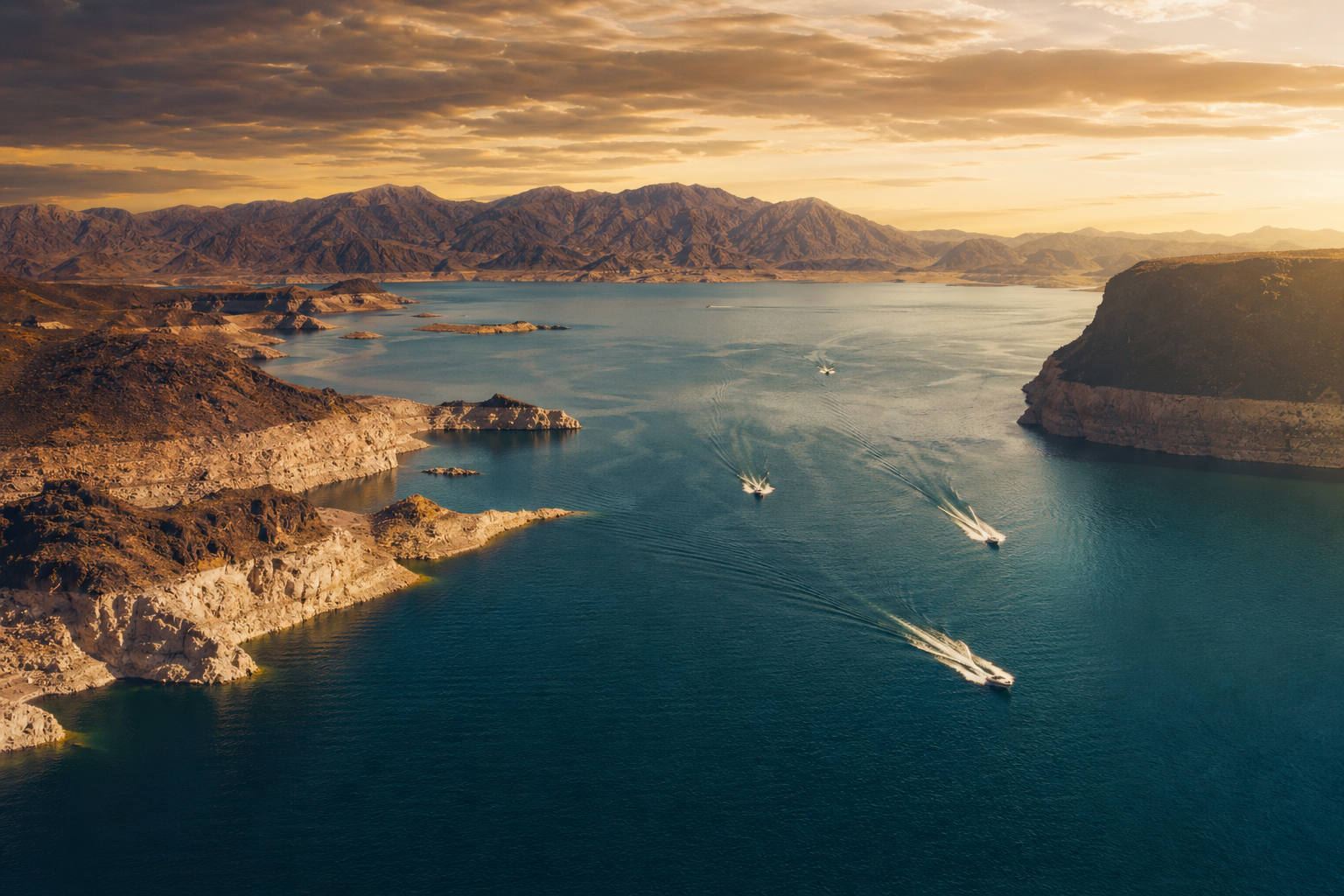
Lake Mead — the largest reservoir in the United States by volume when full — sits just 30 miles east of the Las Vegas Strip and draws millions of recreational visitors every year. From Memorial Day through Labor Day, the lake and its surrounding marinas are packed with powerboats, personal watercraft (jet skis), houseboats, fishing boats, kayaks, and paddleboards. Add in the Colorado River below Hoover Dam, Lake Mohave, and the numerous smaller waterways in Clark County, and you have one of the busiest boating regions in the western United States.
That volume of traffic — combined with extreme desert heat, inexperienced operators, and widespread alcohol use on the water — makes boating accidents a serious and recurring public safety problem in Southern Nevada. The National Park Service, which oversees the Lake Mead National Recreation Area, investigates dozens of boating incidents each year, including collisions, capsizings, falls overboard, propeller strikes, and drownings. When a boating accident causes serious injuries or death, the legal landscape is more complex than a typical car accident — involving federal jurisdiction, maritime law, state negligence statutes, and potentially multiple liable parties.
This article explains the legal framework that applies to boating accidents on Lake Mead and other Nevada waterways, identifies who can be held responsible, and outlines the steps you should take to protect your right to compensation. If you have been injured or lost a loved one in a boating accident, contact Thomas Boley Attorney At Law at (702) 435-3333 for a free consultation.
Free case review
Injured or Facing Charges in Las Vegas?
Thomas Boley offers free consultations — no fees unless we win your case.
Common Causes of Boating Accidents on Lake Mead
The National Park Service and the Nevada Department of Wildlife (NDOW) track boating accidents on Lake Mead and throughout Nevada. The most common causes of serious watercraft accidents include:
- Operator inattention and inexperience — Unlike cars, boats have no brakes and no lanes. Many Lake Mead visitors rent boats or jet skis with minimal instruction. Operators who fail to maintain a proper lookout, misjudge distances, or do not understand right-of-way rules cause a disproportionate number of collisions.
- Boating under the influence (BUI) — Alcohol is the leading contributing factor in fatal boating accidents nationwide. Nevada law under NRS 488.410 makes it illegal to operate a vessel while under the influence of alcohol or drugs, with the same 0.08 BAC limit that applies to driving. Sun, heat, wind, and wave motion amplify the impairing effects of alcohol on the water.
- Excessive speed — Speed limits on Lake Mead vary by zone, with many coves and marina areas restricted to 5 mph no-wake zones. Operators who ignore speed limits or travel too fast for conditions — especially near shore, swimmers, or other vessels — create deadly hazards.
- Hazardous water conditions — Lake Mead's water level has fluctuated dramatically in recent years due to drought. Falling water levels expose previously submerged rocks, sandbars, and debris that can destroy a hull or throw passengers overboard. Strong afternoon winds on the lake can also create dangerous chop, especially in open-water crossings near the Overton Arm and Virgin Basin.
- Equipment failure — Mechanical failures in steering, throttle, engine, or propulsion systems can cause loss of control. Rental boat operators have a legal obligation to maintain their fleet in safe working condition.
- Propeller strikes — Contact with a spinning boat propeller causes catastrophic injuries including amputations, deep lacerations, spinal cord damage, and death. Propeller accidents often occur during boarding, waterskiing, tubing, or when a swimmer surfaces near an idling vessel.
- Carbon monoxide poisoning — Exhaust from boat engines can accumulate in enclosed or semi-enclosed areas such as swim platforms, cabin spaces, and between pontoons of houseboats, causing unconsciousness and drowning.
- Drowning — Whether caused by a collision, capsizing, fall overboard, or medical emergency, drowning is the most common cause of death in boating accidents. Failure to wear a life jacket dramatically increases the risk — the U.S. Coast Guard reports that approximately 75 percent of fatal boating accident victims were not wearing a life jacket.
Types of Injuries in Nevada Boating Accidents
Boating accidents on Lake Mead and Clark County waterways cause the full spectrum of serious injuries, including:
- Drowning and near-drowning — Prolonged submersion causes anoxic brain injury, permanent cognitive impairment, and death. Even survivors of near-drowning events may face years of rehabilitation and lifelong disability.
- Traumatic brain injuries (TBI) — Impacts with other vessels, docks, rocks, or the interior of the boat during a collision can cause concussions, skull fractures, and severe TBI. Learn more about traumatic brain injury claims.
- Spinal cord injuries — High-speed impacts, diving accidents from boats, and falls can cause herniated discs, vertebral fractures, paraplegia, and quadriplegia. These are among the most expensive injuries to treat, often requiring lifelong medical care.
- Propeller laceration injuries — Boat propellers spin at thousands of RPM and can cause deep lacerations, partial or complete amputations, and fatal wounds in seconds.
- Fractures and orthopedic injuries — Broken arms, legs, ribs, hips, and facial bones from collisions, ejections, and falls on wet surfaces.
- Burns — Fuel fires, engine explosions, and exhaust contact can cause severe thermal and chemical burns. Burn injuries on the water are particularly dangerous because medical care is often far from the scene.
- Lacerations and soft tissue injuries — Cuts from fiberglass, metal fittings, dock equipment, and debris are common in boating accidents.
Who Can Be Held Liable for a Boating Accident?
Boating accident liability can be more complex than a typical motor vehicle accident because multiple parties may share responsibility, and different legal frameworks may apply depending on where the accident occurred and who was involved. Potentially liable parties include:
- The boat operator — Like a driver on the road, the person operating the vessel has a duty to follow navigation rules, maintain a proper lookout, avoid excessive speed, and refrain from operating under the influence. Negligent operators are the most common defendants in boating accident lawsuits.
- The boat owner — Under Nevada's negligent entrustment doctrine, a boat owner who allows an inexperienced, unlicensed, or intoxicated person to operate their vessel can be held liable for resulting injuries, even if the owner was not on board at the time of the accident.
- Boat rental companies and marinas — Companies that rent boats, jet skis, and other watercraft on Lake Mead and the Colorado River owe a duty to maintain their fleet in safe condition, provide adequate safety equipment (life jackets, fire extinguishers, navigation lights), and give renters proper operating instructions. Failure to do so is grounds for a negligence claim.
- Commercial tour operators — Companies offering guided boat tours, fishing charters, or water sports excursions in the Lake Mead area must carry proper insurance, employ trained captains, and maintain their vessels to commercial safety standards.
- Boat and equipment manufacturers — If a defective hull design, steering system, propeller guard, fuel system, or other component caused or contributed to the accident, the manufacturer may be liable under Nevada product liability law.
- Government entities — If a hazard on a public waterway — such as an unmarked submerged obstacle, a missing buoy, or an inadequately maintained boat ramp — contributed to the accident, the responsible government agency (National Park Service, Bureau of Reclamation, Clark County) may share liability.
- Other vessel operators — In multi-vessel collisions, all operators whose negligence contributed to the accident may be held proportionally liable under Nevada's comparative negligence rules.
Nevada Boating Laws: NRS Chapter 488
Nevada's boating safety laws are codified in NRS Chapter 488 and enforced by the Nevada Department of Wildlife (NDOW), the National Park Service, and local law enforcement. Key provisions that affect boating accident liability include:
- BUI (Boating Under the Influence) — Under NRS 488.410, operating a vessel with a BAC of 0.08 or higher is a criminal offense. A BUI conviction — or even evidence of alcohol use — dramatically strengthens a civil injury claim against the intoxicated operator.
- Boater education — Nevada requires all persons born on or after January 1, 1983 to complete a boater education course approved by the National Association of State Boating Law Administrators (NASBLA) before operating a motorized vessel. Rental companies must verify compliance or provide abbreviated safety instruction.
- Life jacket requirements — All vessels must carry one U.S. Coast Guard-approved life jacket per person on board. Children under 13 must wear a life jacket at all times while on a vessel underway. Failure to provide or enforce life jacket use can be evidence of negligence.
- Navigation rules — Operators must follow federal and state navigation rules, including maintaining a proper lookout, operating at a safe speed, and yielding right-of-way as required. Violations are per se evidence of negligence.
- Accident reporting — Under NRS 488.500, boating accidents involving death, disappearance, injury requiring medical treatment, or property damage exceeding $2,000 must be reported to NDOW. Failure to report is a criminal offense and can be used as evidence of consciousness of guilt.
Federal Jurisdiction: Lake Mead National Recreation Area
One important complication in Lake Mead boating accidents is federal jurisdiction. Lake Mead is part of the Lake Mead National Recreation Area, managed by the National Park Service under the Department of the Interior. This means that boating accidents on Lake Mead may involve:
- National Park Service regulations — 36 CFR (Code of Federal Regulations) Part 3 governs boating within national recreation areas, imposing additional speed limits, equipment requirements, and operating rules.
- Federal investigation — Serious boating accidents on Lake Mead are investigated by National Park Service rangers and, in some cases, the U.S. Coast Guard. The investigation report can be critical evidence in a civil lawsuit.
- Federal Tort Claims Act (FTCA) — If a government employee's negligence contributed to the accident (for example, a Park Service failure to mark a submerged hazard), the victim may need to file a claim under the FTCA, which has strict notice requirements and procedural rules.
- Admiralty and maritime law — While Lake Mead is not technically navigable waters for admiralty jurisdiction purposes in most cases, certain claims involving commercial vessels or federal employees may invoke maritime legal principles.
The intersection of federal, state, and potentially maritime law makes Lake Mead boating accident cases significantly more complex than a typical car accident. An experienced attorney who understands these overlapping jurisdictions is essential.
Wrongful Death in Boating Accidents
When a boating accident results in a fatality — whether from drowning, blunt force trauma, propeller injuries, or carbon monoxide poisoning — the victim's family may pursue a wrongful death claim under NRS 41.085. Eligible claimants include the surviving spouse, children, parents (if the victim was a minor), and the personal representative of the estate.
Damages in a wrongful death boating accident case may include funeral and burial expenses, medical bills incurred before death, loss of the victim's future income and earning capacity, loss of companionship, love, and guidance, and the grief and sorrow of surviving family members. The statute of limitations is two years from the date of death. Given the complexity of establishing liability and the multiple parties that may be involved, families should consult with an attorney as soon as possible after a fatal boating accident.
Comparative Negligence in Boating Cases
Nevada's modified comparative negligence rule under NRS 41.141 applies to boating accidents just as it does to car accidents. If the victim was partially at fault — for example, not wearing a life jacket, sitting in an unsafe position, or swimming in a restricted area — their compensation is reduced by their percentage of fault. However, the victim can still recover as long as their fault does not exceed 50 percent.
Insurance companies and boat rental operators will aggressively argue that the victim caused their own injuries. Common defenses include claiming the victim assumed the risk by participating in water sports, failed to wear a life jacket, was swimming in a prohibited area, or was intoxicated. An experienced personal injury attorney can counter these arguments and demonstrate that the defendant's negligence was the primary cause of the accident.
What to Do After a Boating Accident on Lake Mead
The steps you take immediately after a boating accident can make or break your legal claim. If you or a family member has been injured in a boating accident on Lake Mead, the Colorado River, Lake Mohave, or any waterway in Clark County, take these steps:
- Call for emergency help immediately. Dial 911 or contact the National Park Service dispatch (702-293-8998) for emergencies on Lake Mead. Get injured victims out of the water and administer first aid. Time is critical in drowning and near-drowning situations.
- Report the accident. Federal law and NRS 488.500 require reporting boating accidents involving injury, death, or significant property damage. Cooperate with National Park Service rangers and NDOW officers, but do not admit fault or speculate about what happened.
- Document the scene. If it is safe to do so, take photographs and video of both vessels, the water conditions, weather, any visible damage, safety equipment (or lack thereof), and the location of the accident. GPS coordinates are particularly valuable on open water.
- Get witness information. Other boaters, marina staff, passengers, and bystanders may have witnessed the accident. Collect their names and contact information before they leave the area.
- Seek medical attention. Even if you feel fine initially, some boating accident injuries — particularly internal bleeding, concussions, and secondary drowning — may not present symptoms immediately. Get a full medical evaluation as soon as possible.
- Preserve physical evidence. Do not repair, clean, or dispose of life jackets, boating equipment, or the vessel involved in the accident until your attorney has had the opportunity to inspect and photograph everything.
- Do not sign anything from the rental company or insurance carrier. Boat rental companies and their insurers will often present liability waivers or release forms immediately after an accident. Do not sign anything without consulting an attorney first.
- Contact a personal injury attorney. Boating accident cases involve overlapping federal and state jurisdiction, complex liability questions, and potentially multiple defendants. An experienced Las Vegas attorney can navigate these issues and build the strongest case for your recovery.
Damages in a Nevada Boating Accident Claim
Victims of boating accidents on Lake Mead and other Nevada waterways may recover both economic and non-economic damages, including:
- Medical expenses — Emergency helicopter transport from Lake Mead to Las Vegas trauma centers, hospitalization, surgery, rehabilitation, and ongoing care. Boating injuries often require specialized treatment at facilities like University Medical Center or Sunrise Hospital.
- Lost wages and reduced earning capacity — Time missed from work during recovery and any permanent impact on your ability to earn a living.
- Pain and suffering — Physical pain, emotional distress, PTSD, anxiety about water, and diminished quality of life.
- Disability and disfigurement — Permanent impairment from amputations, spinal cord injuries, traumatic brain injuries, and severe scarring.
- Loss of consortium — Compensation for the impact of your injuries on your relationship with your spouse and family.
- Punitive damages — Available in cases of gross negligence, such as a BUI operator or a rental company that knowingly rented a vessel with defective safety equipment.
Contact Thomas Boley for a Free Boating Accident Consultation
If you or a loved one has been injured — or if you have lost a family member — in a boating or watercraft accident on Lake Mead, the Colorado River, Lake Mohave, or any waterway in Clark County, you need an attorney who understands the unique challenges of maritime and watercraft injury cases. At Thomas Boley Attorney At Law, we have spent more than 18 years fighting for accident victims throughout the Las Vegas Valley and beyond. We handle personal injury and wrongful death cases on a contingency fee basis — you pay nothing unless we recover compensation for you. Call (702) 435-3333 today for a free, confidential consultation. We will investigate the accident, identify every responsible party, and fight for the maximum compensation you and your family deserve. This article is for informational purposes only and does not constitute legal advice. Every case is unique. Contact Thomas Boley Attorney At Law for a free consultation specific to your situation.
About the Author
Thomas Boley is a Nevada licensed attorney specializing in personal injury law and criminal defense. Since 2008, Thomas has represented thousands of clients in Las Vegas and Clark County, recovering millions of dollars in compensation for injury victims. He is a member of the State Bar of Nevada, the Clark County Bar Association, and the Nevada Justice Association.
Need Legal Help? Contact Thomas Boley for a free consultation: (702) 435-3333