Autonomous Vehicle and Self-Driving Car Accidents in Las Vegas: Your Legal Rights
In This Article
Self-driving cars are no longer science fiction — they are on the streets of Las Vegas right now. Autonomous vehicles (AVs) from companies like Waymo, Motional, and others are actively operating across the Las Vegas valley, from the Strip to Henderson and Summerlin. While this technology promises safer roads, accidents involving autonomous vehicles do happen — and when they do, the question of who is legally liable becomes far more complex than a typical car accident.
If you or a loved one has been injured in an accident involving a self-driving car in Las Vegas or anywhere in Clark County, you deserve experienced legal representation that understands both Nevada personal injury law and the rapidly evolving regulations around autonomous vehicles. This guide explains your rights, the unique liability issues these cases present, and what steps to take after an AV accident.
Nevada's Autonomous Vehicle Laws — NRS Chapter 482A
Free case review
Injured or Facing Charges in Las Vegas?
Thomas Boley offers free consultations — no fees unless we win your case.
Nevada was the first state in the nation to authorize the testing and operation of autonomous vehicles on public roads. Under NRS Chapter 482A, the Nevada Department of Motor Vehicles (DMV) issues licenses for the testing and deployment of autonomous vehicles. Companies must obtain a testing permit or deployment certificate and carry minimum insurance coverage of $5 million — significantly higher than the standard insurance requirements for regular motorists.
Key provisions of Nevada's AV law include:
- Testing permits — Companies must demonstrate their vehicles meet safety standards and carry adequate insurance before testing on Nevada roads
- Deployment certificates — For commercial operation (transporting passengers or goods), companies need a separate deployment certificate from the DMV
- Remote monitoring — Fully driverless vehicles must be monitored remotely by trained operators who can intervene if the system encounters a situation it cannot handle
- Accident reporting — AV operators must report any crash to the Nevada DMV within 10 days and provide detailed data from the vehicle's sensors and systems
- Data preservation — Companies must preserve sensor data, event logs, and video recordings from any crash — this data is critical evidence in injury claims
These regulatory requirements create important advantages for injury victims: the mandatory high insurance limits mean there are typically substantial funds available to compensate victims, and the data preservation requirements ensure crucial evidence is available for your attorney to establish liability.
Who Is Liable When a Self-Driving Car Causes an Accident?
This is the central question in every autonomous vehicle accident case — and the answer is rarely simple. Unlike a traditional car accident where liability typically rests with the at-fault driver, AV crashes can involve multiple potentially liable parties:
- The AV technology company — The company that developed and operates the autonomous driving system (e.g., Waymo, Motional) may be liable if the vehicle's software, sensors, or decision-making algorithm caused or contributed to the crash
- The vehicle manufacturer — If a mechanical defect (brakes, steering, tires) contributed to the accident — separate from the autonomous technology — the vehicle manufacturer may face product liability claims
- The sensor and component manufacturers — Companies that make the lidar, radar, cameras, and other sensors critical to AV operation may be liable if a component failure caused the system to misperceive its environment
- The safety driver or remote operator — If a human safety driver was present and failed to intervene when the autonomous system needed assistance, that individual (and their employer) may share liability
- The vehicle owner or fleet operator — The entity that owns and deploys the AV fleet has a duty to maintain the vehicles properly and ensure software updates are current
- Other drivers — In many AV accidents, the autonomous vehicle is not at fault — another driver's negligence caused the crash. Standard negligence principles apply to the at-fault driver
Product Liability vs. Negligence in AV Accident Cases
AV accident cases often involve two distinct legal theories, each with different requirements and advantages:
Product liability claims argue that the autonomous driving system was defectively designed, defectively manufactured, or lacked adequate warnings. Under Nevada's product liability framework (NRS 695C and common law), you can pursue a strict liability claim — meaning you do not need to prove the manufacturer was careless, only that the product was defective and caused your injuries.
Negligence claims focus on whether the AV operator, safety driver, or fleet operator breached their duty of care. For example, if a company deployed vehicles knowing the software had a bug that caused misidentification of pedestrians at certain intersections near Las Vegas Boulevard or Flamingo Road, that failure could constitute negligence.
Your attorney may pursue both theories simultaneously to maximize your chances of recovery. Product liability claims are particularly powerful in AV cases because they hold technology companies to a strict standard — the vehicle either performed safely or it didn't.
Common Causes of Autonomous Vehicle Accidents in Las Vegas
While autonomous vehicles are designed to be safer than human-operated vehicles, they face unique challenges on Las Vegas roads:
- Sensor limitations in extreme conditions — Las Vegas summer heat (exceeding 115°F), blowing desert sand, and intense sun glare can degrade lidar and camera performance
- Complex traffic patterns — The Strip, Fremont Street, and casino resort entrances create chaotic, unpredictable traffic environments that challenge AV algorithms
- Pedestrian detection failures — Jaywalking pedestrians, people in crosswalks at unusual angles, and crowds exiting casinos create detection challenges, especially at night
- Construction zone confusion — Frequent road construction along I-15, US-95, and the Las Vegas Beltway creates temporary lane configurations that AVs may not process correctly
- Software errors and algorithm failures — Bugs in the decision-making software, failures to recognize unusual objects or situations, and incorrect speed or distance calculations
- Map data errors — Outdated or incorrect map data can cause AVs to make wrong turns, enter incorrect lanes, or fail to recognize new traffic signals
- Communication failures — Loss of connectivity between the vehicle and the remote monitoring center can leave the AV operating without human backup
What to Do After an Autonomous Vehicle Accident
If you are involved in a crash with a self-driving car in Las Vegas, the steps you take immediately after the accident can significantly impact your ability to recover compensation:
- Call 911 and report the accident — A police report is essential. Tell the responding officer that an autonomous vehicle was involved — this triggers specific reporting protocols
- Seek medical attention immediately — Even if you feel fine, get evaluated. Traumatic brain injuries, internal bleeding, and soft tissue injuries may not present symptoms for hours or days
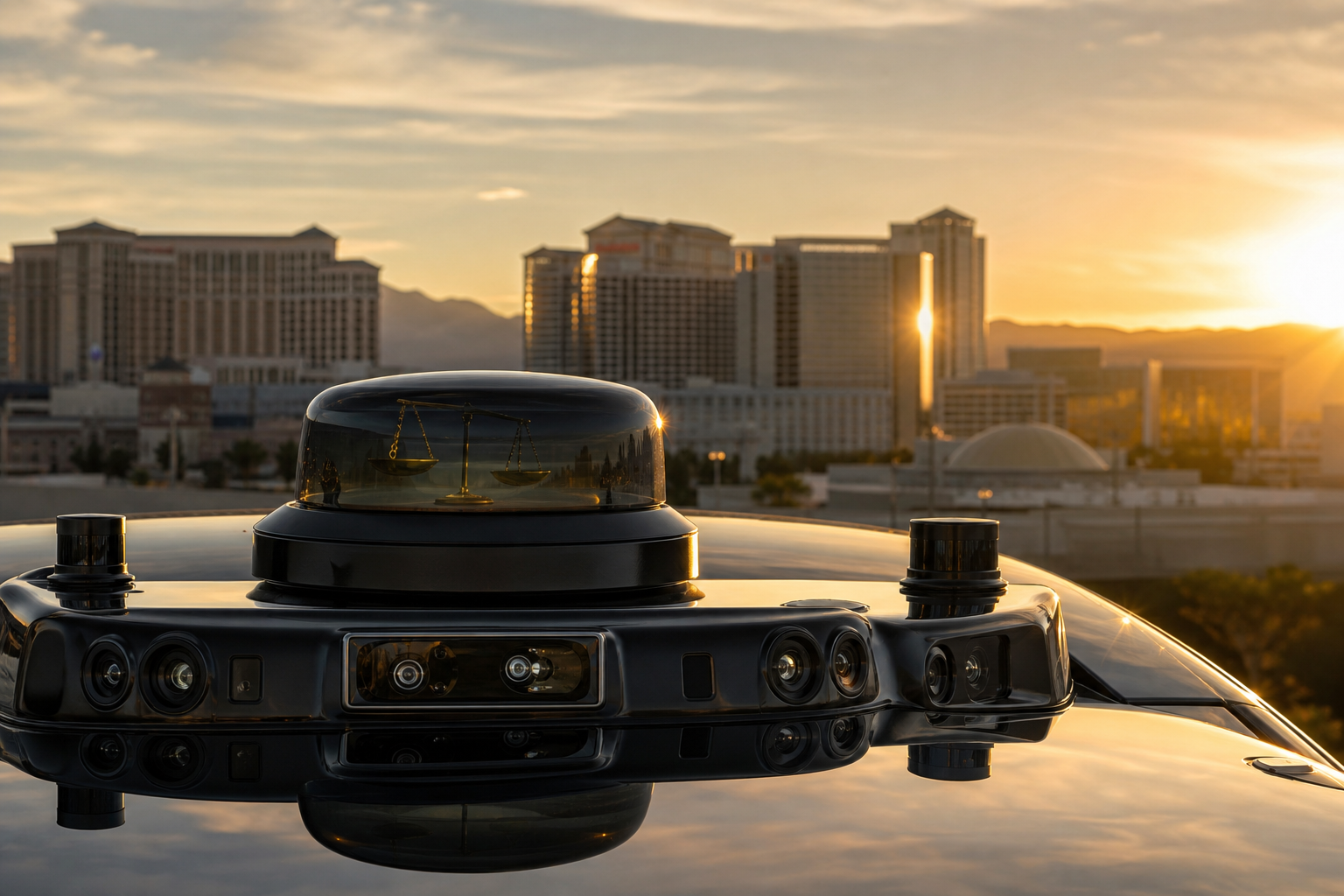
- Document the AV — Photograph the autonomous vehicle from all angles, including any company logos, license plates, the rooftop sensor array, and any visible damage. Record the vehicle identification number if possible
- Note the AV company information — Identify which company operates the vehicle (branding on the vehicle, app notifications if you were a passenger). This determines which insurance policy and corporate entity you will pursue
- Gather witness information — Collect names and contact information from anyone who saw the accident. Their testimony may be critical
- Do not give recorded statements to the AV company — Company representatives and their insurers may contact you quickly after an accident. Do not provide recorded statements or sign any documents without consulting an attorney
- Contact a personal injury attorney experienced in AV cases — These cases require specialized knowledge of technology, product liability, and Nevada's autonomous vehicle regulations. Time-sensitive evidence — including the vehicle's sensor data — must be preserved immediately
Preserving Critical Evidence in AV Cases
Autonomous vehicles generate enormous amounts of data that can prove exactly what happened in a crash. This evidence includes:
- Lidar and radar data — 3D point clouds showing exactly what the vehicle's sensors detected in the moments before, during, and after the crash
- Camera footage — Multiple cameras capture 360-degree video of the vehicle's surroundings
- Event data recorder (black box) — Records speed, braking, steering inputs, and system decisions in the seconds before impact
- Software decision logs — Detailed records of every decision the autonomous system made — when it detected a hazard, what it predicted, and what action it took
- Remote operator logs — Records of communications between the vehicle and the remote monitoring center, including any intervention attempts
While Nevada law requires AV companies to preserve crash data, companies have been known to delay or resist disclosure. Your attorney should send a spoliation letter immediately after the accident — a formal legal demand to preserve all evidence related to the crash. Failure to preserve evidence can result in sanctions and adverse inferences at trial.
Damages Available in Autonomous Vehicle Accident Cases
Victims of AV accidents in Nevada are entitled to the same categories of compensation as any personal injury claim, but the damages are often substantial due to the severity of these collisions:
- Medical expenses — Emergency treatment, hospitalization, surgery, rehabilitation, prescription medications, and future medical care
- Lost wages and earning capacity — Income lost during recovery and any long-term reduction in your ability to earn a living
- Pain and suffering — Physical pain, emotional distress, anxiety, depression, and loss of enjoyment of life
- Property damage — Repair or replacement of your vehicle and any personal property damaged in the crash
- Punitive damages — In cases where the AV company's conduct was willfully reckless — such as deploying vehicles with known safety defects — Nevada law permits punitive damages to punish the wrongdoer and deter future misconduct
Because AV companies are required to carry at least $5 million in insurance under Nevada law, there is typically more coverage available than in a standard car accident case. For catastrophic injuries — traumatic brain injuries, spinal cord injuries, amputations — claims may exceed even these high policy limits, requiring pursuit of the company's corporate assets.
Nevada's Comparative Negligence in AV Cases
Nevada follows a modified comparative negligence system under NRS 41.141. This means you can recover damages even if you were partially at fault for the accident — as long as your fault does not exceed 50%. Your award is reduced by your percentage of fault.
In AV cases, the defendant company will almost certainly argue that you contributed to the accident — perhaps by jaywalking, failing to yield, or not paying attention. An experienced attorney will counter these arguments with the vehicle's own sensor data, which provides an objective record of exactly what happened. This data often contradicts the company's version of events and supports the victim's account.
Statute of Limitations for AV Accident Claims in Nevada
Under NRS 11.190, the statute of limitations for personal injury claims in Nevada is two years from the date of the accident. For product liability claims against the AV manufacturer or technology company, the same two-year period generally applies.
However, AV cases often involve complex multi-party litigation that requires extensive investigation, expert analysis, and data acquisition before a lawsuit can even be filed. Waiting too long risks losing critical evidence and missing filing deadlines. Contact an attorney as soon as possible after any AV accident.
Frequently Asked Questions About Self-Driving Car Accidents
Can I sue a self-driving car company if their vehicle hit me while I was walking? Yes. Pedestrians injured by autonomous vehicles have the right to file personal injury claims against the AV operator, technology company, and any other responsible parties. Pedestrians are among the most vulnerable victims in AV accidents and often suffer the most serious injuries.
What if I was a passenger in an autonomous vehicle that crashed? As a passenger, you have strong legal standing to pursue a claim. You were not operating the vehicle and bear no responsibility for the driving decisions. The AV company, manufacturer, and any at-fault third-party driver may all be liable for your injuries.
Do I need a special attorney for an autonomous vehicle accident? While any personal injury attorney can technically handle an AV case, these cases involve complex technology, specialized regulations, and powerful corporate defendants. You need an attorney who understands product liability, Nevada's autonomous vehicle statutes, and how to obtain and analyze sensor data from the vehicle.
How long do autonomous vehicle accident cases take to resolve? AV cases are typically more complex than standard car accident cases because of the multiple parties involved and the technical evidence that must be analyzed. Many cases settle within 12 to 24 months, but cases that go to trial may take longer. Your attorney can provide a more specific timeline based on the facts of your case.
What if the self-driving car had a safety driver who didn't intervene? If a human safety driver was present and failed to take control when the autonomous system was unable to handle the situation, both the safety driver and the AV company may be liable. The company is responsible for training its safety drivers and ensuring they are alert and capable of intervening.
Contact Thomas Boley — Las Vegas Autonomous Vehicle Accident Attorney
If you or a family member has been injured in an accident involving a self-driving car or autonomous vehicle in Las Vegas, Henderson, Summerlin, North Las Vegas, or anywhere in Clark County, you need an attorney who understands both the technology and the law.
Call (702) 435-3333 today for a free, no-obligation consultation. Thomas Boley Attorney At Law has over 18 years of experience handling complex personal injury cases throughout the Las Vegas valley. We work on a contingency fee basis — you pay nothing unless we win your case.
This article is for informational purposes only and does not constitute legal advice. Every personal injury case is unique. Contact Thomas Boley Attorney At Law for a free consultation specific to your situation.
Related Articles
If you were injured in an accident on Nevada roads, our attorneys have covered related topics: Las Vegas Personal Injury Attorney, Traumatic Brain Injuries After a Car Accident, and Product Liability and Defective Vehicle Parts in Nevada.
About the Author
Thomas Boley is a Nevada licensed attorney specializing in personal injury law and criminal defense. Since 2008, Thomas has represented thousands of clients in Las Vegas and Clark County, recovering millions of dollars in compensation for injury victims. He is a member of the State Bar of Nevada, the Clark County Bar Association, and the Nevada Justice Association.
Need Legal Help? Contact Thomas Boley for a free consultation: (702) 435-3333