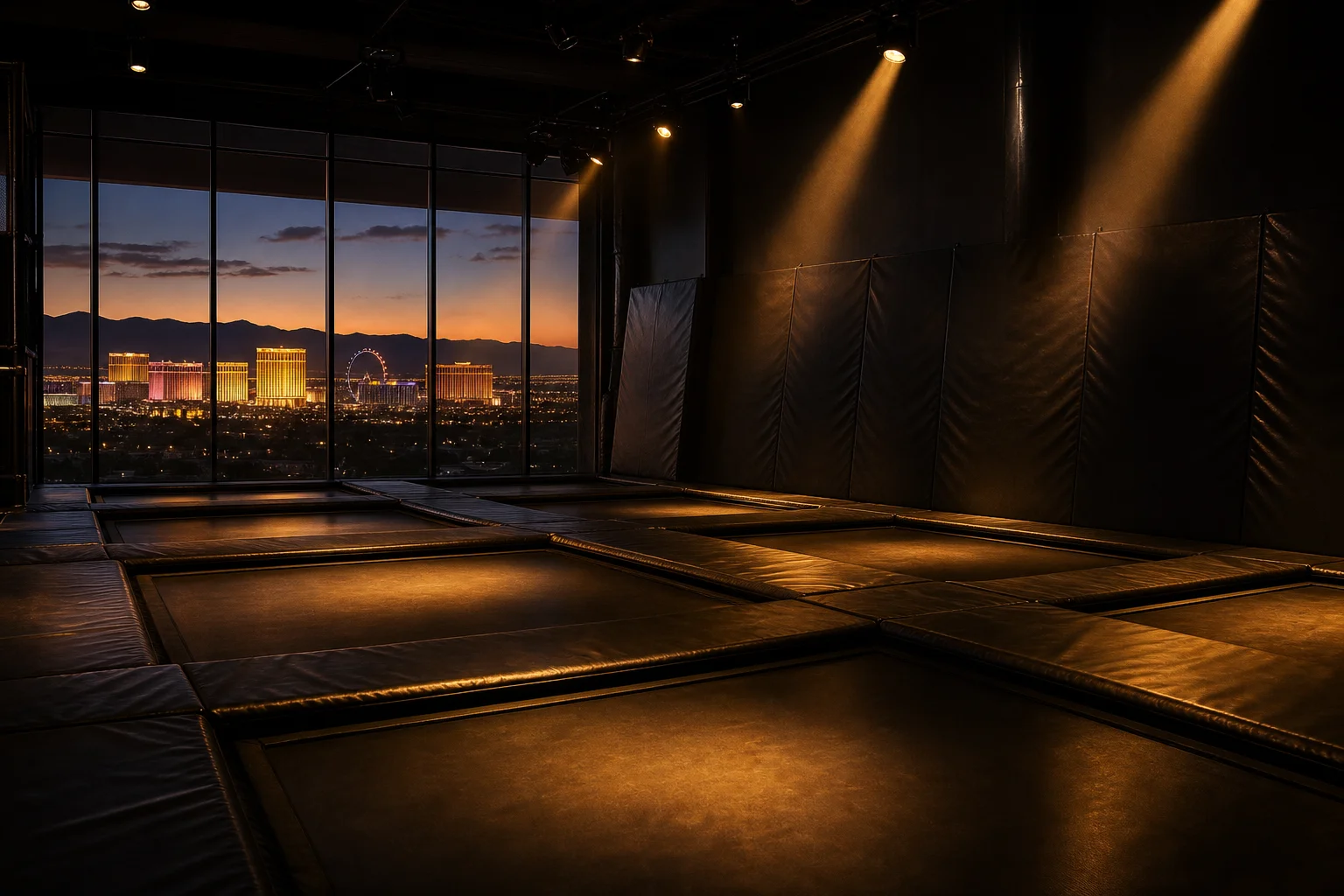
Trampoline Park Injury Claims in Las Vegas: Legal Rights
In This Article
A ten-year-old jumping at a Henderson trampoline park launches off a foam-pit platform, misjudges the landing, and comes down wrong on an ankle that buckles before her shoes hit the foam. Her parents assumed the liability waiver they signed at check-in meant the park owed them nothing if she got hurt, and that assumption is wrong more often than not. Trampoline park injury claims in Las Vegas turn on a distinction most visitors never learn until after someone is hurt: a signed waiver can bar a claim for the ordinary risks of jumping, but it cannot excuse an operator for its own negligence in maintaining equipment, training staff, or controlling how many jumpers share a single court. At Thomas Boley Attorney At Law, we represent injured jumpers and their families throughout Las Vegas, Henderson, Summerlin, North Las Vegas, and the rest of Clark County, and this guide explains how Nevada law actually treats a trampoline park injury claim.
- Nevada's amusement-ride safety statute, NRS 455B.010, defines a covered "ride" as a device that carries passengers "over a fixed or restricted route" — a definition most open-jump trampoline courts and foam pits do not meet, so ordinary premises liability and negligence law usually govern a trampoline park injury claim instead.
- A liability waiver signed at check-in can bar a claim for the inherent risks of jumping, but under Nevada law a waiver cannot excuse a business for its own negligence once that negligence becomes gross negligence or willful misconduct, and courts construe an unclear waiver against the business that wrote it.
- Common grounds for a claim include negligent maintenance (torn padding, exposed springs, unrepaired gaps between trampoline beds), negligent supervision (overcrowded courts, unsupervised stunt jumps, ignored capacity limits), and inadequate staff training.
- Nevada's modified comparative negligence rule, NRS 41.141, still lets an injured jumper recover damages, reduced by their own percentage of fault, as long as that share is 50% or less.
- Liability can extend beyond the park operator to an equipment manufacturer or maintenance contractor when a defective or poorly serviced trampoline bed, spring system, or padding caused the injury.
- Nevada's statute of limitations gives an injured jumper two years from the date of injury to file suit under NRS 11.190(4)(e); a minor's own claim is generally tolled until two years after their 18th birthday under NRS 11.250.
Trampoline Park Injury Claims in Las Vegas: Why the Amusement-Ride Statute Usually Doesn't Apply
Free case review
Injured or Facing Charges in Las Vegas?
Thomas Boley offers free consultations — no fees unless we win your case.
Nevada does have a statute built specifically for amusement facilities. NRS 455B.010 defines an "amusement ride" as a mechanical or aquatic device that carries passengers over a fixed or restricted route primarily for their amusement, and NRS 455B.020 requires an operator to take all measures reasonably necessary to ensure passenger safety in constructing, maintaining, operating, and supervising that ride, backed by mandatory injury reporting and posted-signage rules. That statute was written with roller coasters, drop towers, and similar route-based rides in mind, and most trampoline parks do not fit its definition — an open court of interconnected in-ground trampolines, a foam pit, or a dodgeball arena does not carry a jumper "over a fixed or restricted route." That gap matters in a real case, because it means a Las Vegas trampoline park injury claim usually cannot lean on NRS 455B.010's statutory duties directly. Instead, the claim rests on ordinary Nevada premises liability and negligence law: the general duty a business owes to keep its premises reasonably safe for paying customers, evaluated the same way a court would evaluate a claim against a gym, a hotel pool, or a retail store. NRS 455B.020's language is still useful as a benchmark for what "reasonable" safety measures look like in a jump facility, even where it does not apply as a matter of statutory obligation.
Common Injuries at Las Vegas Trampoline Parks
Trampoline injuries tend to be more severe than a typical playground fall because of the height, speed, and rebound forces involved, and our firm sees a recurring set of injury patterns from local trampoline parks. Ankle and foot sprains or fractures are the most common, usually from a mistimed landing at the edge of a trampoline bed. Knee injuries, including ACL and MCL tears, happen when a jumper's body twists while their foot stays planted on the mat. Wrist and forearm fractures follow when a jumper instinctively braces a fall with an outstretched hand. Cervical spine and neck injuries, some of them serious, occur in foam-pit landings and attempted flips that go wrong, particularly among older kids and teens attempting tricks they saw online. Concussions and other head injuries commonly result from jumper-to-jumper collisions on crowded, shared courts. Dislocated shoulders and knees can happen at the transition points between adjoining trampoline beds, especially where a torn pad or a gap in the padding creates an unexpected drop. A poorly maintained landing surface turns what should be a survivable fall into a fracture, a torn ligament, or worse, which is why the condition of the equipment matters as much as how the injury happened.
Liability Waivers: What a Signed Release Does and Doesn't Cover in Nevada
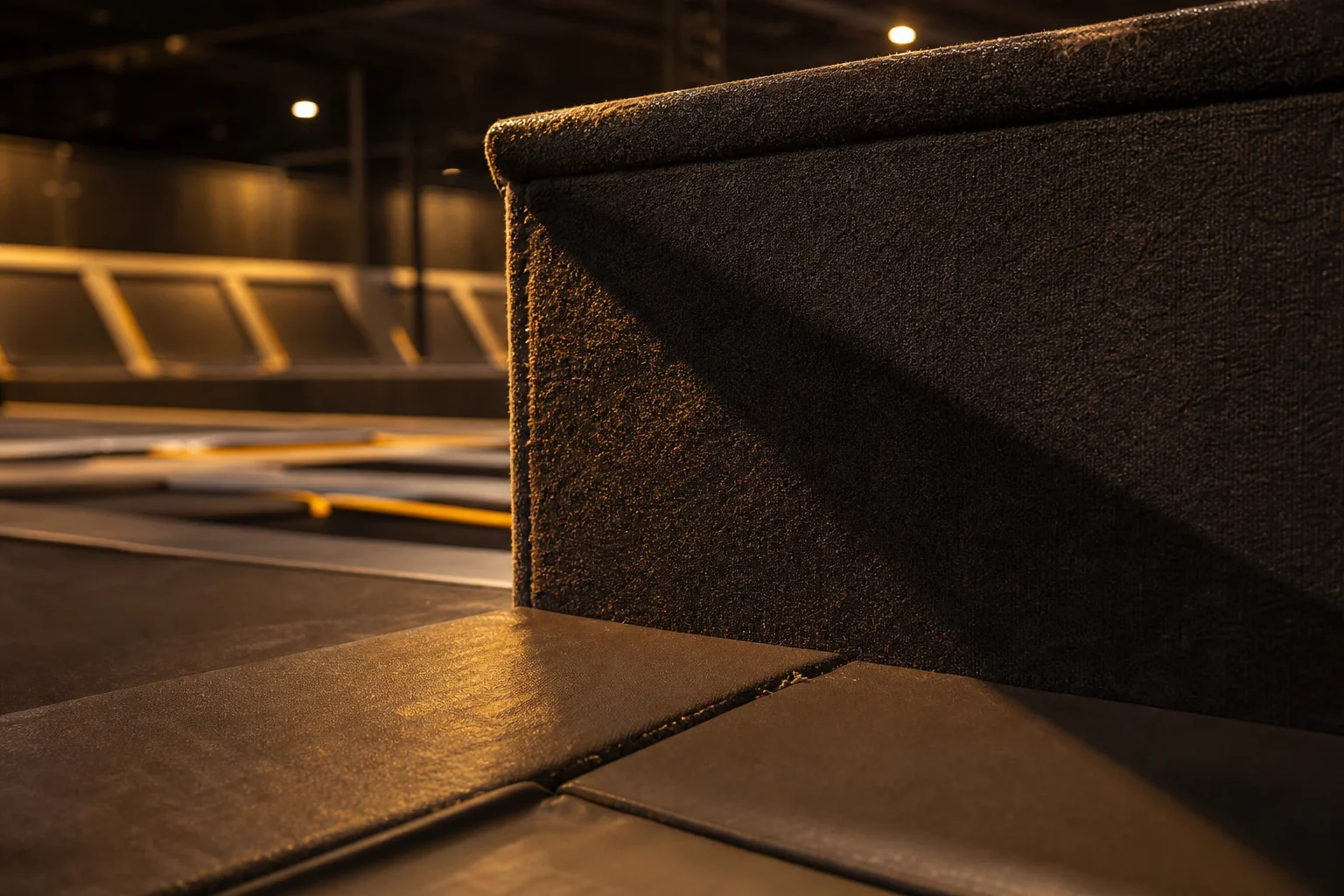
Nearly every Las Vegas trampoline park requires a signed or click-through liability waiver before a jumper is allowed on the court, and most visitors assume that document ends any possibility of a claim. Nevada law does not go that far. A liability waiver can validly limit a business's responsibility for ordinary negligence tied to the inherent risks of the activity itself — a jumper misjudging their own landing, or an ordinary bump with another jumper engaged in normal play. What a waiver cannot do under Nevada law is excuse a business for gross negligence or willful misconduct, and Nevada courts require an enforceable release to be clear, conspicuous, and unambiguous, construing any doubt against the business that drafted it. Negligent maintenance of torn padding or exposed springs, negligent supervision that allows a court to become dangerously overcrowded, and understaffing that leaves nobody watching for unsafe stunt jumps are risks the operator itself creates, not risks inherent to jumping — and a waiver rarely bars a claim built on that kind of conduct. Waivers signed by a parent on a minor's behalf raise an additional, frequently contested question in Nevada about how far a parent's signature can bind a child's own claim, which is one more reason a signed release should never be treated as the end of the conversation without an attorney reviewing it first.
Proving Negligence and Comparative Fault Under Nevada Law
A premises liability claim against a trampoline park requires proving the same four elements as any Nevada negligence case: the park owed a duty of reasonable care to its jumping customers, it breached that duty, the breach caused the injury, and the injury resulted in real damages. In practice, that means building a record from incident reports, equipment maintenance and inspection logs, staff training records, surveillance video, and jumper counts at the time of the injury — evidence a park's insurer will not volunteer and that can disappear quickly once a facility realizes a claim is coming. NRS 41.141, Nevada's modified comparative negligence statute, still allows an injured jumper to recover damages even if they share some fault for the accident, as long as their own percentage of responsibility is 50% or less; the award is simply reduced by that percentage. That structure gives a park's insurer a direct incentive to characterize an injured jumper's own conduct as reckless or rule-breaking, pushing their fault share toward the 51% line that would eliminate the claim entirely. A thorough premises liability investigation — comparing what actually happened against the park's own posted rules, staff training standards, and manufacturer maintenance schedule — is usually what separates an insurer's characterization from what the evidence actually supports.
Who Can Be Held Liable for a Trampoline Park Injury
More than one party can share responsibility for a trampoline park injury in Las Vegas. The park operator is the most common defendant, under ordinary premises liability principles, for negligent maintenance, negligent supervision, or overcrowding a court beyond its posted capacity. An equipment manufacturer can face a separate product liability claim if a trampoline bed, spring system, or padding was defectively designed or manufactured, and Nevada law treats that kind of claim differently than an ordinary negligence claim: NRS 41.141(5)(e) preserves full joint and several liability for injuries resulting from a defective product, rather than splitting liability strictly by percentage among defendants. A third-party inspection or maintenance contractor hired to service the equipment can also be liable if a documented inspection missed or ignored a hazard. In a franchised facility, both the local franchisee that runs day-to-day operations and, depending on how much control it exercised over safety standards and training, the parent franchisor can potentially be named. Identifying every responsible party matters because a single operator's insurance policy limits are not always enough to cover a serious injury.
- Report the injury to on-duty staff immediately and request a written incident report before you leave the facility.
- Photograph the exact spot where the injury happened — torn padding, an exposed spring, a gap between trampoline beds, or a visibly overcrowded court — before it can be repaired or the crowd disperses.
- Get the names of any staff members on the floor and any witnesses who saw what happened.
- Seek medical evaluation the same day, even if the injury seems minor at first. Some fractures and ligament tears do not show their full severity until swelling develops.
- Do not sign any additional release, statement, or settlement offer from the park's insurer without an attorney reviewing it first.
- Preserve your online waiver confirmation email and any photos or video taken during the visit.
- Contact a Las Vegas personal injury attorney promptly. Many facilities overwrite surveillance footage on a short retention cycle, sometimes within days to a few weeks.
- Does signing a liability waiver mean I can't sue after a trampoline park injury? Not necessarily. A Nevada waiver can bar a claim for the ordinary risks of jumping, but it cannot excuse a business for gross negligence or willful misconduct, such as ignoring known equipment hazards or letting a court become dangerously overcrowded.
- Can I file a claim if my child was injured and I signed the waiver? Often, yes. A parent's signature is generally understood to limit claims for the inherent risks of the activity, not to waive claims based on the park's own negligence, and how far a parent's signature binds a minor's own claim is a frequently contested issue an attorney should evaluate.
- What if the trampoline park says I was jumping recklessly? Nevada's comparative negligence rule under NRS 41.141 still allows recovery as long as your own share of fault is 50% or less, with your damages reduced by that percentage. An insurer has an incentive to inflate your share of fault, which is why an independent investigation matters.
- How long do I have to file a trampoline park injury claim in Las Vegas? Nevada's statute of limitations gives most injured adults two years from the date of injury under NRS 11.190(4)(e). A minor's own claim is generally tolled until two years after they turn 18 under NRS 11.250, though a parent's separate claim on the child's behalf typically still runs on the standard two-year deadline.
- What compensation can I recover? Depending on the severity of the injury, damages can include medical expenses, lost wages, pain and suffering, and compensation for any lasting impairment or future medical care.
Speak With a Las Vegas Personal Injury Attorney About a Trampoline Park Injury
Thomas Boley has represented injured clients throughout Clark County for more than 18 years, including premises liability cases where a signed waiver, a torn safety pad, or an overcrowded court became the central dispute. Trampoline park operators and their insurers often point to a signed release as if the conversation ends there — it doesn't, and knowing the difference between a waived risk and the park's own negligence is often what determines whether a claim succeeds.
Call (702) 435-3333 for a free consultation, or contact Thomas Boley online to discuss a trampoline park injury in Las Vegas, Henderson, Summerlin, North Las Vegas, or elsewhere in Clark County. Our full personal injury practice handles premises liability claims of every kind, including cases similar to our guides to amusement park and attraction injuries and gym and fitness center injuries, both of which raise similar waiver and negligent-maintenance questions. This article is informational only and is not legal advice. Every case is unique.
About the Author
Thomas Boley is a Nevada licensed attorney specializing in personal injury law and criminal defense. Since 2008, Thomas has represented thousands of clients in Las Vegas and Clark County, recovering millions of dollars in compensation for injury victims. He is a member of the State Bar of Nevada, the Clark County Bar Association, and the Nevada Justice Association.
Need Legal Help? Contact Thomas Boley for a free consultation: (702) 435-3333