Rotator Cuff Injury Claims Las Vegas: Nevada Legal Guide
In This Article
Rotator cuff injury claims Las Vegas residents pursue after car crashes, falls, and other accidents often depend on medical detail that an insurance adjuster may try to minimize. A torn tendon can make it painful to lift an arm, sleep, drive, work, or perform basic household tasks, yet the injury may not appear on an ordinary X-ray. At Thomas Boley Attorney At Law, we help injured people across Las Vegas, Henderson, Summerlin, North Las Vegas, and Clark County connect the accident to the shoulder damage, document the practical impact, and seek compensation from the responsible party.
- The rotator cuff is a group of muscles and tendons that stabilizes the shoulder and helps lift and rotate the arm.
- Crashes and falls can cause a new tear or aggravate a previously asymptomatic degenerative condition.
- Prompt examinations, consistent treatment, MRI or ultrasound findings, and orthopedic opinions can connect the injury to the accident.
- A claim may include medical expenses, lost income, reduced earning ability, pain, limitations, and future care.
- Nevada generally allows two years to file a personal injury lawsuit, but shorter notice rules can apply to government-related claims.
- Do not sign a broad release before the diagnosis, prognosis, and potential need for surgery are understood.
Rotator Cuff Injury Claims Las Vegas: Liability and Proof
Free case review
Injured or Facing Charges in Las Vegas?
Thomas Boley offers free consultations — no fees unless we win your case.
A successful injury claim requires more than proof that a shoulder hurts. The injured person generally must show that another party owed a duty of reasonable care, breached that duty, caused the injury, and created measurable damages. In a traffic collision, the breach may be speeding, unsafe lane movement, distracted driving, or failure to yield. In a premises case, it may be a dangerous condition the property owner knew or should have known about. Our Las Vegas personal injury practice evaluates the full liability record before presenting the medical damages.
Causation is frequently the contested issue. Insurers may accept that their driver caused a crash but argue that the shoulder tear existed beforehand, resulted from age-related degeneration, or came from work or recreation. That argument does not automatically defeat a claim. Nevada law can allow recovery when an accident aggravates or makes symptomatic a pre-existing condition. The important questions are what the person could do before the incident, when symptoms began, what the imaging shows, and whether the treating specialist believes the event caused or materially worsened the condition.
How Accidents Damage the Rotator Cuff
The rotator cuff includes four muscles and their tendons, which surround the head of the upper-arm bone and help keep it centered in the shoulder socket. Sudden trauma can overstretch or tear one or more tendons. A driver may brace against the steering wheel during impact, be pulled sharply by a seat belt, strike the door, or experience violent rotation as the vehicle changes direction. A fall can drive force through an outstretched hand or directly into the shoulder. Motorcycle, bicycle, pedestrian, construction, and hotel accidents can produce similar mechanisms.
Shoulder injuries vary from inflammation and impingement to partial-thickness and full-thickness tendon tears. Associated problems may include a labral tear, biceps tendon injury, fracture, dislocation, nerve symptoms, or adhesive capsulitis commonly called frozen shoulder. A person may initially focus on more obvious neck, back, or head pain and notice the shoulder limitation later. Delayed awareness can be medically reasonable, but an unexplained gap in evaluation gives the insurer room to dispute causation. Report every symptom and follow the clinician’s instructions.
Symptoms That Deserve Prompt Medical Evaluation
Common warning signs include pain when lifting or lowering the arm, weakness, reduced range of motion, clicking or catching, pain that travels down the upper arm, and difficulty sleeping on the affected side. Some people cannot reach a shelf, fasten a seat belt, wash their hair, dress, or carry groceries without pain. Others can move the arm but lose endurance or strength. Emergency symptoms such as visible deformity, loss of sensation, a cold or pale hand, or inability to move the arm require immediate care.
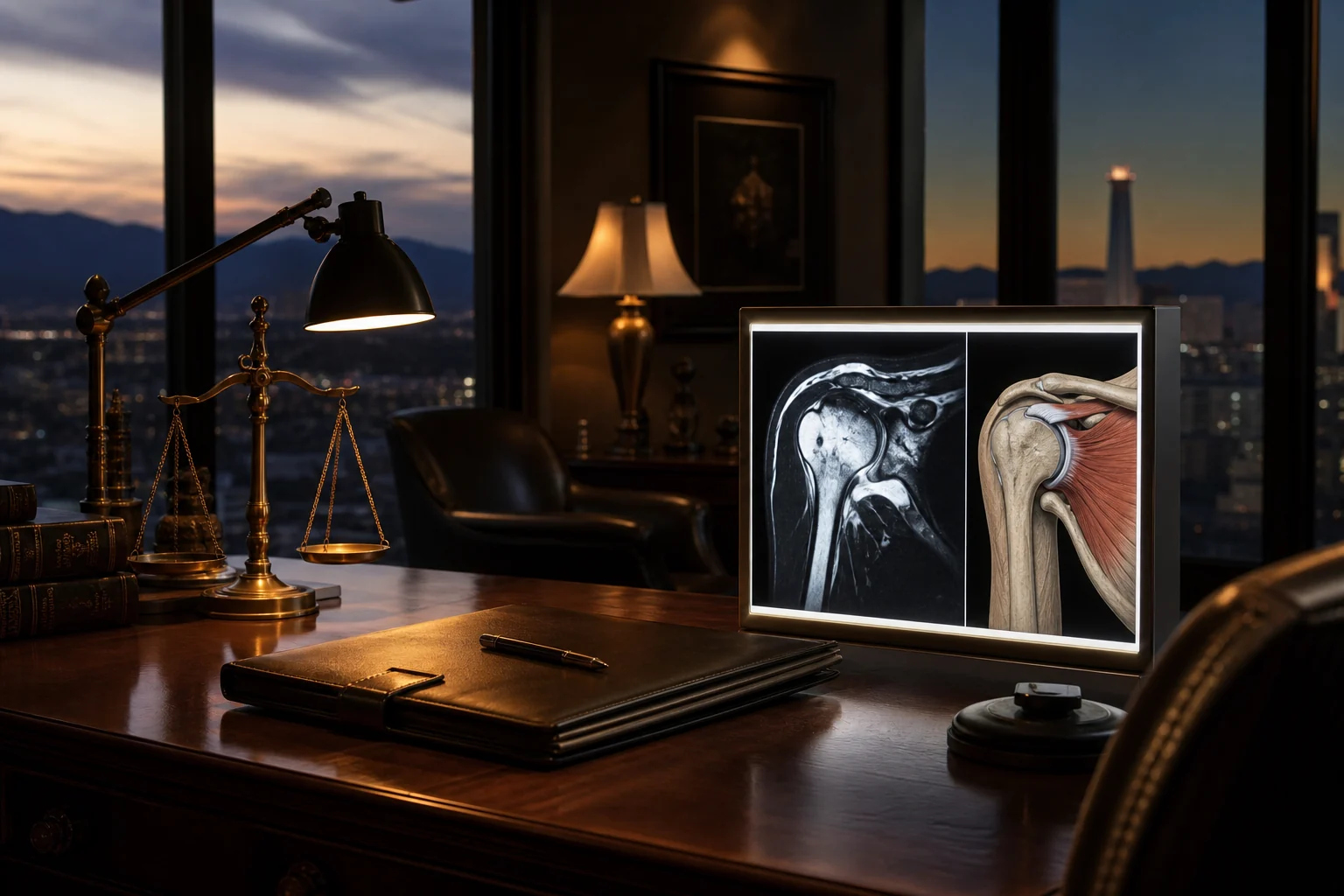
An initial examination may include strength and range-of-motion testing. X-rays can identify fractures, arthritis, or changes around the joint, but they do not directly show most tendon tears. MRI and diagnostic ultrasound can provide better soft-tissue detail. The treating provider may recommend medication, physical therapy, injections, activity restrictions, or referral to an orthopedic surgeon. When conservative care fails or a significant traumatic tear is present, arthroscopic repair or another procedure may be considered. The treatment plan should come from qualified medical professionals, not from an insurer’s preferred timeline.
Medical Evidence That Connects the Tear to the Accident
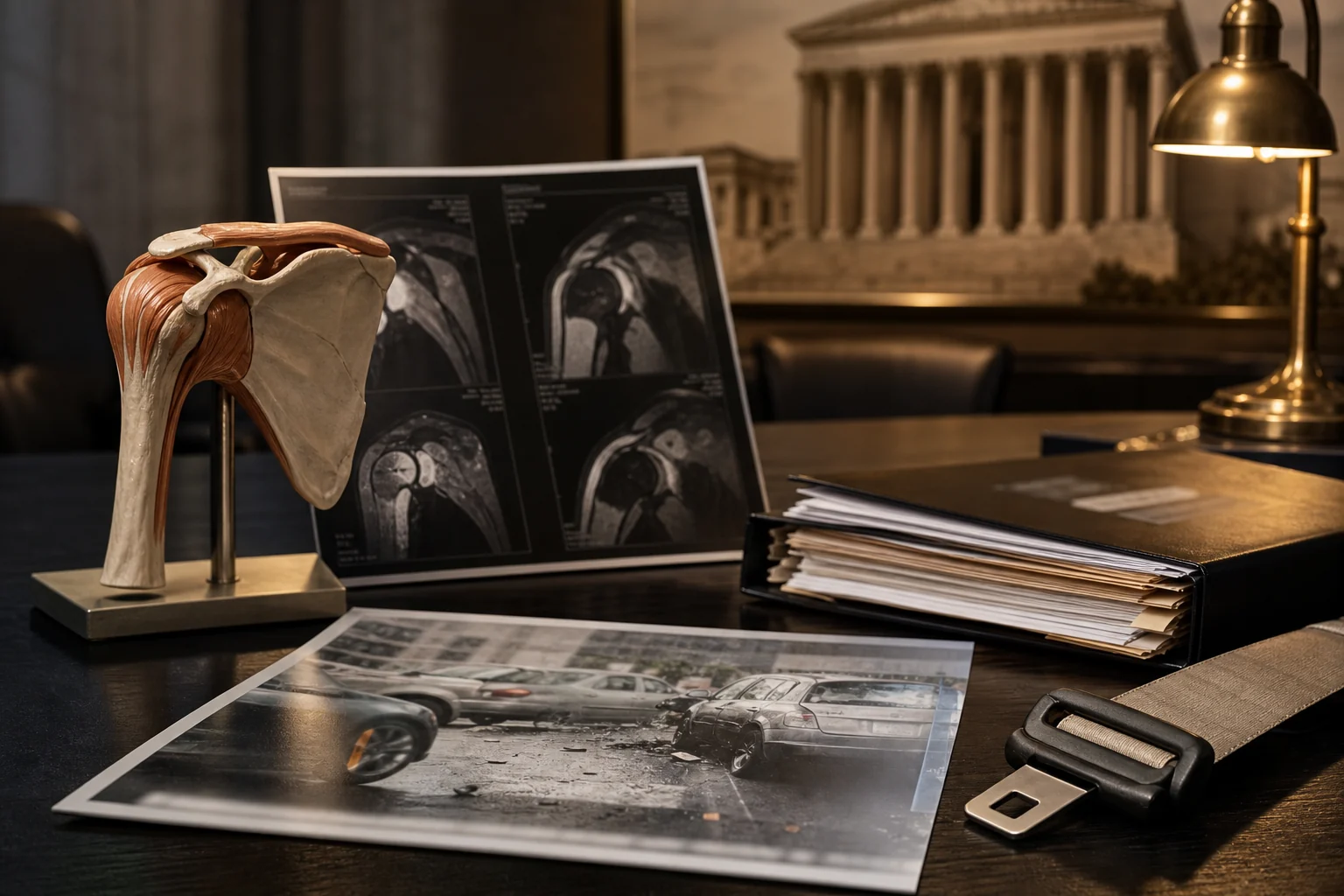
Strong documentation begins with the first visit. The record should accurately describe the accident mechanism, onset of symptoms, affected side, prior shoulder history, and functional limits. Follow-up notes can show whether pain and weakness persisted despite treatment. Imaging reports identify tendon involvement, tear size, retraction, muscle atrophy, inflammation, and degenerative findings. An orthopedic specialist can explain whether the pattern is consistent with acute trauma, chronic wear, or an acute-on-chronic injury and whether future treatment is reasonably necessary.
Before-and-after evidence is also valuable. Employment records, gym or recreational history, prior medical notes, photographs, and statements from family or coworkers may show that the person used the shoulder normally before the accident. A daily log can capture interrupted sleep, missed activities, help needed at home, and specific work tasks that became impossible. The goal is not to exaggerate symptoms; it is to preserve an accurate account that allows the insurer, attorneys, and ultimately a jury to understand how the injury changed real life.
Insurance Company Arguments in Shoulder Injury Cases
The most common defense is degeneration. Rotator cuff tissue can weaken with age, and imaging may use terms such as tendinosis, impingement, or chronic tearing. An insurer may treat those words as proof that the accident caused nothing. The legal and medical issue is more specific: did the event produce a new injury, enlarge a tear, accelerate the need for surgery, or turn a stable condition into painful disability? A person does not have to be in perfect health to be harmed by negligence. Complete prior records and a careful specialist opinion can address the distinction honestly.
Adjusters also point to delayed care, inconsistent appointments, social-media photographs, prior claims, or continued work. There may be legitimate explanations: shock after a crash, lack of transportation, waiting for a primary-care appointment, financial pressure, or modified work duties. Those facts should be documented rather than hidden. Giving a recorded statement without preparation can create avoidable confusion, and signing blanket medical authorizations may expose unrelated history. A lawyer can coordinate a focused evidence response while preserving the insurer’s right to investigate the claim.
Compensation Available for a Rotator Cuff Injury
Recoverable damages depend on the evidence and the individual case. Economic damages may include emergency care, imaging, specialist visits, physical therapy, medication, injections, surgery, rehabilitation, travel for treatment, lost wages, and reduced future earning capacity. Future medical damages should be supported by a reasonable treatment plan and cost evidence. A surgical case may involve months away from heavy work, postoperative therapy, lifting restrictions, and a risk of residual weakness even after the tendon heals.
Noneconomic damages address pain, inconvenience, emotional distress, sleep disruption, and loss of enjoyment of life. There is no automatic settlement chart that assigns a fixed amount to an MRI finding. Tear severity matters, but so do age, occupation, dominant arm, treatment response, credibility, pre-existing conditions, policy limits, and the quality of liability proof. A cashier, electrician, nurse, mechanic, parent, and professional athlete may experience the same diagnosis very differently. Any settlement should consider the likely long-term effect, not only bills already received.
Nevada Comparative Negligence and Filing Deadlines
Under Nevada’s modified comparative-negligence rule, an injured person’s recovery may be reduced by the percentage of fault assigned to that person. Recovery is generally barred when the claimant’s negligence is greater than the combined negligence of the defendants from whom recovery is sought. Insurers may use this rule to argue that a driver was speeding, ignored a warning, or contributed to a fall. Our guide to comparative negligence in Nevada personal injury cases explains why preserving scene evidence and witness accounts matters.
Nevada generally provides a two-year limitations period for an action seeking damages for injury to a person under NRS 11.190. That does not mean every claimant should wait two years. Video can be overwritten, vehicles repaired, witnesses lost, and medical causation harder to establish. Claims involving a public entity or employee can require additional procedures and notice, and other exceptions may alter the deadline. Prompt legal review protects the opportunity to investigate the correct parties without treating a general rule as advice for a particular case.
Steps to Protect a Las Vegas Shoulder Injury Claim
Seek appropriate care, describe the accident accurately, and attend recommended follow-up appointments. Preserve crash photographs, incident reports, witness information, damaged property, receipts, wage records, and communications with insurers. Do not post about physical activities in a way that can be taken out of context. Follow medical restrictions, but do not perform painful tasks merely to prove that you are trying. If the injury arose from a vehicle collision, our Las Vegas auto accident representation page explains how we investigate fault and insurance coverage.
Before resolving the claim, determine whether the shoulder has reached a stable diagnosis, whether surgery remains possible, whether work restrictions are temporary or permanent, and whether liens or health-insurance reimbursement claims must be addressed. A quick offer may look helpful while bills are accumulating, but a signed release usually ends the claim. It cannot be reopened simply because later imaging shows a larger tear or a surgeon recommends a costly repair.
- Can a car accident cause a rotator cuff tear? Yes. Bracing, seat-belt loading, direct impact, or violent rotation can injure shoulder tendons. Medical evidence must connect the mechanism and symptoms to the diagnosis.
- What if my MRI shows degeneration? Degeneration does not automatically defeat the case. A claim may involve a new tear or an accident that aggravated and made a pre-existing condition symptomatic.
- Do I need surgery to have a claim? No. Some tears are treated with therapy, medication, injections, and restrictions. The value depends on documented losses and limitations, not surgery alone.
- How long does a shoulder injury claim take? Timing depends on diagnosis, treatment, maximum medical improvement, liability disputes, insurance limits, and whether litigation is necessary. Settling before the prognosis is clear can undervalue future care.
- How much is a rotator cuff case worth? There is no fixed amount. Relevant factors include tear severity, treatment, lost income, future limitations, prior health, fault evidence, and available coverage.
Talk With a Las Vegas Personal Injury Attorney
A shoulder injury can affect nearly every movement of the upper body and threaten a person’s ability to earn a living, care for family, and live without constant pain. Thomas Boley has represented injured people in Clark County for more than 18 years. He understands how to combine accident evidence, orthopedic records, before-and-after proof, and future-care analysis into a clear demand for compensation while preparing the case for litigation when the insurer will not be reasonable.
Call (702) 435-3333 for a free consultation, or contact Thomas Boley online to discuss a rotator cuff or shoulder injury after an accident. You may also find our guide to herniated disc injury claims useful when a collision caused multiple orthopedic injuries. This article is informational only and is not legal advice. Every case is unique.
About the Author
Thomas Boley is a Nevada licensed attorney specializing in personal injury law and criminal defense. Since 2008, Thomas has represented thousands of clients in Las Vegas and Clark County, recovering millions of dollars in compensation for injury victims. He is a member of the State Bar of Nevada, the Clark County Bar Association, and the Nevada Justice Association.
Need Legal Help? Contact Thomas Boley for a free consultation: (702) 435-3333