Pickleball Injury Claims in Las Vegas: Who Is Liable
In This Article
Pickleball courts have multiplied across the Las Vegas Valley over the last two years, from dedicated clubs in Henderson and Summerlin to converted tennis courts at apartment complexes and city parks in North Las Vegas and across Clark County. With more players packed onto smaller courts, pickleball injury claims in Las Vegas are becoming a regular part of our premises liability practice, ranging from twisted ankles on cracked asphalt to collisions between doubles partners and opponents who never saw each other coming. At Thomas Boley Attorney At Law, we handle these claims, and this guide explains who can be held responsible, how waivers and public-park rules affect a case, and what to do after a fall or collision.
- A private pickleball club, apartment complex, or HOA that operates courts owes patrons and residents the ordinary Nevada premises liability duty of reasonable care for a safe playing surface, fencing, and lighting.
- Free public courts run by a city or county park may qualify for the recreational-use immunity in NRS 41.510, which limits liability for land opened to the public without charge for recreational purposes.
- A signed waiver at a paid club can bar an ordinary negligence claim, but it generally cannot excuse gross negligence or a known, unrepaired hazard.
- Nevada's modified comparative negligence rule, NRS 41.141, bars recovery only if you are found more than 50% at fault, which matters heavily in player-versus-player collision cases.
- A paddle manufacturer, net or fencing installer, or court resurfacing contractor can be liable when defective equipment or a construction defect causes the injury, separate from any claim against the venue.
- NRS 11.190 generally gives an injured player 2 years to file suit.
Pickleball Injury Claims in Las Vegas: How These Injuries Happen
Free case review
Injured or Facing Charges in Las Vegas?
Thomas Boley offers free consultations — no fees unless we win your case.
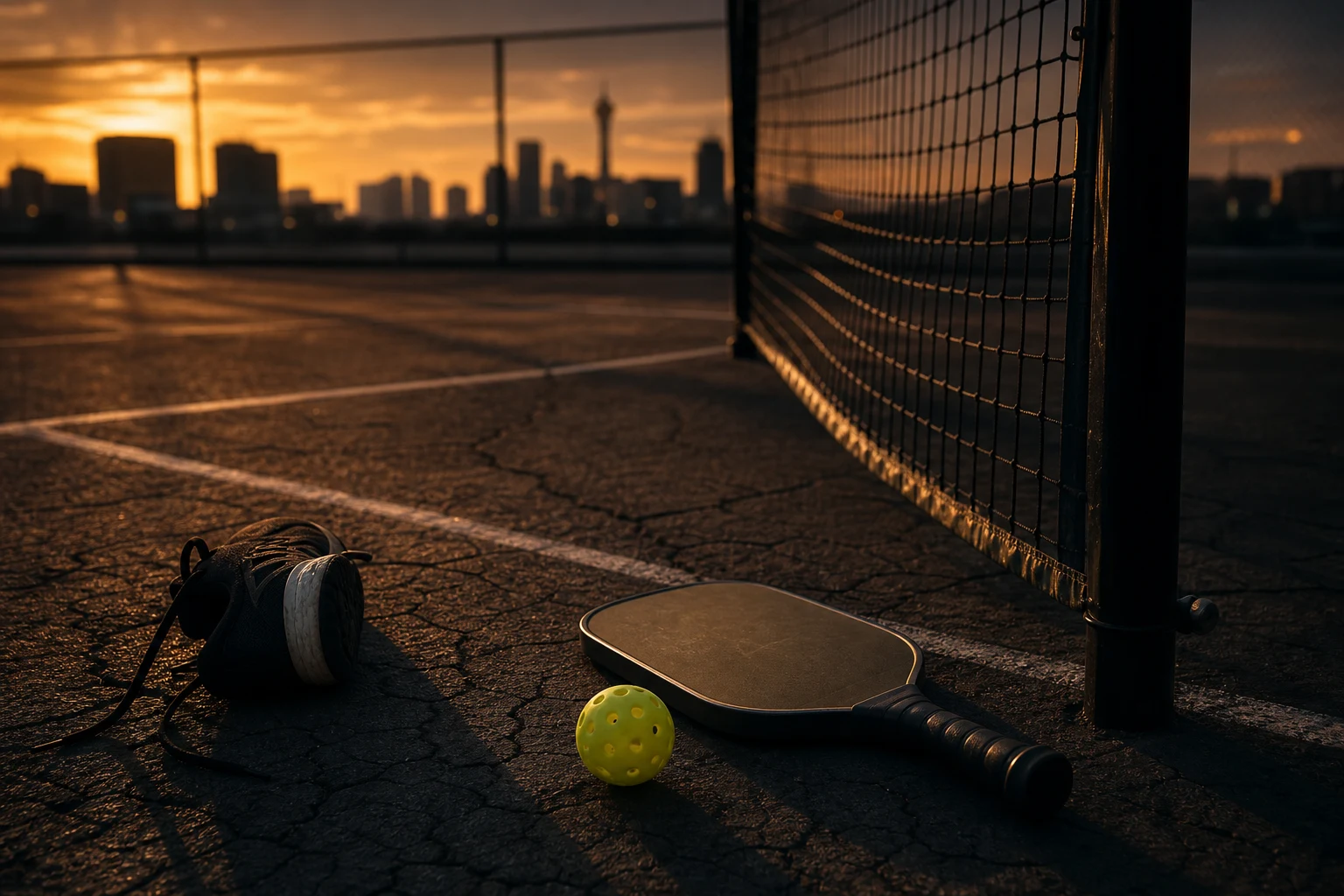
Pickleball's small court and fast-paced kitchen play put players close together, and injuries tend to cluster around a handful of recurring causes. Cracked, uneven, or poorly resurfaced asphalt catches a toe or an ankle mid-lunge. Doubles partners collide chasing the same ball, or a player backpedaling for a lob runs into an opponent at the net. A stray ball or a paddle swung during a fast exchange strikes another player in the eye, face, or hand. Courts converted from tennis lanes sometimes keep the old fencing, nets, or lighting, which were never designed for pickleball's shorter sightlines. And in the Las Vegas heat, players pushed onto courts without shade structures or water access can suffer heat exhaustion or a fall brought on by dehydration. Some falls are simply the price of a fast game. Others trace back to a surface defect, an equipment failure, or a facility decision about staffing and layout, and that decision is usually where a claim begins.
Who Can Be Held Liable for a Pickleball Injury
Several parties can share responsibility for a pickleball accident, depending on what actually caused the injury:
- The club, gym, resort, or HOA that owns and maintains the courts: a business or association that invites members and guests to play owes the ordinary duty of reasonable care to keep the surface, fencing, and lighting in safe condition.
- A property management company: apartment complexes and master-planned communities that added courts as an amenity can be liable for deferred maintenance, standing water, or a failure to repair a known crack or dip in the surface.
- The court builder or resurfacing contractor: improper drainage, incorrect surface coating, or a botched conversion from an old tennis court can create a defect that supports a construction or product liability claim.
- Equipment manufacturers: a paddle that delaminates, a net system that collapses, or a portable net post that tips over can point liability at the company that made or sold the equipment.
- Another player: reckless play, an unsafe overhead smash toward a crowded net, or ignoring a call to stop can create direct negligence liability against the player who caused the collision.
- An instructor or league organizer: a paid coach or tournament director who overcrowds a court, mismatches skill levels, or ignores a hazard reported during play can share liability alongside the venue.
Public Courts, Private Clubs, and Recreational-Use Immunity
Where you were injured changes the legal analysis more than almost anything else in a pickleball injury claim. Free courts at a Clark County or City of Las Vegas park may fall under Nevada's recreational-use immunity statute, NRS 41.510, which limits a landowner's liability for injuries on land opened to the public for recreational activities without an admission charge, as long as the owner did not willfully fail to warn of a known, hidden danger. That immunity does not disappear entirely, but it makes a claim against a public park meaningfully harder than a claim against a business that charges for court time. Paid clubs, gyms, resorts, and community centers with membership or reservation fees generally do not get that protection; they owe the ordinary commercial premises liability duty that applies to any business open to the public, and a poorly maintained surface or broken gate latch is treated like a hazard in any other retail or recreational setting.
Liability Waivers at Pickleball Clubs and Leagues
Most paid pickleball facilities and organized leagues in the Las Vegas Valley require players to sign a waiver, often as part of an online membership sign-up or a tablet check-in at the front desk. Nevada courts generally enforce a clearly written waiver against a claim of ordinary negligence, such as a routine collision during normal play, but a waiver does not excuse gross negligence, recklessness, or a hazard the facility knew about and failed to fix, such as a reported crack that was never repaired. A waiver can also be challenged if it is buried in unrelated paperwork, written in confusing language, or never actually presented to the player before an injury. Whether a specific waiver holds up almost always comes down to exactly how the injury happened and what the facility knew beforehand.
Comparative Negligence and Player-Versus-Player Collisions
Nevada follows a modified comparative negligence rule under NRS 41.141: an injured player can still recover as long as they are not found more than 50% at fault, and any award is reduced by their own percentage of fault. This rule is especially important in pickleball cases because so many injuries involve two players rather than a defect alone. Insurance adjusters and opposing players routinely argue that the injured party moved into the wrong lane, poached a shot that was not theirs, or ignored a "mine" or "yours" call. Those arguments can reduce a recovery or defeat it entirely, which is why documenting exactly how the collision happened matters as much as documenting the injury itself. Our article on comparative negligence in Nevada explains how fault gets divided between the parties in more detail.
Evidence to Preserve After a Pickleball Injury
- Photograph the exact spot where you fell or collided, including any cracks, standing water, debris, or damaged fencing, before the facility can repair it.
- Get the names and contact information of everyone on the court, including the other players, anyone waiting to play next, and staff who witnessed the incident.
- Ask the facility for a copy of any incident report, and request surveillance footage in writing right away; many systems overwrite recordings within days.
- Keep the shoes, paddle, or any equipment involved in the fall exactly as they were; do not clean or repair anything before it can be inspected.
- Save your reservation confirmation, membership agreement, or waiver, along with any signage posted near the court about rules or known hazards.
- Seek medical care promptly and keep every record; a gap between the injury and treatment gives an insurer room to argue the injury came from something else.
Common Injuries and Damages
Pickleball's quick direction changes and close quarters produce a recognizable pattern of injuries. Ankle sprains and Achilles tendon tears are among the most common, along with wrist and forearm fractures from a hard fall on an outstretched hand. Collisions between players can cause facial injuries, dental damage, or a concussion when a paddle or the ball strikes the head. Overuse and repetitive-motion injuries, sometimes called "pickleball elbow," can also support a claim when they stem from a defective paddle or an instructor pushing an unsafe drilling pace. Depending on severity, a claim can include medical bills, lost income, pain and suffering, and, for lasting injuries, future care costs. Our guides to gym and fitness injury claims and slip and fall liability in Nevada cover related premises liability standards in more depth.
Statute of Limitations for Pickleball Injury Claims in Nevada
NRS 11.190 generally gives an injured person 2 years from the date of the accident to file a personal injury lawsuit in Nevada, and the same period usually applies to a product liability claim against a paddle or net manufacturer. Waiting does not just risk the filing deadline; it also risks the surveillance footage, incident report, and witness memories that make or break a premises liability case. Our overview of the Nevada statute of limitations for personal injury covers the general rules and a few exceptions worth knowing.
- Can I sue a Las Vegas pickleball club for my injury? Often, yes, if the injury came from a maintained surface defect, faulty equipment, or unsafe conditions the facility knew about. Free public park courts may have more legal protection under Nevada's recreational-use immunity statute.
- I signed a waiver before playing. Does that end my claim? Not necessarily. A waiver may bar an ordinary negligence claim, but it generally cannot excuse gross negligence or a known, unrepaired hazard.
- Can I sue another player who collided with me? Possibly, if their conduct was reckless or careless beyond ordinary contact expected during play, subject to Nevada's comparative negligence rule.
- What if my paddle or the net broke and caused my injury? A defect in the equipment can support a product liability claim against the manufacturer or seller, separate from any claim against the venue.
- How long do I have to file a claim? Generally 2 years from the date of the injury under NRS 11.190.
- What should I do right after a fall or collision? Get medical care, photograph the court and your injuries, collect witness names, and request the facility's incident report and surveillance footage in writing.
Speak With a Las Vegas Personal Injury Attorney About a Pickleball Injury
Thomas Boley has represented injury victims throughout Clark County for more than 18 years, including premises liability cases that turn on court maintenance, equipment defects, and waiver disputes. Because surveillance footage and court conditions change quickly, getting a Las Vegas personal injury attorney involved early helps protect the evidence a claim depends on.
Call (702) 435-3333 for a free consultation, or contact Thomas Boley online to discuss a pickleball injury in Las Vegas, Henderson, Summerlin, North Las Vegas, or elsewhere in Clark County. Our slip and fall practice handles premises liability injuries of every kind. This article is informational only and is not legal advice. Every case is unique.
About the Author
Thomas Boley is a Nevada licensed attorney specializing in personal injury law and criminal defense. Since 2008, Thomas has represented thousands of clients in Las Vegas and Clark County, recovering millions of dollars in compensation for injury victims. He is a member of the State Bar of Nevada, the Clark County Bar Association, and the Nevada Justice Association.
Need Legal Help? Contact Thomas Boley for a free consultation: (702) 435-3333