
Perjury Charges in Las Vegas: What Nevada Law Requires
In This Article
Quick answer: Perjury charges in Las Vegas involve more than simply saying something inaccurate in court. NRS 199.120 covers specified willful statements after a lawful oath or affirmation in a judicial proceeding or another matter requiring one by law, as well as certain false affidavits and inducing another person's prohibited statement. NRS 199.145 separately addresses declarations made under penalty of perjury. Both provisions classify covered perjury and subornation as category D felonies. The exact words, document, setting, and evidence of what the speaker knew matter more than a later disagreement over the facts. Individual facts always require close attention and careful review. See the official text: official Nevada statute and official Nevada statute.
What conduct does NRS 199.120 describe?
The opening language of NRS 199.120 applies to a person who has taken a lawful oath or made an affirmation in a judicial proceeding, or in another matter where law requires an oath or affirmation and no other penalty is prescribed. The statute then identifies several forms of conduct. One is willfully making an unqualified statement about something the person does not know to be true. Another is willfully swearing or affirming falsely about a matter material to the issue or point in question. It also reaches suborning another person to make either kind of statement. These alternatives should not be collapsed into a single rule that every error under oath is a felony.
Free case review
Injured or Facing Charges in Las Vegas?
Thomas Boley offers free consultations — no fees unless we win your case.
The same section separately describes executing an affidavit under NRS 15.010 containing a false statement, or inducing another person to do so. It also describes executing an affidavit or other instrument containing a false statement before someone authorized to administer oaths, or inducing another person to do that. Whether a particular paper fits one of these descriptions depends on its contents, execution, and the authorized official's role. A lawyer should identify the precise statutory alternative charged rather than assume that trial testimony is the only possible basis.
Oath, affirmation, affidavit, or declaration: why the form matters
Nevada defines an oath broadly. Under NRS 199.125, it includes an affirmation and every other legally authorized way of attesting that a statement is true; stating a matter under oath counts as swearing to it. A person need not use one particular religious phrase for the statute to apply. The relevant questions include whether the oath or affirmation was lawful, what was actually attested, and which provision covers the setting. Read official Nevada statute.
An affidavit ordinarily involves a written statement executed with an oath before an authorized person. A declaration under penalty of perjury is a different statutory route. NRS 199.145 covers a willful, false statement material to the issue or point in question in such a declaration, or a willful unqualified assertion of something the declarant does not know to be true. It also covers suborning another to make a statement of either kind in that declaration. The prosecutor must establish the applicable route; a document's title alone does not settle what it is or whether the statutory conditions were met.
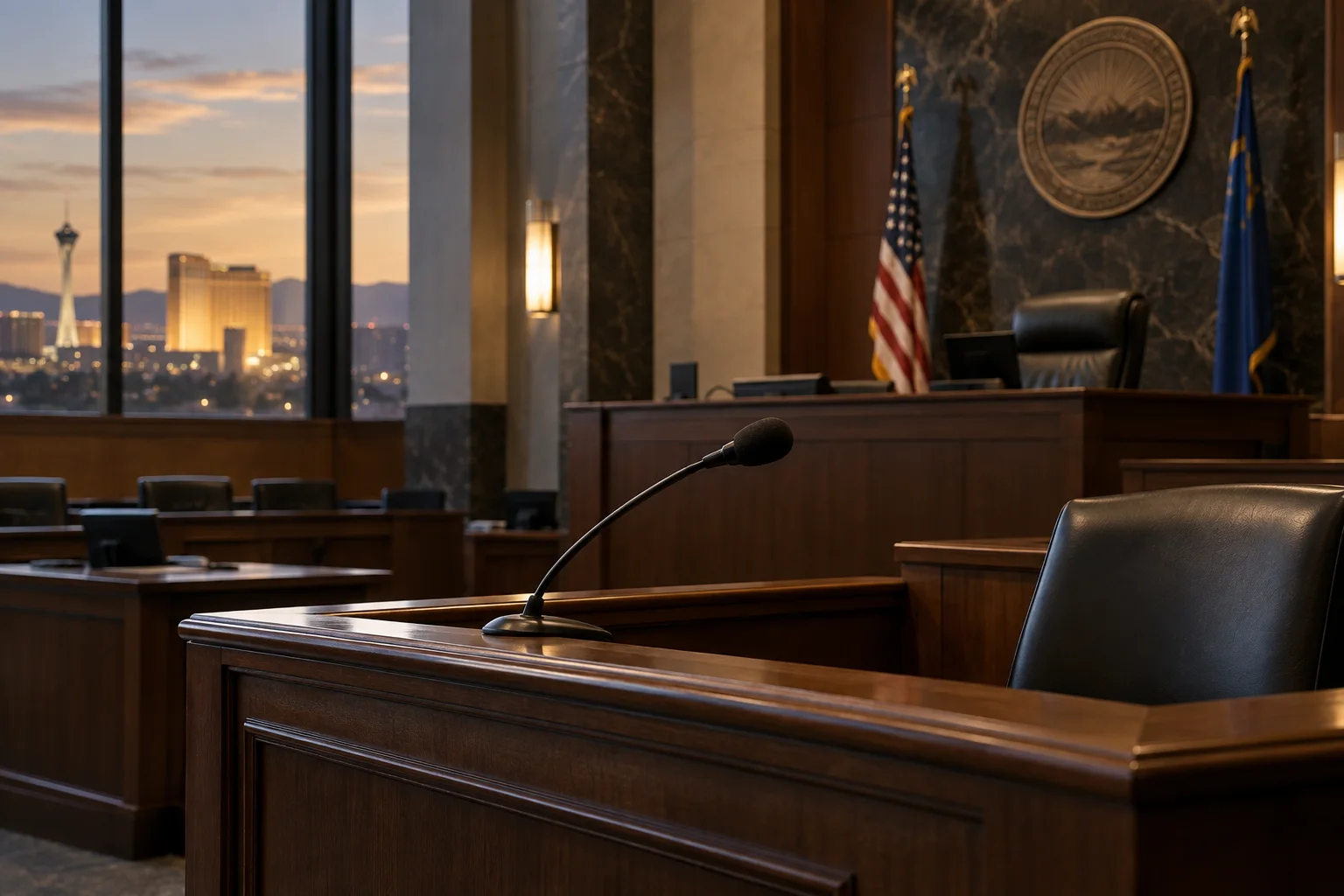
Willfulness, knowledge, and materiality are distinct questions
Willfulness concerns the person's conduct at the time of the statement. A contradiction between two versions may justify closer inquiry, but it does not by itself show a deliberate falsehood or a deliberate assertion without knowledge. Interview notes, earlier drafts, translations, instructions given to the witness, and the exact question-and-answer sequence can illuminate what the person understood. A statement should be assessed in context, not as a sentence lifted from a transcript. A witness who says 'I think' is not necessarily making the same assertion as someone who claims certainty; the surrounding language still controls.
Nevada's text expressly distinguishes a willfully false statement material to the issue or point in question from a willful, unqualified statement about something the person does not know to be true. The latter alternative is important even if the prosecution cannot prove the speaker knew a contrary fact. NRS 199.200 equates an unqualified assertion of what one does not know to be true with an assertion one knows to be false. Materiality is expressly stated in the false-statement alternatives of NRS 199.120(2) and 199.145(1); avoid assuming that identical wording governs every alternative, including the affidavit clauses. See official Nevada statute.
What penalties can a Nevada perjury conviction carry?
Perjury or completed subornation under NRS 199.120 and NRS 199.145 is a category D felony. The general sentencing provision, NRS 193.130(2)(d), provides a state-prison sentence with a minimum term of at least one year and a maximum term of no more than four years; a court may also impose a fine up to $5,000 unless another statute authorizes or requires more. Nevada uses minimum and maximum terms, and NRS 193.130(1) imposes an additional relationship between them. The statutory range does not predict the sentence, eligibility for alternatives, or disposition in an individual case. Official source: official Nevada statute.
Collateral effects can also matter: a felony accusation may affect work, licensing, immigration questions, or an underlying civil or criminal case, depending on personal circumstances and governing rules. Those consequences are not uniform. Anyone concerned about immigration status should seek qualified immigration advice as well as criminal defense advice before making decisions about a plea. A charge is an allegation, not a conviction; the prosecution bears the burden of proving the charged offense in court. Read our witness intimidation guide for a separate offense involving pressure on a witness.
What defenses or challenges might the evidence support?
Potential issues include an ambiguous question, a truthful answer to a different reasonable reading of the question, a mistaken recollection, an inaccurate transcription, or evidence that the speaker believed a statement was true. A lawyer may also examine whether an assertion was actually unqualified, whether knowledge can be proven, whether the alleged falsehood was material where the charged subsection requires it, and whether the paper or proceeding fits the cited statute. None of these is an automatic defense: a persuasive theory needs facts, documents, and the applicable law.
Do not assume that a procedural imperfection in administering the oath ends a case. NRS 199.180 says an irregular manner of administering or taking an oath, or a witness's incompetency, is not a defense to perjury if the person actually gave the covered testimony or made the relevant deposition, certificate, or affidavit. Likewise, a subsequent correction may be relevant evidence of intent and timing, but it is not a guaranteed cure for an earlier completed offense. A defense assessment must account for these limits rather than promise dismissal. See official Nevada statute.
How to respond to an investigation or a suspected false statement
First, preserve the original documents and context: the signed statement, every draft and attachment, correspondence about preparation, notices of the proceeding, recordings, and any transcript. Record when and to whom each version was delivered, but do not change a document or ask someone to align their account with yours. Seemingly minor wording differences can affect which statutory theory applies. If you have only a partial transcript, obtain the full question-and-answer sequence through proper channels before drawing conclusions.
Second, speak with a criminal defense attorney promptly, especially before a new interview, affidavit, or declaration. Counsel can compare the alleged statement with the governing oath or declaration language, identify the issues to which it related, and consider whether related proceedings create additional risks. Do not treat an online article as permission to ignore a subpoena or court order; ask counsel about the obligation and the lawful way to respond. Do not contact witnesses to coordinate stories, destroy messages, or publish a detailed account while facts are being reviewed. Explore the criminal defense practice for the broader process and our digital evidence guide for related record questions.
A useful timeline separates the date an event occurred from the date someone described it. List who supplied each fact, which records existed then, and when a correction became possible. Preserve metadata and original files rather than creating a cleaned-up replacement. If a form was prepared by another person or translated, retain those communications too. These steps do not establish innocence or resolve legal duties; they give counsel a more reliable basis to examine the speaker’s understanding and the prosecution’s theory. Ask counsel before sending a proposed correction to a court, agency, or opposing party.
Subornation, attempted subornation, and related offenses
Subornation means inducing another person to make one of the prohibited statements described in NRS 199.120 or 199.145. It is not the same as merely disagreeing with a witness or preparing someone to testify truthfully. The statutory language matters when evaluating what was asked, what the other person said, and whether a prohibited statement was actually made. Completed subornation under those sections is classified with perjury as a category D felony.
NRS 199.150 addresses a different situation: without giving, offering, or promising a bribe, a person incites or attempts to procure another to commit perjury, offer false evidence, or withhold true testimony. It is a gross misdemeanor even if no perjury occurs, no false evidence is offered, and no true testimony is withheld. Bribery or intimidation may implicate other statutes rather than this precise no-bribe provision. The wording and conduct alleged therefore matter. Read official Nevada statute. Separate provisions also address false writings used to seek warrants and other evidence-related misconduct; a charging document should be reviewed on its own terms.
Frequently asked questions
Is every false statement material? No. Materiality is an express requirement for the willfully false, material-statement alternatives in NRS 199.120(2) and 199.145(1). The statutes separately describe willful unqualified assertions of what a person does not know to be true, as well as affidavit-related acts in NRS 199.120. Counsel should identify the charged alternative before treating materiality as a universal shortcut.
What if I later corrected the statement? A prompt correction may help explain what happened, but the cited statutes do not provide a blanket rule that recanting erases a completed offense. Before amending a filing or giving new sworn testimony, seek advice about accurate wording and the procedure in that forum. Never replace an uncertain answer with a new confident assertion merely to make a record look consistent.
Discuss a Las Vegas perjury allegation with Boley Law Group
If you have received notice of a possible perjury or subornation investigation in Las Vegas, contact Boley Law Group to discuss the specific statement, document, and proceeding with a lawyer. Bring the charging papers or inquiry, complete transcripts if available, and the original version of any declaration or affidavit. A focused review can identify which provision is alleged and what additional records are needed; it cannot guarantee a particular outcome. Early, accurate advice may help you avoid making another statement before you understand the legal questions. You can contact our office to request a consultation.
Disclaimer: This article provides general Nevada legal information, not legal advice or an attorney-client relationship. Statutes and their application can change, and federal law or another jurisdiction's law may differ. Obtain advice from a qualified lawyer about your facts, deadlines, and available options.
About the Author
Thomas Boley is a Nevada licensed attorney specializing in personal injury law and criminal defense. Since 2008, Thomas has represented thousands of clients in Las Vegas and Clark County, recovering millions of dollars in compensation for injury victims. He is a member of the State Bar of Nevada, the Clark County Bar Association, and the Nevada Justice Association.
Need Legal Help? Contact Thomas Boley for a free consultation: (702) 435-3333