Nevada Probation Violation: What Happens at a Revocation Hearing in Las Vegas
In This Article
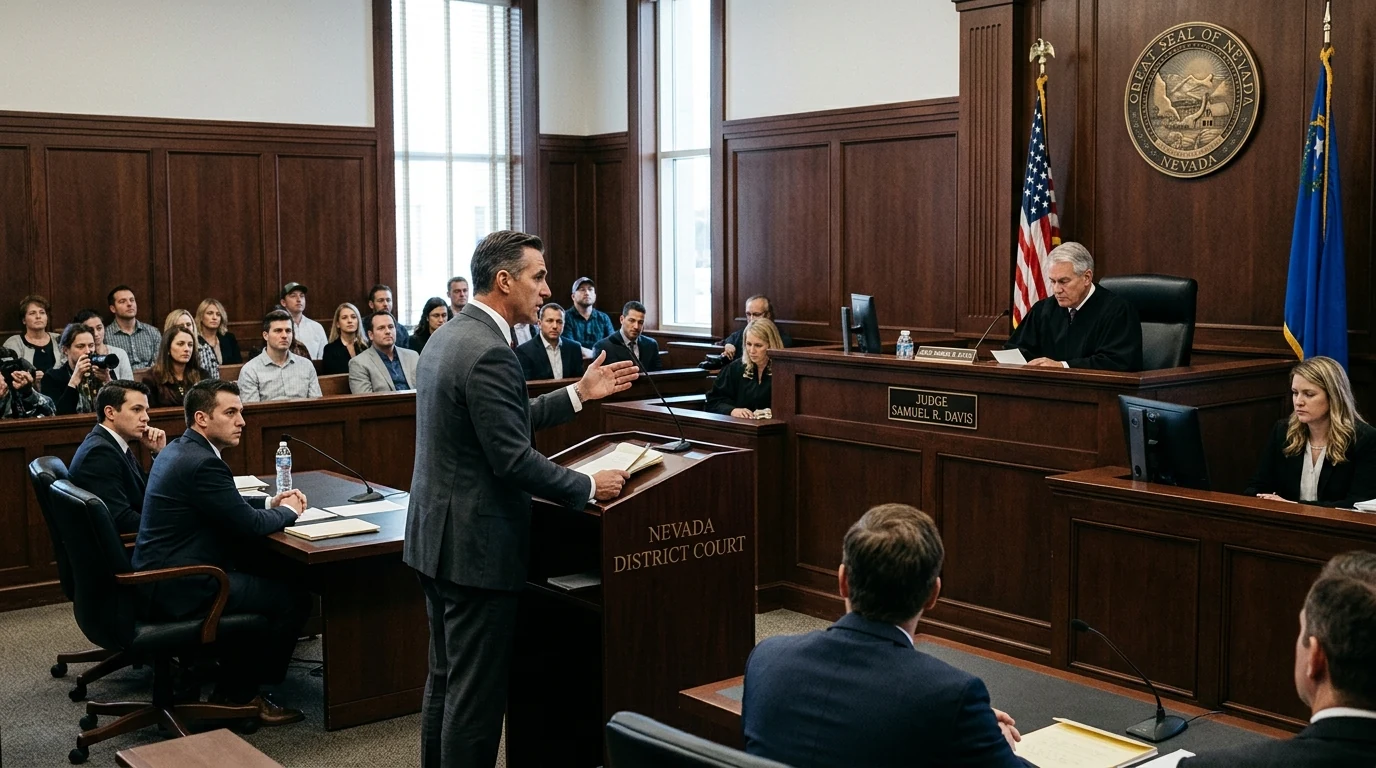
A Nevada probation violation can put you back behind bars — often for the full term of the original suspended sentence, plus additional time. Probation in Nevada (governed by NRS Chapter 176A) is a conditional alternative to incarceration. When the state alleges you've violated its conditions, a revocation hearing is scheduled before the same judge who sentenced you. Unlike a criminal trial, these hearings use a much lower evidentiary standard, and the consequences can be immediate and severe. Whether you're accused of a technical violation (missing a meeting, failing a drug test) or a substantive violation (new criminal charges), the Law Offices of Thomas Boley defends clients at probation revocation hearings throughout Clark County. Call (702) 435-3333 for a free consultation.
Types of Nevada Probation Violations
Nevada probation violations fall into two categories:
Technical violations involve breaching the administrative conditions of probation without committing a new crime:
• Missing a required check-in with your probation officer
• Failing or refusing a drug or alcohol test
• Leaving Clark County or Nevada without prior permission
• Failing to complete court-ordered community service, treatment, or classes
• Not paying restitution, fines, or supervision fees
• Associating with known felons or co-defendants if prohibited
• Failing to maintain employment or school enrollment as required
Substantive violations involve being arrested for or convicted of a new offense while on probation. A new arrest — even without a conviction — can trigger a revocation proceeding. The new charge is handled separately in criminal court, while the probation violation is handled before your original sentencing judge.
Free case review
Injured or Facing Charges in Las Vegas?
Thomas Boley offers free consultations — no fees unless we win your case.
We cover the surrounding issues in more depth in nevada Record Sealing and in drug Possession Charges in Nevada.
The Nevada Probation Revocation Process (NRS 176A.630)
When a probation officer reports a violation to the court, the following process unfolds:
1. Arrest or summons: You may be arrested on a bench warrant issued by the court, or you may receive a summons to appear. In Clark County, probation violations often result in immediate arrest and detention without bail pending the hearing.
2. Initial appearance: You appear before the judge to hear the alleged violation. The judge can release you, detain you, or set bail at their discretion.
3. Preliminary hearing (if detained): Under Gagnon v. Scarpelli (1973) and Nevada law, you have a right to a preliminary hearing to determine whether there is probable cause that a violation occurred, and to a final revocation hearing.
4. Revocation hearing: The state presents evidence of the alleged violation. The standard of proof is preponderance of the evidence — much lower than the "beyond a reasonable doubt" standard in a criminal trial. Hearsay evidence is generally admissible. You have the right to present evidence, call witnesses, and be represented by counsel.
5. Judge's decision: The judge has broad discretion to: revoke probation and impose the original suspended sentence; reinstate probation with the same or stricter conditions; modify conditions (adding treatment, curfew, electronic monitoring); or dismiss the violation if the evidence is insufficient.
Your Rights at a Nevada Probation Revocation Hearing
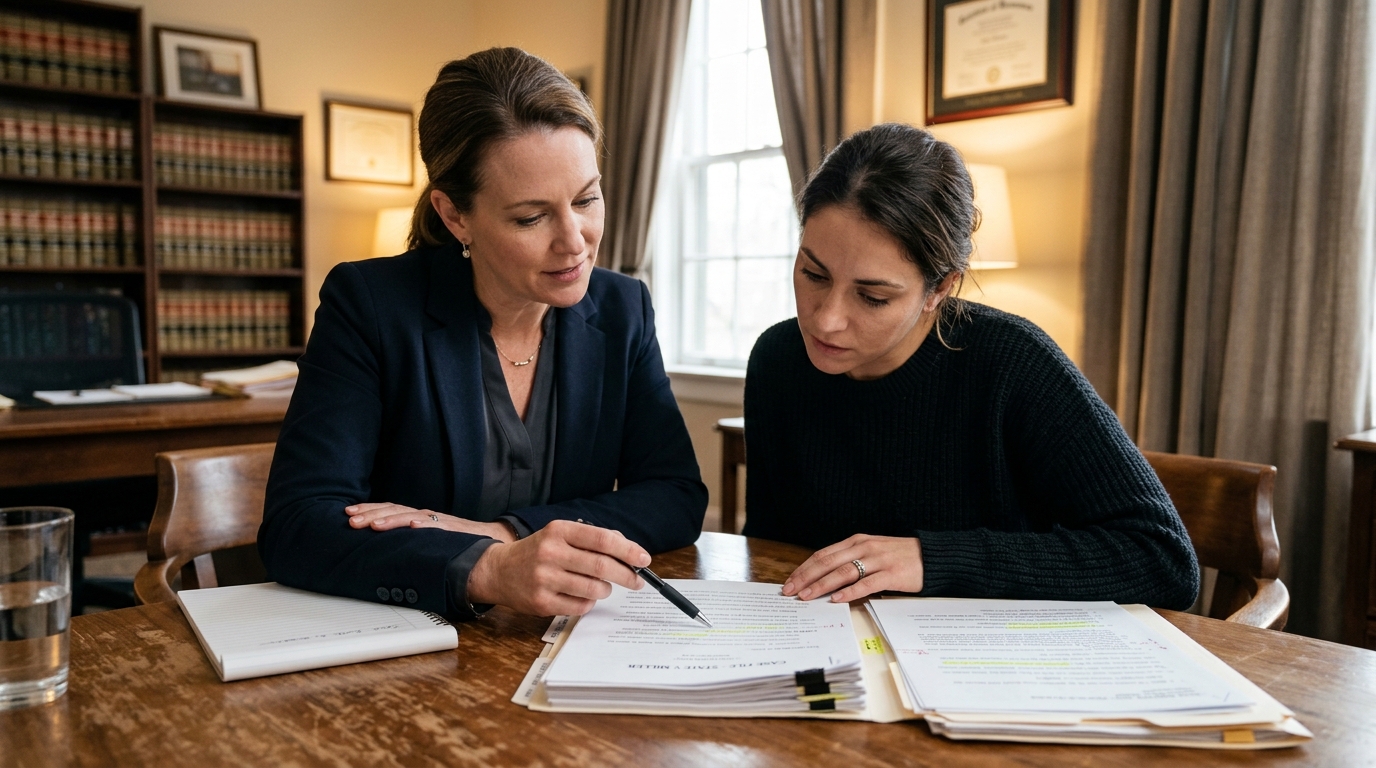
Despite the lower standard of proof, Nevada probationers have important constitutional protections at revocation hearings established in Morrissey v. Brewer (1972) and Gagnon v. Scarpelli:
• Written notice of the claimed violations
• Disclosure of the evidence against you
• The opportunity to be heard in person and to present witnesses and evidence
• The right to confront and cross-examine adverse witnesses (unless good cause exists to deny confrontation)
• A neutral and detached hearing body
• A written statement of the evidence relied upon and the reasons for revoking probation (if revoked)
• The right to counsel — if you cannot afford one, the court must appoint a public defender
These rights are meaningful. A skilled defense attorney can challenge the admissibility of evidence, cross-examine the probation officer, present mitigating circumstances, and negotiate alternatives to full revocation.
Defense Strategies in Nevada Probation Violation Cases
Challenging the factual basis of the violation: Many technical violations are disputed — a drug test result may have been a false positive, a missed appointment may have been caused by a documented medical emergency, or there may be paperwork errors showing you actually complied. We review all evidence before the hearing.
Presenting mitigation: Even if a violation is admitted, the judge has discretion in the outcome. Evidence of rehabilitation, employment, family support, sobriety, and completion of other conditions can persuade the court to reinstate probation rather than impose incarceration. Character letters, drug test results, employment verification, and treatment compliance records all matter.
Challenging hearsay and procedural issues: While hearsay is generally admissible at revocation hearings, there are limits. Evidence obtained in violation of your constitutional rights may still be suppressible. We scrutinize the record for procedural defects.
Negotiating with the probation officer and prosecutor: In Clark County, early communication with the supervising probation officer and prosecutor can sometimes result in an agreed resolution — such as a brief jail stay in lieu of full revocation, or a modification of conditions — before the hearing.
Contesting new charge-based violations: If the violation is based on a new arrest and you are ultimately acquitted of the new charge, that acquittal is powerful evidence at the revocation hearing (though not automatically dispositive).
Consequences of a Probation Revocation in Nevada
If the court revokes your probation, it may impose:
The original suspended sentence: If you were sentenced to 3 years suspended with probation, revocation can mean serving those 3 years in Nevada State Prison. Additional time for the violation itself: Some revocations result in time above the original suspended sentence. Loss of earned good-time credits: Time served on probation generally does not count as time served on the original sentence. Impact on subsequent cases: A revocation is a severe negative factor in any future criminal matter, including sentencing on the new charge that triggered the violation. Record consequences: A probation revocation can affect the timing of record sealing eligibility under NRS 179.245 — the waiting period runs from the date of discharge from supervision, not the original conviction date.
Frequently Asked Questions
Q: Can I be violated for a positive drug test if I have a medical marijuana card?
A: In most cases, yes. Nevada probation conditions typically prohibit the use of any controlled substance without a valid prescription, and many probation orders specifically prohibit marijuana use even with a medical card. If marijuana use is a specific prohibited condition of your probation, a positive test can result in a violation — even though recreational marijuana is legal in Nevada for non-probationers.
Q: What happens if I miss a probation appointment because of a genuine emergency?
A: A documented emergency — hospitalization, documented transportation failure, a family crisis — is a legitimate defense to a technical violation. Notify your probation officer as soon as possible, document the reason in writing, and contact an attorney immediately if a violation report has been filed. Courts generally respond more favorably when there is contemporaneous documentation of the reason for the missed appointment.
Q: Can I get bail if I'm arrested for a probation violation in Las Vegas?
A: There is no automatic right to bail on a probation violation in Nevada — the court has discretion to detain you pending the hearing. However, an attorney can argue for release at the initial appearance, particularly for minor technical violations, clients with strong community ties, and those who have been compliant for most of their probationary period.
Q: If I'm acquitted of the new charge that triggered the violation, does the probation case go away?
A: Not automatically. The revocation hearing uses a preponderance of the evidence standard, which is much lower than the criminal "beyond a reasonable doubt" standard. A criminal acquittal is strong mitigating evidence but does not automatically resolve the probation violation. An experienced attorney is essential to leverage the acquittal effectively at the revocation hearing.
Q: How quickly does a probation violation hearing happen in Clark County?
A: Clark County courts generally schedule revocation hearings within a few weeks of the violation report. If you are detained pending the hearing, the timeline may be faster. Contact our office at (702) 435-3333 immediately — early intervention gives us the best opportunity to negotiate a favorable resolution before the hearing date.
For more information, visit our Las Vegas criminal defense attorney | schedule a free consultation | all practice areas.
About the Author
Thomas Boley is a Nevada licensed attorney specializing in personal injury law and criminal defense. Since 2008, Thomas has represented thousands of clients in Las Vegas and Clark County, recovering millions of dollars in compensation for injury victims. He is a member of the State Bar of Nevada, the Clark County Bar Association, and the Nevada Justice Association.
Need Legal Help? Contact Thomas Boley for a free consultation: (702) 435-3333