Nevada DUI Breath Test Refusal: Implied Consent Law Guide
In This Article
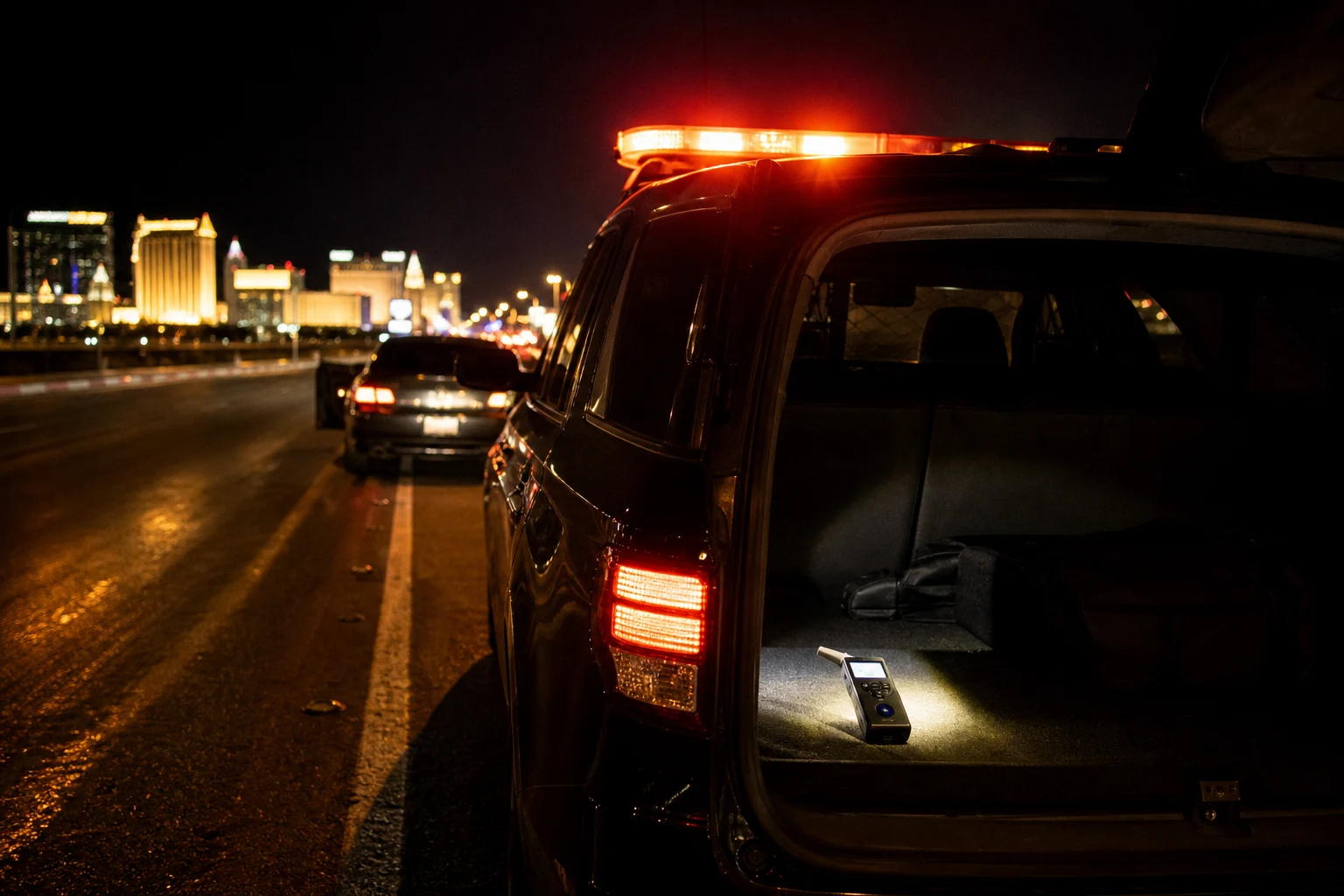
A late-night traffic stop on the Strip or a quiet Henderson side street can turn into a fast, high-stakes decision: do you take the breath or blood test the officer is asking for, or do you refuse? A Nevada DUI breath test refusal does not make a DUI stop go away, and it carries its own separate consequences under state law, on top of whatever happens with the underlying DUI charge. At Thomas Boley Attorney At Law, we represent people arrested for DUI throughout Clark County, including cases that start with a refused breath or blood test, and this guide explains how Nevada's implied consent law actually works, what refusal costs you, and how it can affect your defense.
- Nevada's implied consent law, NRS 484C.150 and NRS 484C.160, means anyone who drives in the state is deemed to have already agreed to a preliminary and an evidentiary chemical test if lawfully arrested for DUI.
- Refusing an evidentiary breath, blood, or urine test triggers an automatic driver's license revocation through the DMV, separate from any criminal DUI penalty.
- A first refusal generally results in a one-year revocation; a refusal within seven years of a prior refusal-based revocation can mean three years under NRS 484C.210.
- If officers have reasonable grounds to believe the DUI caused death or substantial bodily harm to another person, NRS 484C.160(9) allows them to seek a warrant or court order for a forced blood draw even after a refusal.
- A refusal can be introduced as evidence against you at trial, and it does not prevent a DUI arrest or prosecution from moving forward.
- How officers documented the stop, the arrest, and the refusal itself often becomes a central issue in the defense.
Nevada DUI Breath Test Refusal: How Implied Consent Law Works
Free case review
Injured or Facing Charges in Las Vegas?
Thomas Boley offers free consultations — no fees unless we win your case.
Nevada does not ask drivers to agree to chemical testing at the moment of a stop; the law treats that consent as already given the moment someone gets behind the wheel. NRS 484C.150 provides that any person who drives or is in actual physical control of a vehicle on a Nevada highway is deemed to have consented to a preliminary breath test when an officer has reasonable grounds to believe the person is under the influence. NRS 484C.160 extends that same deemed consent to an evidentiary test of blood, urine, breath, or another bodily substance once a lawful DUI arrest has been made. In practice, that means a Nevada DUI breath test refusal is not simply declining a request, it is withdrawing consent the law already says you gave, and withdrawing it has its own built-in penalty structure independent of whether you are ultimately convicted of DUI.
Preliminary Test vs. Evidentiary Test: What's the Difference
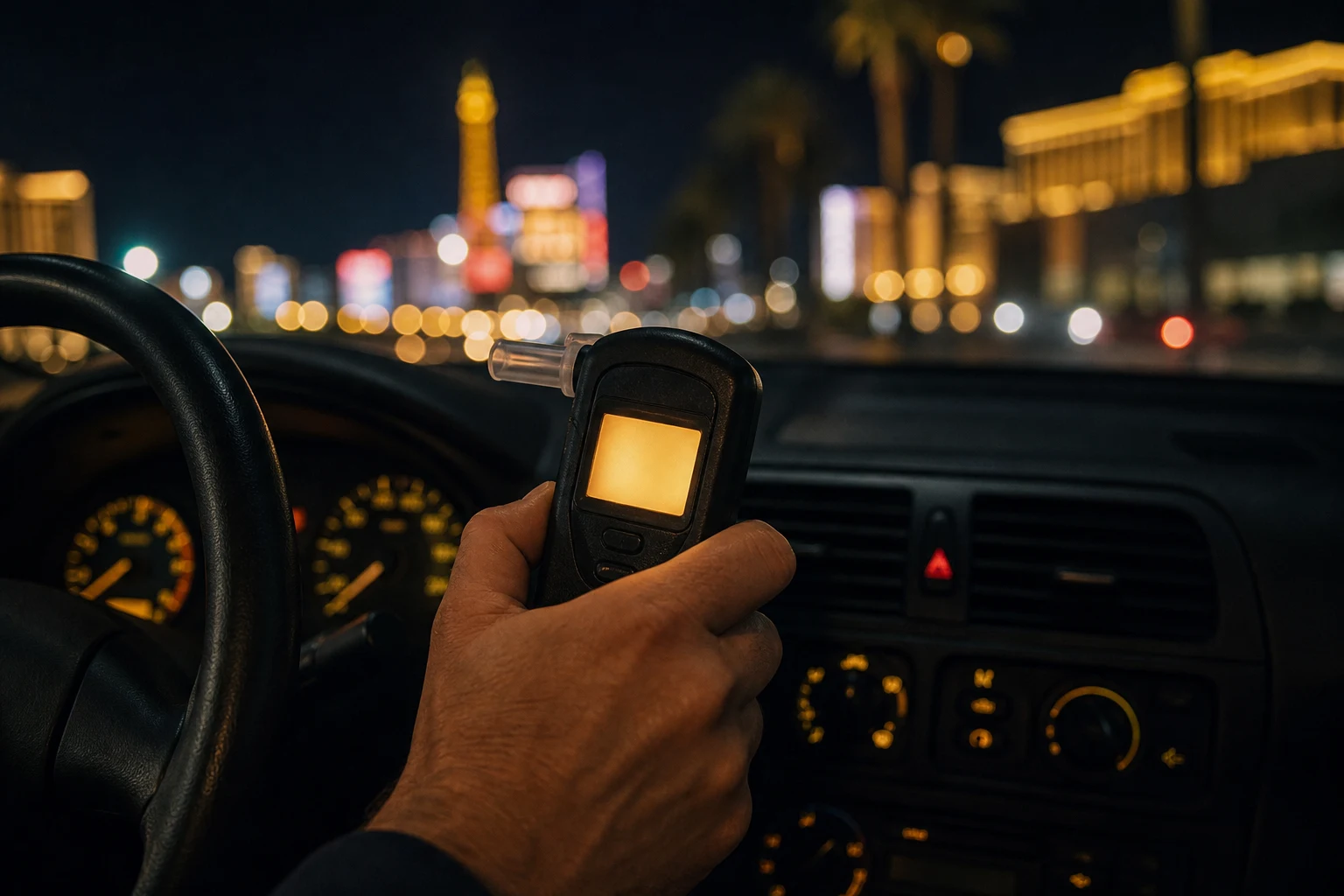
These two tests get confused constantly, and the confusion matters because the consequences for refusing each one are not identical in practice. A preliminary breath test is the handheld device an officer may use roadside, before an arrest, to help establish probable cause. An evidentiary test is the more formal breath, blood, or urine test administered after arrest, typically at a police station, jail, or hospital, using equipment intended to produce a result that can be used in court. Officers in Nevada generally have discretion over which evidentiary test to require, and a driver does not get to pick breath over blood simply because it is less invasive. Refusing either stage can factor into an officer's case, but it is the post-arrest evidentiary test refusal under NRS 484C.160 that triggers the license revocation and forced-draw provisions discussed below.
What Happens If You Refuse a Breath or Blood Test
Refusing an evidentiary test after a lawful DUI arrest does not end the encounter. The officer will typically still book the driver on suspicion of DUI, and the refusal itself becomes part of the case file. Nevada law treats the refusal as an independent administrative event: it is reported to the Nevada DMV, it can trigger license revocation regardless of whether the criminal DUI charge ever results in a conviction, and it can be mentioned to a jury at trial as evidence of consciousness of guilt, meaning prosecutors are generally permitted to argue that refusing the test suggests the person believed they would have failed it. None of that means refusing automatically makes a case worse than testing would have, since every case turns on its own facts, but it does mean refusal is not a way to avoid consequences, only a way to trade one set of consequences for a different one.
License Revocation for Refusal: How Long You Could Lose Your License
NRS 484C.210 sets out the administrative license revocation that follows a refusal, and it runs on a track separate from the criminal court case. A first refusal generally results in a one-year revocation of driving privileges. If the driver's license was already revoked within the preceding seven years for a prior refusal, the revocation period generally increases to three years. This DMV action can move faster than the criminal case and often comes with its own short window to request a hearing, so missing that deadline can mean losing the chance to challenge the revocation administratively, even if the underlying DUI charge is later resolved favorably. Our related guide on working with a DUI attorney in Las Vegas covers how the administrative and criminal tracks of a DUI case typically run side by side.
Can Police Force a Blood Draw After a Refusal
A refusal does not always end the testing question. NRS 484C.160(9) allows an officer who has reasonable grounds to believe the DUI caused death or substantial bodily harm to another person to apply for a warrant or court order directing that reasonable force be used to obtain a blood sample, even after the driver has refused. Outside of that narrow category of serious-injury or fatality cases, officers generally need either the driver's actual consent or a warrant to draw blood by force, consistent with the broader Fourth Amendment framework that governs searches of the body. A forced or warrant-based blood draw raises its own set of legal questions, including whether the warrant application was accurate, whether the draw was performed by qualified personnel, and whether the sample was properly handled afterward, all of which can become central to a defense in a serious-injury DUI case. Our guide on felony DUI charges involving injury or death in Nevada covers this higher-stakes category of case in more detail.
Does Refusing Help or Hurt a DUI Defense
There is no universal answer, and anyone promising one is oversimplifying a fact-specific decision. Refusing a test means the state has no breath or blood alcohol number to present at trial, which can remove a piece of evidence prosecutors would otherwise rely on heavily. But it replaces that evidence with the refusal itself, the license revocation, and often a more aggressive officer narrative about why the driver supposedly refused. A refusal also does nothing to prevent an arrest, a booking, or a DUI charge from being filed, and it does not erase whatever officer observations, field sobriety test results, dashcam or bodycam footage already exist in the case. Whether a refusal ultimately helps or hurts depends on the specific facts: how the stop was conducted, whether the arrest itself was lawful, how the refusal was documented, and what other evidence the state is relying on. This is exactly the kind of judgment call that benefits from a lawyer reviewing the full record rather than general advice applied to every stop.
What to Do During and After a Las Vegas DUI Stop
- Stay calm and polite with the officer, but understand that politeness is separate from what you are legally required to do or say.
- Provide your license, registration, and proof of insurance when asked; those are standard requirements independent of any chemical test question.
- Know that you are generally not required to answer questions about how much you had to drink or where you were coming from.
- Understand that refusing a preliminary roadside breath test and refusing a post-arrest evidentiary test are treated differently under Nevada law.
- Write down everything you remember as soon as possible afterward, including what you were told about the consequences of refusing.
- Contact a criminal defense attorney before your DMV hearing deadline and before your first court date, since both tracks move on independent clocks.
- Is refusing a breath test illegal in Nevada? Refusing is not a separate crime, but it triggers an administrative license revocation under NRS 484C.210 and can be used as evidence against you in the DUI case itself.
- How long will I lose my license for a Nevada DUI breath test refusal? A first refusal generally results in a one-year revocation; a refusal within seven years of a prior refusal-based revocation can mean three years, under NRS 484C.210.
- Can police force a blood draw if I refuse in Nevada? Only in narrow circumstances. If officers have reasonable grounds to believe the DUI caused death or substantial bodily harm, NRS 484C.160(9) allows them to seek a warrant or court order for a forced blood draw.
- Does refusing a test stop me from being arrested for DUI? No. Officers can still arrest and book a driver on suspicion of DUI based on other evidence, such as field sobriety tests and officer observations.
- Can prosecutors use my refusal against me at trial? Generally yes. Nevada allows a refusal to be introduced as evidence, and prosecutors often argue it shows consciousness of guilt.
- Should I refuse a breath or blood test if I'm stopped for DUI in Las Vegas? There is no one-size-fits-all answer. The right move depends on the specific stop, and it is best discussed with an attorney as early as possible rather than decided from general advice.
Speak With a Las Vegas DUI Defense Attorney
Thomas Boley has represented clients throughout Clark County on DUI and other criminal matters for more than 18 years, including cases built around a refused breath or blood test and the DMV revocation that follows. Because a Nevada DUI breath test refusal sets two separate clocks running, a short DMV hearing deadline and a criminal court case, early legal advice matters. Call (702) 435-3333 for a free consultation, or contact Thomas Boley online to discuss a DUI stop or refusal anywhere in Las Vegas, Henderson, Summerlin, North Las Vegas, or elsewhere in Clark County. Our DUI defense practice handles refusal cases and chemical-test challenges regularly. This article is informational only and is not legal advice. Every case is unique.
About the Author
Thomas Boley is a Nevada licensed attorney specializing in personal injury law and criminal defense. Since 2008, Thomas has represented thousands of clients in Las Vegas and Clark County, recovering millions of dollars in compensation for injury victims. He is a member of the State Bar of Nevada, the Clark County Bar Association, and the Nevada Justice Association.
Need Legal Help? Contact Thomas Boley for a free consultation: (702) 435-3333