Helicopter Tour Accident Claims Las Vegas: Legal Guide
In This Article
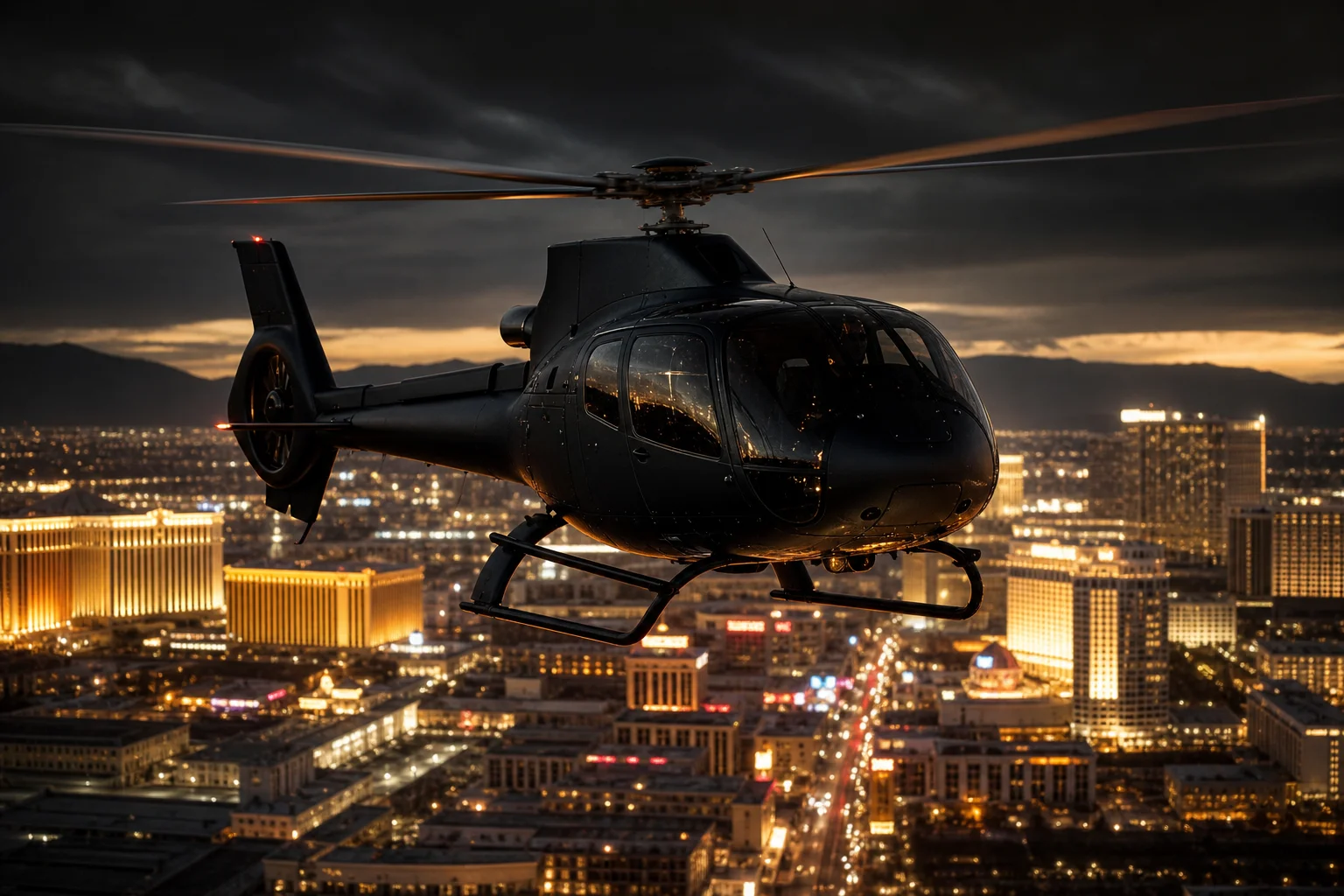
Las Vegas is the launch point for some of the most photographed helicopter flightseeing routes in the world, from sunset loops over the Strip to sweeping tours across the floor of the Grand Canyon. Tour operators based at Boulder City, the North Las Vegas Airport, and Strip-area heliports fly tens of thousands of visitors every year, and most flights land safely. But when one goes wrong, the results are often catastrophic, and helicopter tour accident claims Las Vegas victims and grieving families pursue are among the most complex personal injury cases a Nevada attorney can handle, involving federal aviation regulation, multiple potential defendants, and evidence that can disappear within days. At Thomas Boley Attorney At Law, we represent injured passengers and the families of those killed in helicopter tour accidents originating in Las Vegas, Henderson, Boulder City, and throughout Clark County.
- Helicopter tour accidents can involve the tour operator, the pilot, the aircraft or parts manufacturer, a maintenance contractor, and occasionally federal air traffic control.
- Commercial air tour operators must hold an FAA Part 135 operating certificate, and flights over Grand Canyon National Park must comply with the National Parks Air Tour Management Act.
- The NTSB investigates fatal and serious helicopter tour accidents, and its findings often become critical evidence in a civil claim.
- A liability waiver signed before boarding rarely protects an operator that was grossly negligent or violated a federal safety regulation.
- Nevada's modified comparative negligence rule still allows recovery even if a passenger was partly at fault, as long as they were less than 51% responsible.
- Nevada's statute of limitations for personal injury and wrongful death claims is generally two years from the date of the crash or death.
Helicopter Tour Accident Claims Las Vegas: Who Can Be Held Liable
Free case review
Injured or Facing Charges in Las Vegas?
Thomas Boley offers free consultations — no fees unless we win your case.
Unlike a typical car accident, helicopter tour accident claims Las Vegas attorneys investigate often involve several potentially responsible parties working together, and sometimes against each other, once litigation begins. The tour operator can be liable under respondeat superior for a pilot's negligence on the job, and separately for its own negligence in hiring an underqualified pilot, skipping required maintenance, or pressuring crews to fly in marginal weather to keep a tour schedule on time. The pilot can be individually liable for errors in judgment, procedure, or airmanship, although the operator's insurance typically covers a pilot acting within the scope of employment. The aircraft manufacturer or a parts supplier can face strict product liability if a mechanical defect, such as a tail rotor, engine, or transmission failure, contributed to the crash. A third-party maintenance contractor can be liable if improper inspection or repair work went undetected before the flight. In rare cases involving air traffic control error near a controlled airport, a claim against the federal government is possible, though these claims move through the Federal Tort Claims Act and carry their own strict notice deadlines. Identifying every liable party, and every insurance policy behind them, is essential to full compensation in a case this complex.
Common Causes of Las Vegas Helicopter Tour Accidents
Pilot error and loss of control account for a significant share of tour helicopter accidents nationwide, particularly in the tight canyon terrain, sudden downdrafts, and shifting desert winds that define the Grand Canyon corridor. Mechanical failure, including engine, tail rotor, and transmission problems, remains a recurring cause, and is more likely when an aircraft is flown on a demanding schedule with limited downtime for inspection. Deferred or improperly documented maintenance is a related risk in a high-utilization tour fleet that may fly a dozen or more short flights a day. Weather-related decision-making is especially dangerous in Southern Nevada and Northern Arizona, where dust storms, monsoon downdrafts, and sudden visibility loss can develop faster than a pilot under schedule pressure is prepared to react to. Overloading a helicopter beyond its certified weight and balance limits, whether from passenger weight, fuel load, or camera and support equipment, can degrade handling exactly when a pilot needs every bit of performance margin. Finally, fatigue and scheduling pressure created by back-to-back flights during peak tourist season can erode the judgment and reaction time a safe flight depends on.
FAA and NTSB Oversight of Grand Canyon and Las Vegas Air Tours
Commercial helicopter tour operators are certificated and regulated by the Federal Aviation Administration under 14 CFR Part 135, the rules governing on-demand air taxi and commuter operations, which set standards for pilot qualification, aircraft maintenance, and operational limits. Tours that cross into Grand Canyon National Park airspace fall under the additional framework of the National Parks Air Tour Management Act and 14 CFR Part 136, which the FAA and National Park Service jointly administer to set approved flight routes, minimum altitudes, and total flight caps designed to protect both visitors on the ground and the flying public. When a serious or fatal helicopter tour accident occurs, the National Transportation Safety Board opens an independent investigation, examining wreckage, flight data, maintenance records, weather conditions, and pilot history before issuing a probable cause determination. That federal investigation does not resolve civil liability on its own, but the NTSB's factual findings, wreckage documentation, and interview transcripts frequently become some of the most important evidence a Las Vegas personal injury attorney can use to prove a case.
Common Injuries in Helicopter Tour Crashes
Because helicopter tour accidents typically occur at altitude and speed, without the structural protection of a car or bus, the resulting injuries are frequently severe or fatal. Survivors often suffer traumatic brain injuries and spinal cord damage from the force of impact, along with multiple fractures, internal organ injuries, and severe burns when post-crash fire involves onboard fuel. Passengers who survive a crash frequently develop lasting post-traumatic stress in addition to their physical injuries, particularly when they witnessed a fellow passenger's death or a prolonged, frightening emergency descent. When a crash proves fatal, surviving family members can pursue a wrongful death claim under Nevada law on behalf of the deceased's estate and heirs, seeking accountability for a loss that was often entirely preventable.
What Compensation Is Available After a Las Vegas Helicopter Tour Accident
Injured passengers can generally pursue compensation for past and future medical expenses, including emergency transport, surgery, hospitalization, and long-term rehabilitation for catastrophic injuries. Lost wages and diminished future earning capacity matter enormously in these cases, since many victims are visitors from out of state who lose income while recovering far from home, in addition to Nevada residents who work in or around the tour industry itself. Pain and suffering, loss of enjoyment of life, and, in cases involving permanent disability or disfigurement, the cost of lifetime care can substantially increase the value of a claim. When a passenger dies, surviving heirs may recover funeral and burial expenses, loss of the decedent's financial support and companionship, and grief-related damages under Nevada's wrongful death statute, and the estate may separately recover the decedent's own predeath pain and suffering. Where a court finds gross negligence, such as flying a known-defective aircraft or knowingly falsifying maintenance records, punitive damages may also be available to punish the responsible party and deter similar conduct across the industry.
How Liability Is Proven After a Helicopter Tour Crash
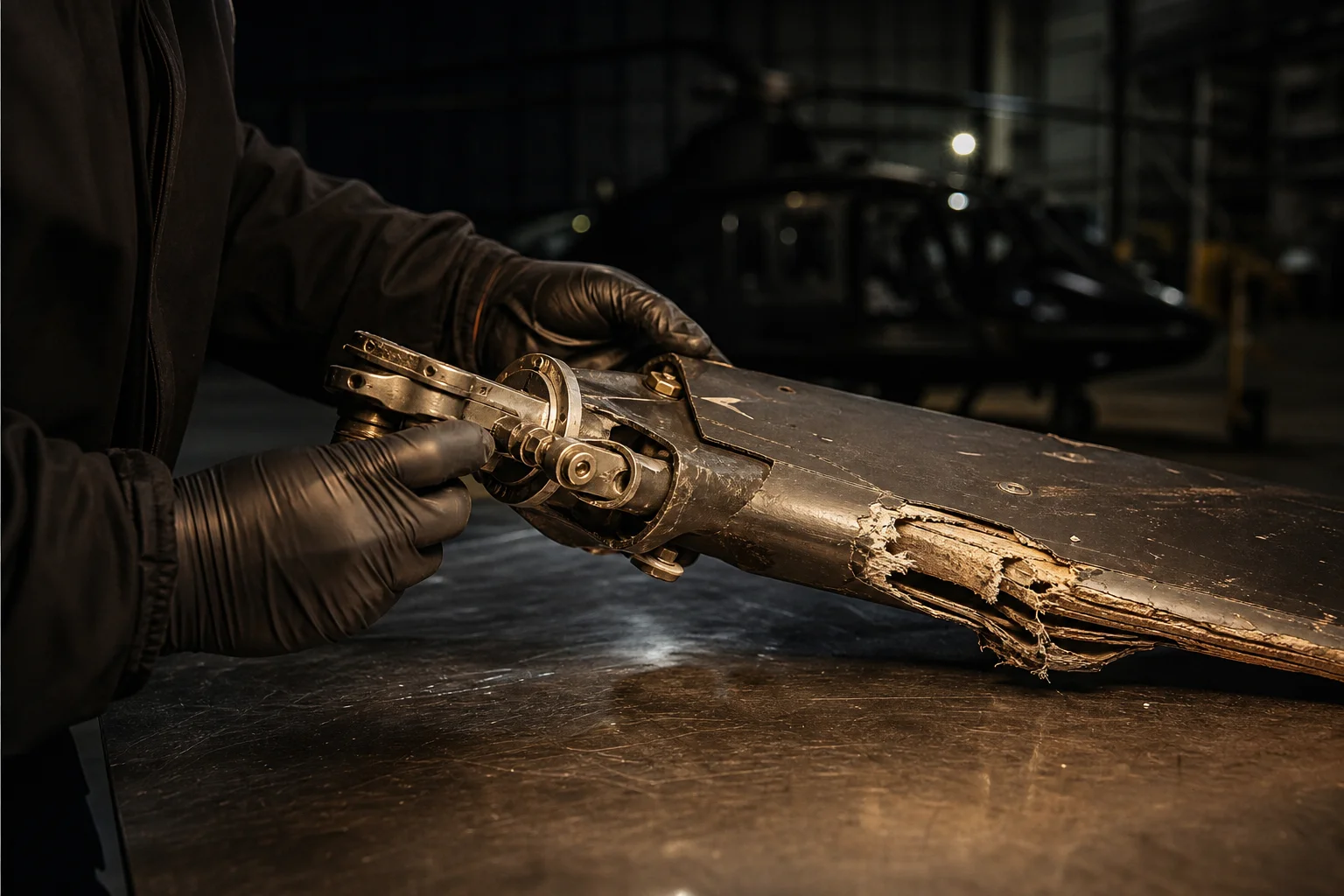
Proving liability after a helicopter tour accident depends heavily on evidence that federal investigators, the operator, and insurance companies all have an interest in controlling. NTSB and FAA investigation files, including wreckage photographs, maintenance logs, and pilot training and duty-time records, are often central to establishing what actually went wrong. Flight tracking and onboard data, including GPS logs and any cockpit or engine monitoring systems the aircraft carried, can establish altitude, speed, and flight path in the moments before impact. Weather data from the time of the flight, maintenance and inspection records for the specific aircraft, and the operator's internal scheduling and dispatch records can each reveal whether a decision to fly was reasonable or reckless. Because wreckage is frequently released, repaired, or scrapped once the federal investigation concludes, and because digital flight data can be overwritten, sending a formal evidence preservation request to the operator immediately after a crash is one of the most important steps a personal injury attorney can take.
What to Do After a Helicopter Tour Accident in Las Vegas, Henderson, or Boulder City
Seek immediate medical evaluation even if your injuries seem minor at first, since adrenaline and shock can mask the early symptoms of a concussion, internal bleeding, or delayed-onset spinal injury. Preserve your booking confirmation, boarding pass, itinerary, and any photos or videos you or fellow passengers took before, during, or after the flight, since tour operators sometimes attempt to obtain and delete this material. Get contact information for other passengers and any ground crew you spoke with, since their observations about pre-flight briefings, weather concerns, or maintenance conversations can matter later. Do not sign anything the operator or its insurer presents afterward, including a liability release, an incident statement, or a quick settlement offer, before speaking with an attorney, since Nevada courts closely scrutinize waivers and will not enforce a release that attempts to excuse gross negligence or a violation of federal aviation regulations. Contact an experienced personal injury attorney as soon as possible, since evidence tied to a federal investigation can become difficult to access once it is folded into an NTSB docket.
- Is the tour company liable if the pilot made a mistake? Usually yes. Under respondeat superior, a tour operator is generally liable for a pilot's negligence committed within the scope of employment.
- Does signing a waiver before the flight bar my claim? Not necessarily. Nevada courts will not enforce a waiver that attempts to excuse an operator's gross negligence or a violation of federal aviation safety rules.
- What if the crash happened over the Grand Canyon in Arizona instead of Nevada? You may still be able to bring a claim in Nevada if the operator is based here, but crashes on federal land or across state lines raise complex jurisdiction questions that require prompt legal advice.
- Can my family sue if a loved one died on a helicopter tour? Yes. Nevada's wrongful death statute allows surviving heirs and the estate to pursue compensation from the responsible parties.
- How long do I have to file a claim? Nevada's statute of limitations for most personal injury and wrongful death claims is generally two years from the date of the crash or death.
Speak With a Las Vegas Personal Injury Attorney
A helicopter tour accident can leave survivors with catastrophic injuries and grieving families searching for answers, while the operator's insurer works quickly to limit what it pays. Thomas Boley has represented injured clients and families throughout Clark County for more than 18 years, and moves immediately to preserve flight data, maintenance records, and NTSB evidence before it becomes harder to obtain.
Call (702) 435-3333 for a free consultation, or contact Thomas Boley online to discuss a helicopter tour accident in Las Vegas, Henderson, Boulder City, Summerlin, North Las Vegas, or elsewhere in Clark County. Bring your booking confirmation, any photos or videos you have, and your medical records. This article is informational only and is not legal advice. Every case is unique.
About the Author
Thomas Boley is a Nevada licensed attorney specializing in personal injury law and criminal defense. Since 2008, Thomas has represented thousands of clients in Las Vegas and Clark County, recovering millions of dollars in compensation for injury victims. He is a member of the State Bar of Nevada, the Clark County Bar Association, and the Nevada Justice Association.
Need Legal Help? Contact Thomas Boley for a free consultation: (702) 435-3333