Elevator and Escalator Accident Injuries in Las Vegas
In This Article
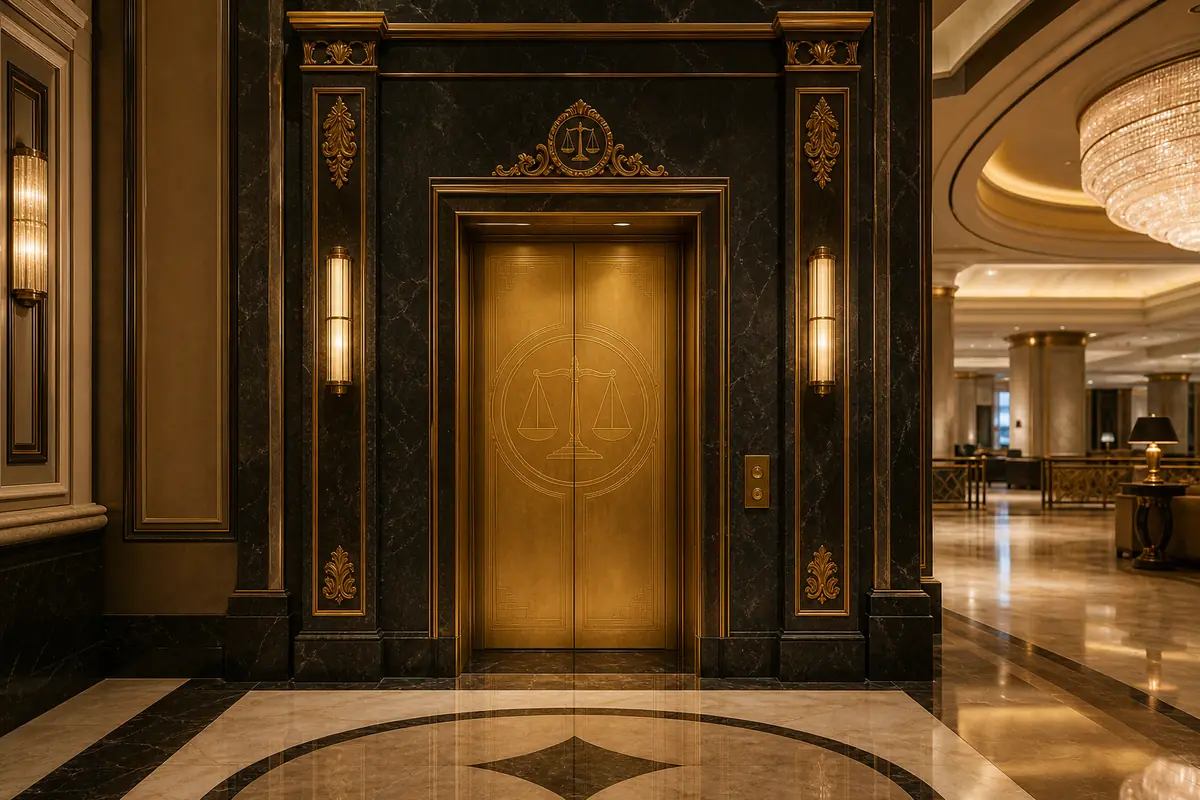
Las Vegas is a city of towering structures — mega-resorts, casino complexes, multi-story parking garages, and convention centers that collectively house thousands of elevators and escalators operating around the clock. The sheer volume of vertical transportation in Clark County far exceeds that of most American cities, and with that volume comes an elevated risk of mechanical failure, maintenance lapses, and serious injuries. When an elevator suddenly drops, an escalator abruptly stops or reverses direction, or a door mechanism crushes a limb, the resulting injuries can be catastrophic — broken bones, spinal damage, traumatic brain injuries, and even death.
If you or a loved one suffered injuries in an elevator or escalator accident in Las Vegas, Henderson, Summerlin, North Las Vegas, or anywhere in Clark County, you may be entitled to substantial compensation from the property owner, maintenance company, or equipment manufacturer. Understanding who is liable and how Nevada law applies to these cases is critical to protecting your claim.
How Common Are Elevator and Escalator Accidents?
Free case review
Injured or Facing Charges in Las Vegas?
Thomas Boley offers free consultations — no fees unless we win your case.
According to the U.S. Bureau of Labor Statistics and the Consumer Product Safety Commission (CPSC), elevator and escalator accidents cause approximately 17,000 injuries and 30 deaths per year nationwide. While these numbers may seem modest compared to motor vehicle accidents, the injuries tend to be severe — and Las Vegas, with its concentration of high-rise hotels, casino resorts, and massive shopping complexes along the Strip and Las Vegas Boulevard, accounts for a disproportionate share of incidents.
The busiest properties — including resorts on the Las Vegas Strip, Fremont Street Experience, and convention facilities — see millions of visitors annually. Every one of those visitors uses elevators and escalators multiple times per day. The combination of heavy foot traffic, 24/7 operation, extreme desert heat that stresses mechanical components, and the sheer age of some legacy properties creates conditions where accidents are not rare — they are inevitable without rigorous maintenance.
For a deeper dive, read hotel and Resort Injury Claims in Las Vegas and casino Accident Injuries in Las Vegas.
Common Causes of Elevator Accidents in Las Vegas
Elevator accidents in Las Vegas casinos, hotels, parking structures, and commercial buildings are typically caused by one or more of the following failures:
- Sudden drops or free-falls. When cable, hydraulic, or braking systems fail, an elevator car can drop unexpectedly — sometimes several floors. Even a drop of a few feet can cause severe spinal compression injuries, broken ankles, and traumatic brain injuries from impact with the walls, floor, or ceiling.
- Door malfunctions. Elevator doors that close too rapidly, fail to detect obstructions, or reopen and close repeatedly can crush hands, arms, and fingers. Sensor failures are a leading cause of elevator-related injuries, particularly among children and elderly passengers.
- Leveling errors. When an elevator car stops above or below the floor level, passengers step into a gap — creating a trip-and-fall hazard. Leveling errors are common in older hydraulic elevators and can cause broken hips, wrist fractures, and head injuries.
- Entrapment and stuck elevators. Being trapped in a stalled elevator — sometimes for hours in a Las Vegas property where temperatures can exceed 110°F — can cause panic attacks, cardiac events, dehydration, and claustrophobia-related psychological trauma. Rescue delays compound the danger.
- Electrical failures and fires. Faulty wiring, power surges, or electrical shorts within elevator shafts can cause burns, smoke inhalation, and electrocution injuries.
- Structural collapse. In rare but catastrophic cases, the elevator shaft structure itself fails, particularly in older buildings undergoing renovation or those with deferred maintenance.
Common Causes of Escalator Accidents in Las Vegas
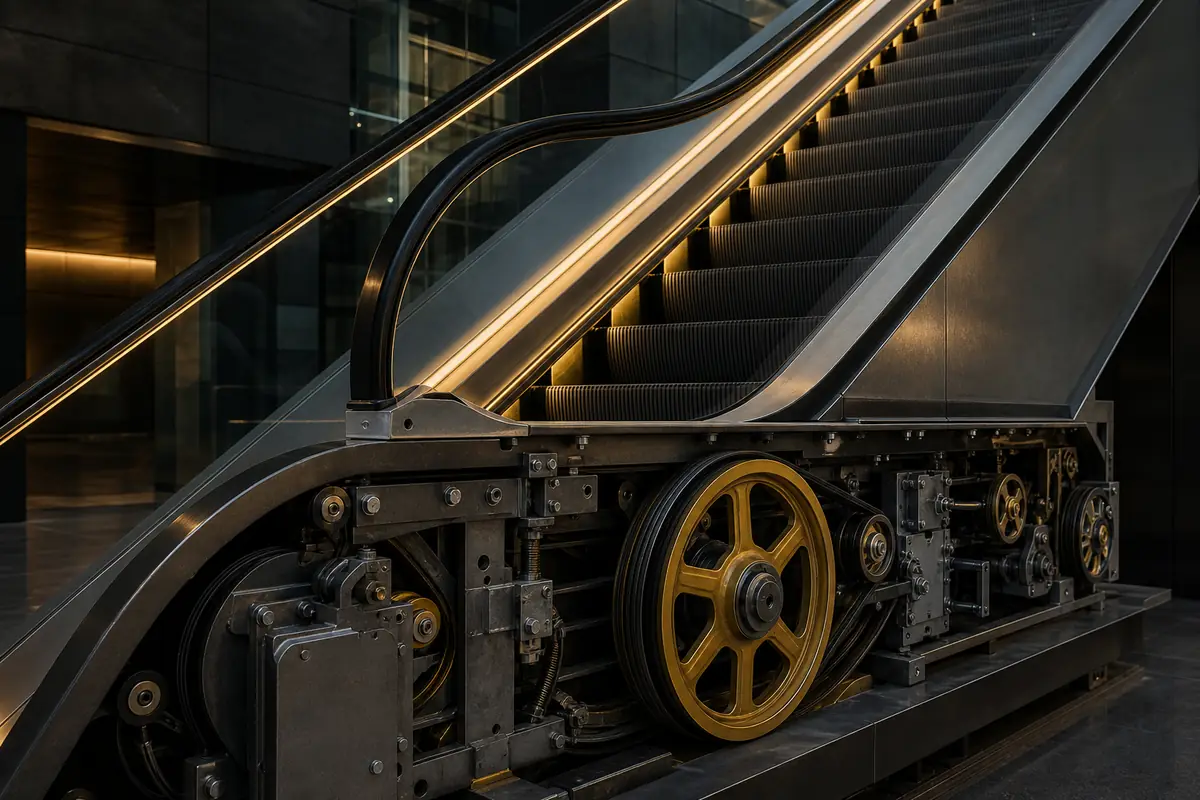
Escalators present a different set of dangers, and Las Vegas properties feature some of the longest and highest-traffic escalators in the country. Common escalator accident causes include:
- Sudden stops or direction reversal. When an escalator abruptly halts or reverses direction, passengers lose balance and fall — often causing a chain-reaction pileup. The elderly, children, and passengers carrying luggage are particularly vulnerable.
- Entrapment in step gaps and side panels. Escalator steps have gaps between the moving treads, side skirts, and comb plates at the top and bottom. Loose clothing, shoe laces, sandals, and small children's fingers or toes can become caught — leading to lacerations, degloving injuries, and amputations.
- Missing or broken handrails. Handrails that move at a different speed than the steps, stop moving, or are missing entirely create instability and increase fall risk.
- Wet or slippery surfaces. Spilled drinks, cleaning solution residue, or tracked-in rain on escalator steps create slip hazards. In Las Vegas, where patrons frequently carry beverages, this is an especially common factor.
- Inadequate speed regulation. Escalators that operate too fast — or accelerate unexpectedly — can throw passengers off balance, particularly those with mobility limitations.
Who Is Liable for Elevator and Escalator Accidents in Nevada?
One of the most important aspects of an elevator or escalator injury claim is identifying every potentially liable party. Unlike a simple slip-and-fall case, elevator and escalator accidents often involve multiple defendants, each with their own insurance coverage — which means the total recoverable compensation can be substantial. Potentially liable parties include:
- Property owners and operators. Under Nevada premises liability law (NRS 41.130), property owners owe a duty of reasonable care to maintain safe conditions for visitors. Casinos, hotels, shopping centers, and parking garages must ensure that all elevators and escalators on their premises are properly maintained, regularly inspected, and promptly repaired when defects are identified.
- Maintenance and repair companies. Most Las Vegas properties contract with third-party elevator and escalator service companies. If a maintenance provider failed to identify a defect, performed negligent repairs, or used substandard parts, that company is independently liable for resulting injuries.
- Elevator and escalator manufacturers. If the accident was caused by a design defect or manufacturing flaw in the elevator or escalator itself — such as a faulty door sensor, defective braking mechanism, or poorly designed comb plate — the manufacturer can be held strictly liable under Nevada product liability law (NRS Chapter 695H). Strict liability means you do not need to prove negligence — only that the product was defective and caused your injury.
- General contractors and renovation firms. If an elevator or escalator accident occurs in a building undergoing construction or renovation, the general contractor or subcontractor responsible for the work may bear liability — particularly if construction activities interfered with elevator shaft integrity or escalator mechanisms.
- Government entities. Elevators and escalators in government-owned buildings (courthouses, transit stations, Clark County facilities) are subject to sovereign immunity limitations under NRS 41.031, but claims are still possible. Government claims require a special notice filed within two years and are subject to a $100,000 per-claim cap.
Nevada Premises Liability Law and the Duty of Care
Nevada premises liability law requires property owners and occupiers to maintain their premises in a reasonably safe condition. For elevator and escalator accident claims, you must prove four elements:
- Duty. The property owner owed a duty of care to you as a lawful visitor. In Las Vegas, casino and hotel guests, shoppers, convention attendees, and employees are all owed the highest duty of care as invitees.
- Breach. The property owner or maintenance company failed to meet that duty — by neglecting inspections, ignoring reported defects, using unqualified repair technicians, or allowing an unsafe condition to persist.
- Causation. The breach of duty directly caused your injuries. This often requires expert testimony from elevator engineers or mechanical safety specialists.
- Damages. You suffered actual, compensable damages — medical bills, lost wages, pain and suffering, disability, or wrongful death.
Importantly, Nevada follows a modified comparative negligence standard under NRS 41.141. If the defendant argues that you were partially at fault — for example, by ignoring a warning sign, overcrowding an elevator, or wearing loose clothing on an escalator — your compensation is reduced by your percentage of fault. However, you can still recover damages as long as you are less than 51% at fault.
Types of Injuries from Elevator and Escalator Accidents
Elevator and escalator accidents produce a wide spectrum of injuries, from moderate to life-altering:
- Broken bones and fractures — wrists, ankles, hips, and vertebrae are the most commonly fractured bones in falls caused by elevator leveling errors and escalator sudden stops
- Traumatic brain injuries (TBI) — head strikes against elevator walls, floors, or escalator handrails can cause concussions, subdural hematomas, and diffuse axonal injuries
- Spinal cord injuries — elevator drops and escalator falls can cause herniated discs, spinal compression, and in severe cases, partial or complete paralysis
- Crush injuries and amputations — escalator entrapment can crush fingers, toes, and hands between moving parts; elevator door malfunctions can crush limbs
- Lacerations and degloving injuries — escalator comb plates and step edges can cause deep lacerations and degloving (where skin is torn from underlying tissue)
- Psychological trauma — elevator entrapment, falls, and witnessing serious injuries can cause PTSD, severe anxiety, and phobias that significantly impact daily life
- Burns and electrocution — electrical faults in elevator shafts can cause severe burns and cardiac arrest
Nevada Statute of Limitations for Elevator and Escalator Claims
Under NRS 11.190, the statute of limitations for personal injury claims in Nevada is two years from the date of the accident. For product liability claims against an elevator or escalator manufacturer, the same two-year deadline generally applies.
However, there are exceptions that can extend or shorten this deadline:
- Discovery rule. If an injury was not immediately apparent — such as a slow-developing spinal condition after an elevator drop — the two-year clock may start from the date you discovered (or should have discovered) the injury.
- Minor children. If the injured person is a minor, the statute of limitations is generally tolled until the child turns 18.
- Government claims. Claims against government-owned properties must follow the notice requirements of NRS 41.036, which requires written notice within two years.
Do not wait. Critical evidence in elevator and escalator cases — surveillance footage, maintenance logs, inspection records, and the physical condition of the equipment — can be destroyed, overwritten, or \"lost\" within weeks of an incident. An attorney can send a preservation letter immediately to ensure this evidence is retained.
What to Do After an Elevator or Escalator Accident in Las Vegas
The steps you take immediately after an elevator or escalator accident can significantly impact the strength of your claim:
- Report the incident immediately. Notify the property manager, hotel front desk, casino security, or building management. Insist that a written incident report is created and request a copy.
- Call 911 if anyone is injured. Even if injuries seem minor, a medical response creates an official record. Many elevator and escalator injuries — concussions, internal bleeding, spinal compression — have delayed symptoms.
- Document everything. Use your phone to photograph the elevator or escalator, the surrounding area, any warning signs (or the absence of warning signs), your injuries, and any visible defects. Video is even better.
- Identify witnesses. Get names and contact information from anyone who witnessed the accident. In a Las Vegas casino or hotel, witnesses are often tourists who will leave the state within days.
- Seek medical attention promptly. Visit an emergency room or urgent care facility as soon as possible. Medical records linking your injuries to the accident are essential evidence.
- Do not give recorded statements. The property owner's insurance company will likely contact you quickly. Do not provide a recorded statement or sign anything without consulting an attorney first.
- Contact an experienced personal injury attorney. Call (702) 435-3333 to speak with Thomas Boley. We can send a preservation letter to the property owner, begin investigating the cause, and protect your right to full compensation.
Compensation Available in Elevator and Escalator Injury Cases
Victims of elevator and escalator accidents in Nevada may recover both economic and non-economic damages, including:
- Medical expenses — emergency treatment, surgery, hospitalization, physical therapy, prescription medications, and future medical care
- Lost wages — income lost during recovery, including bonuses, overtime, and benefits
- Loss of earning capacity — if your injuries prevent you from returning to your previous occupation or reduce your lifetime earning potential
- Pain and suffering — physical pain, emotional distress, mental anguish, and loss of enjoyment of life
- Disability and disfigurement — permanent impairments, scarring, and loss of function
- Loss of consortium — the impact on your relationship with your spouse or family
- Wrongful death damages — if a loved one died in an elevator or escalator accident, surviving family members may recover funeral expenses, lost financial support, and companionship losses under NRS 41.085
Because elevator and escalator cases often involve multiple defendants — the property owner, maintenance company, and manufacturer — the combined insurance coverage available can be significantly higher than in a standard premises liability case. It is not uncommon for casino and hotel elevator accident settlements to reach six or seven figures when injuries are serious.
Why Las Vegas Elevator and Escalator Cases Require an Experienced Attorney
Elevator and escalator accident claims are among the most complex personal injury cases for several reasons:
- Technical evidence is critical. These cases require analysis by mechanical engineers, elevator safety inspectors, and industry experts who can identify the specific failure that caused the accident.
- Multiple parties complicate liability. Property owners, maintenance contractors, and manufacturers will each point the finger at the other. An experienced attorney knows how to navigate multi-party litigation and hold each defendant accountable.
- Casinos and hotels aggressively defend claims. Major Las Vegas properties employ dedicated risk management teams and national defense law firms. They act quickly to control the narrative, minimize evidence, and pressure victims into lowball settlements.
- Surveillance footage is time-sensitive. Casino surveillance systems record on a loop and overwrite footage within days or weeks. Immediate legal action is essential to preserve this critical evidence.
- Inspection and maintenance records must be subpoenaed. Property owners are not required to voluntarily share elevator maintenance logs, inspection reports, or defect histories. Only through formal legal discovery can your attorney access the full maintenance record.
Frequently Asked Questions About Elevator and Escalator Accidents
Q: Can I sue a Las Vegas casino if I was injured in their elevator?
A: Yes. Casinos and hotels are required to maintain all equipment on their premises — including elevators and escalators — in a reasonably safe condition. If negligent maintenance, a known defect, or inadequate inspections caused your injury, the casino can be held liable under Nevada premises liability law.
Q: What if the elevator had a \"out of order\" sign but I used it anyway?
A: Using equipment marked as out of order could affect your claim under Nevada's comparative negligence law — your compensation may be reduced by your percentage of fault. However, if the sign was inadequate, poorly placed, or the elevator should have been locked or physically barricaded to prevent access, the property owner may still bear significant liability.
Q: My child's shoe was caught in an escalator at a Las Vegas hotel. Can we file a claim?
A: Absolutely. Escalator entrapment injuries are common among children and are often caused by inadequate safety guards, excessive gaps between steps and side skirts, or failure to install modern comb-plate protection. Hotels and property owners have a heightened duty of care when children are known to frequent the premises.
Q: How much is an elevator or escalator accident case worth?
A: Case values vary widely depending on the severity of injuries, the number of liable parties, and available insurance coverage. Minor injuries may settle for tens of thousands of dollars, while serious injuries involving surgery, permanent disability, or death can result in settlements or verdicts of $500,000 to several million dollars.
Q: What if I was injured on a government-owned escalator (like at a transit station)?
A: You can file a claim, but government claims in Nevada are subject to special rules under NRS 41.031–41.039, including a $100,000 per-claim damages cap and specific notice requirements. An attorney experienced in government liability claims can ensure you meet all deadlines.
Contact Thomas Boley — Las Vegas Elevator and Escalator Injury Attorney
If you were injured in an elevator or escalator accident at a Las Vegas casino, hotel, resort, shopping center, parking garage, or any other property in Clark County, do not wait to take action. Critical evidence can disappear within days, and the property owner's insurance company is already working to minimize your claim. At Thomas Boley Attorney At Law, we have extensive experience with complex premises liability cases involving elevators and escalators throughout Las Vegas, Henderson, Summerlin, North Las Vegas, and all of Clark County. We work on a contingency fee basis — you pay nothing unless we win your case. Call (702) 435-3333 today for a free, no-obligation consultation. This article is for informational purposes only and does not constitute legal advice. Every case is unique. Contact Thomas Boley Attorney At Law for a free consultation specific to your situation.
For more information, visit our Las Vegas personal injury attorney | schedule a free consultation.
About the Author
Thomas Boley is a Nevada licensed attorney specializing in personal injury law and criminal defense. Since 2008, Thomas has represented thousands of clients in Las Vegas and Clark County, recovering millions of dollars in compensation for injury victims. He is a member of the State Bar of Nevada, the Clark County Bar Association, and the Nevada Justice Association.
Need Legal Help? Contact Thomas Boley for a free consultation: (702) 435-3333