Catalytic Converter Theft Charges in Las Vegas: Penalties
In This Article
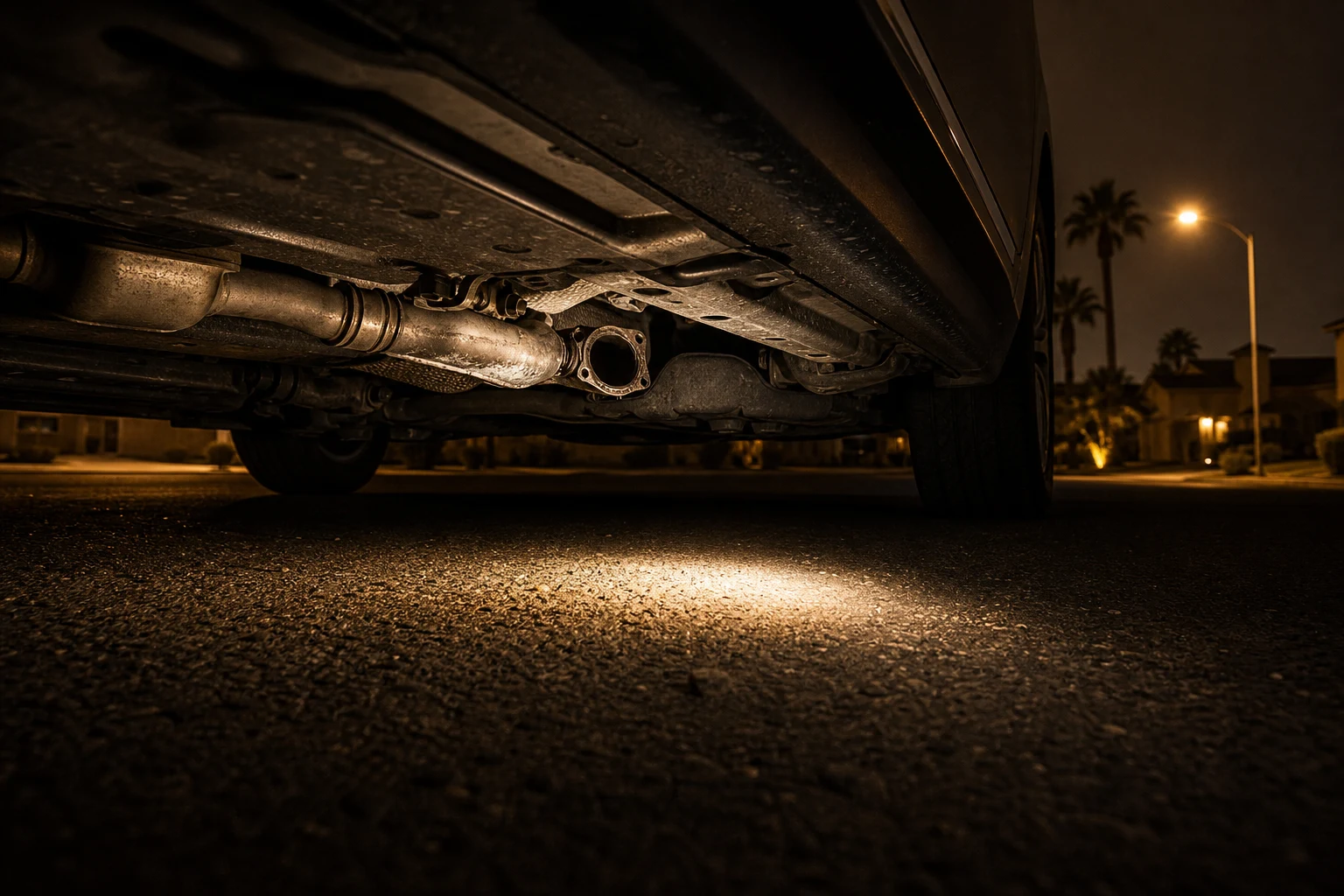
A homeowner in a Henderson cul-de-sac hears a brief metallic grinding sound just after 2 a.m. and finds their SUV's exhaust hanging loose the next morning, the catalytic converter sawed cleanly away in under two minutes. A used car lot on Boulder Highway loses a dozen converters from its inventory in a single overnight sweep. Catalytic converter theft charges in Las Vegas have become one of the fastest-growing property crime categories in Clark County as the precious metals inside these parts have driven up their scrap value. At Thomas Boley Attorney At Law, we defend clients throughout Las Vegas, Henderson, Summerlin, North Las Vegas, and the rest of Clark County against catalytic converter theft, unlawful possession, and scrap-dealer violations, and this guide explains Nevada's dedicated catalytic converter statutes, how penalties scale with quantity, and what defenses are realistically available.
- Nevada created a dedicated catalytic converter theft statute, NRS 205.27415, that makes taking or unlawfully possessing a used catalytic converter a standalone felony, separate from ordinary theft charges.
- Penalties scale directly with the number of converters involved: a single converter is a category E felony, 2 to 9 converters is a category D felony, and 10 or more converters is a category C felony carrying up to 5 years in prison and a $10,000 fine.
- NRS 205.27417 separately makes it unlawful to purchase a used catalytic converter without verified proof that the seller owns the vehicle it came from, unless the buyer is a licensed scrap metal processor.
- Nevada's scrap metal statutes in NRS Chapter 647 ban cash payments for detached converters, require sellers to show ID and ownership documentation matching the vehicle identification number, and require dealers to keep daily transaction records.
- Prosecutors can also add a grand larceny charge when the value of stolen converters exceeds Nevada's felony theft threshold, layering additional exposure on top of the dedicated converter statute.
- Because the statute allows a possession-based charge even without proof of the original theft, someone who bought or accepted converters without asking questions can face the same felony exposure as the person who cut them off the vehicle.
Catalytic Converter Theft Charges in Las Vegas: Why Nevada Created a Dedicated Statute
Free case review
Injured or Facing Charges in Las Vegas?
Thomas Boley offers free consultations — no fees unless we win your case.
Nevada lawmakers passed a standalone catalytic converter theft law because the existing grand larceny and receiving stolen property statutes were not built for a crime that can be committed in under two minutes with a battery-powered saw, leaves almost no forensic trail, and produces a part with almost no serial number or ownership marking once it is removed. NRS 205.27415 now makes it a distinct crime to willfully take, attempt to take, or exercise unlawful control over a used catalytic converter with intent to deprive its rightful owner, and it separately criminalizes simply possessing two or more used converters without a scrap metal license or documentation tying each one to a specific vehicle. That second provision matters enormously in practice: prosecutors do not need to prove who actually removed a converter from a vehicle to charge someone found with several loose converters in a truck bed or garage, because unlawful possession alone is enough.
Penalties for Catalytic Converter Theft Under NRS 205.27415
Nevada scales the felony level directly to how many converters are involved in a single case, which means the same underlying conduct can carry very different exposure depending on how much a defendant is found with:
- One converter (category E felony): 1 to 4 years in Nevada State Prison and a fine of up to $5,000, though category E felonies are eligible for probation on a first offense in many cases.
- Two to nine converters (category D felony): 1 to 4 years in Nevada State Prison and a fine of up to $5,000, with probation less readily available than for a category E offense.
- Ten or more converters (category C felony): 1 to 5 years in Nevada State Prison and a fine of up to $10,000, reflecting the scale typically associated with an organized theft or resale operation.
- Restitution: Courts routinely order repayment for the replacement converter, exhaust system repairs, and any towing or diagnostic costs the vehicle owner incurred.
- Enhanced scrutiny for repeat cases: A defendant with a prior conviction under this statute faces a steeper uphill climb at sentencing even within the same felony category.

Unlawful Purchase and Possession Charges Under NRS 205.27417
NRS 205.27417 targets the buying side of the market, since converter theft is driven almost entirely by the ability to quickly resell the part for its metal content. The statute makes it unlawful for anyone other than a licensed scrap metal processor to purchase a used catalytic converter unless the seller can show documentation — a title, registration, or repair invoice — connecting the converter to a specific vehicle the seller actually owns. This provision catches people who never touched a stolen vehicle but who bought converters from a stranger in a parking lot or through an online marketplace listing without asking for any paperwork, and it can support a charge even when the buyer claims they didn't know the parts were stolen, since the statute is written around the failure to verify ownership rather than actual knowledge of a theft.
Nevada's Scrap Metal Dealer Rules Under NRS Chapter 647
Licensed scrap metal processors face their own detailed compliance regime under NRS Chapter 647, and a dealer who cuts corners on these rules can face criminal exposure independent of any theft charge:
- No cash payments: Dealers must pay for a detached catalytic converter by check or traceable electronic transfer, never cash, making every legitimate purchase leave a paper trail.
- Seller identification and ownership proof: A dealer must collect a seller's photo identification and documentation showing the converter came from a vehicle the seller actually owned.
- Vehicle identification number matching: Records must tie each purchased converter to a specific vehicle identification number rather than accepting a converter with no traceable origin.
- Daily recordkeeping and reporting: Dealers must maintain daily transaction logs and, in many cases, report individual seller transactions to local law enforcement.
- Licensing: Only a scrap metal processor licensed under NRS 647.092 may lawfully purchase used converters at all, and operating without that license compounds any other violation.
When Grand Larceny Charges Get Added
A catalytic converter theft charge under NRS 205.27415 does not exist in a vacuum. When the total value of the stolen converters, or the damage to the vehicles they were removed from, exceeds Nevada's felony theft threshold, prosecutors frequently add a grand larceny count on top of the dedicated converter charge, since the two statutes are not mutually exclusive. That layering matters most in cases involving a theft ring that hit multiple vehicles in a single night, where the combined value of converters and vehicle repairs can push the grand larceny exposure well above what the converter statute alone would carry, giving the state two separate paths to the same sentencing range and sometimes consecutive exposure on both.
Why Las Vegas Sees So Many Catalytic Converter Thefts
Several features of the Las Vegas area combine to make it a persistent hot spot for this crime:
- Sprawling surface parking: Casino employee lots, hotel self-park garages, and 24-hour retail parking along the Strip and Boulder Highway leave thousands of vehicles exposed overnight.
- High ground clearance vehicles: SUVs and trucks common in Henderson, Summerlin, and North Las Vegas neighborhoods make the converter easier to reach without lifting the car.
- A 24-hour economy: Shift workers who park in the same lot for hours at odd times of day create predictable windows of opportunity.
- Interstate access: Interstate 15 and U.S. 95 make it easy to move stolen converters out of the jurisdiction quickly, complicating recovery and identification.
- Rising precious metal prices: Palladium, rhodium, and platinum inside the converter's ceramic core can be worth far more than the vehicle repair cost the crime creates, driving persistent demand.
Common Defenses to Catalytic Converter Theft Charges
Because these cases often rest on possession of an untraceable part rather than direct evidence of the theft itself, several defenses come up regularly:
- Lack of knowledge or intent: Someone who bought or transported converters for a legitimate reason without knowing or having reason to know they were stolen may be able to defeat the intent element the statute requires.
- No connection to a specific theft: Without a serial number or vehicle-specific marking, the state must rely on circumstantial evidence to connect a recovered converter to a particular theft, and that chain can have real gaps.
- Unlawful search or seizure: A search of a vehicle, garage, or storage unit conducted without a valid warrant or a recognized exception can result in suppression of the recovered converters.
- Licensed activity mistaken for a crime: A legitimate mechanic, salvage yard employee, or licensed scrap processor conducting routine business can be wrongly swept into an investigation targeting an unrelated theft ring.
- Challenging the quantity for sentencing purposes: Because the felony category is tied directly to the number of converters charged, disputing how many are actually attributable to a single defendant can move a case down a full felony category.
Statute of Limitations for Catalytic Converter Theft in Nevada
Catalytic converter theft under NRS 205.27415 is a felony not listed among the specific offenses given a longer window under NRS 171.085, so it generally falls under that statute's default 3-year limitations period for felonies other than theft, robbery, and the small group of offenses carrying a longer window. Because these cases are often built weeks or months later from pawn and scrap-dealer transaction records rather than from an eyewitness at the scene, that documentation trail can develop well after the theft itself, making early legal advice valuable the moment law enforcement makes contact.
- Is catalytic converter theft its own crime in Nevada, or is it just theft? Nevada created a dedicated statute, NRS 205.27415, that separately criminalizes taking or unlawfully possessing used catalytic converters, and prosecutors can add a grand larceny charge on top when the value supports it.
- Can I be charged just for possessing converters I didn't steal? Yes. NRS 205.27415 criminalizes possessing two or more used converters without a scrap metal license or documentation tying them to a specific vehicle, regardless of who actually removed them.
- How does the penalty change based on how many converters are involved? One converter is a category E felony, 2 to 9 is a category D felony, and 10 or more is a category C felony carrying up to 5 years in prison and a $10,000 fine.
- Can a scrap dealer be charged even if they didn't know the converters were stolen? Yes. NRS 205.27417 and Chapter 647's recordkeeping rules focus on whether the dealer verified ownership and followed payment and documentation requirements, not just on actual knowledge of a theft.
- What should I do if I'm accused of catalytic converter theft in Las Vegas? Do not discuss the incident with police without an attorney present, and contact a Las Vegas criminal defense lawyer immediately, since scrap-dealer transaction records central to these cases can be requested by investigators quickly.
Speak With a Las Vegas Criminal Defense Attorney About Catalytic Converter Theft Charges
Thomas Boley has defended clients throughout Clark County for more than 18 years against theft, property crime, and grand larceny allegations, including cases where the difference between a category E and a category C felony came down to precisely how many parts investigators could actually attribute to a single defendant. Because these cases increasingly rely on scrap-dealer paperwork and transaction records rather than eyewitness testimony, getting an experienced defense attorney involved early protects your ability to challenge exactly what the state can prove.
Call (702) 435-3333 for a free consultation, or contact Thomas Boley online to discuss a catalytic converter theft, unlawful possession, or scrap-dealer violation charge in Las Vegas, Henderson, Summerlin, North Las Vegas, or elsewhere in Clark County. Our full criminal defense practice handles theft, larceny, and property crime charges of every kind, and our guides to stolen vehicle charges, grand larceny charges, and receiving stolen property charges cover closely related ground. This article is informational only and is not legal advice. Every case is unique.
About the Author
Thomas Boley is a Nevada licensed attorney specializing in personal injury law and criminal defense. Since 2008, Thomas has represented thousands of clients in Las Vegas and Clark County, recovering millions of dollars in compensation for injury victims. He is a member of the State Bar of Nevada, the Clark County Bar Association, and the Nevada Justice Association.
Need Legal Help? Contact Thomas Boley for a free consultation: (702) 435-3333