Balcony Collapse Injury Claims in Las Vegas: Who Pays
In This Article
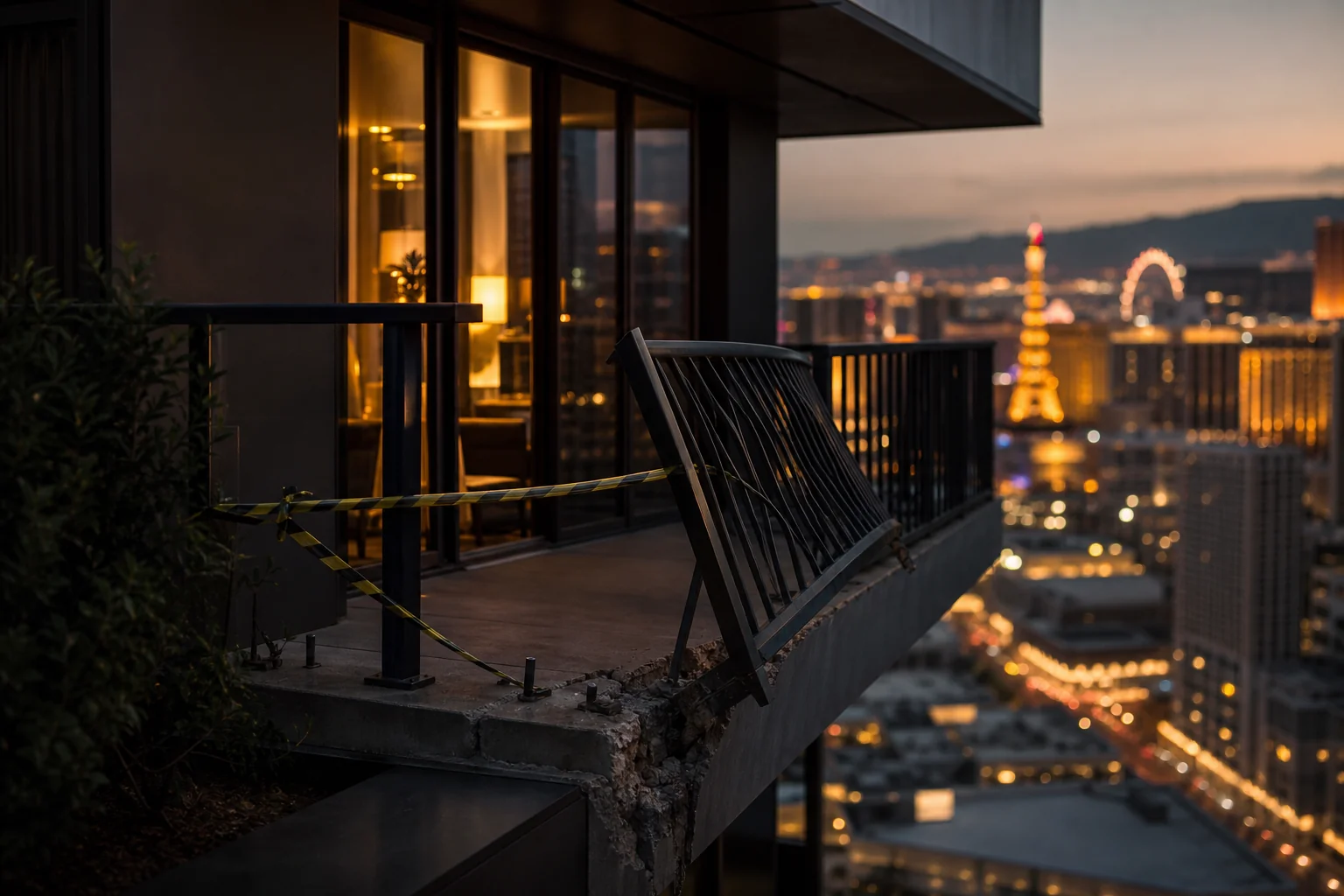
A guardrail that gives way thirty stories above the Strip, or a second-floor apartment balcony that drops without warning, can turn an ordinary evening into a catastrophic fall. Balcony collapse injury claims in Las Vegas are not common, but when a railing, deck, or balcony slab fails, the injuries are often severe and the legal questions move fast: who owned the structure, who inspected it last, and whether warning signs were ignored. At Thomas Boley Attorney At Law, we represent people hurt by defective balconies and railings at hotels, apartment complexes, and short-term rentals across Clark County, and this guide explains how Nevada premises liability law applies to a collapse like this.
- A property owner, manager, or contractor can be liable for a balcony or railing collapse if they knew or should have known about a defect and failed to fix it.
- Nevada premises liability claims generally rest on a duty to inspect and maintain common structural elements, not just a duty to clean up spills.
- Corrosion, water intrusion, improper original construction, and skipped inspections are the most common causes of balcony and railing failures.
- Clark County and most Las Vegas municipalities have adopted versions of the International Building Code, which sets minimum railing-load and structural standards.
- Nevada's modified comparative negligence rule under NRS 41.141 can reduce, but does not automatically bar, a claim even if the injured person is found partly at fault.
- A personal injury claim must generally be filed within two years under Nevada's statute of limitations, NRS 11.190.
Balcony Collapse Injury Claims in Las Vegas: Why They Happen
Free case review
Injured or Facing Charges in Las Vegas?
Thomas Boley offers free consultations — no fees unless we win your case.
Las Vegas has thousands of high-rise condo and hotel balconies, plus a huge stock of older apartment complexes with exterior walkways and second- and third-floor decks, many built decades ago in a desert climate that stresses metal and concrete in its own way. Balcony collapse injury claims in Las Vegas typically trace back to one of a handful of root causes: a corroded steel support that was never replaced, a railing bolted into concrete that had already begun to spall, waterproofing that failed years before anyone noticed staining, or an occupancy load that exceeded what the structure was ever designed to hold. A short-term rental converted from an older building can carry defects the current owner never discovered, while a newer high-rise can still fail if a contractor cut corners during the original build. In every case, the legal analysis starts with whether the hazard was reasonably foreseeable and whether someone with a duty to act did enough about it.
Who Can Be Held Liable for a Balcony or Railing Collapse
More than one party can share responsibility for a balcony or railing collapse, and identifying all of them often changes the outcome of a claim. A hotel, resort, or casino that owns and operates the property can be liable for failing to inspect and maintain a balcony guests rely on. An apartment complex owner or property management company can be liable under Nevada landlord-tenant principles for a common-area or unit balcony it was responsible for maintaining. A homeowners association can be liable for a shared deck or railing within its maintenance scope under the association's governing documents. A general contractor, structural engineer, or railing manufacturer can be liable if the collapse traces back to defective original construction or a defective product rather than deferred maintenance. Our related article on hotel and resort injury claims in Las Vegas walks through how liability typically works when the property is a Strip hotel rather than a residential building.
Nevada's Duty to Inspect and Maintain a Balcony or Railing
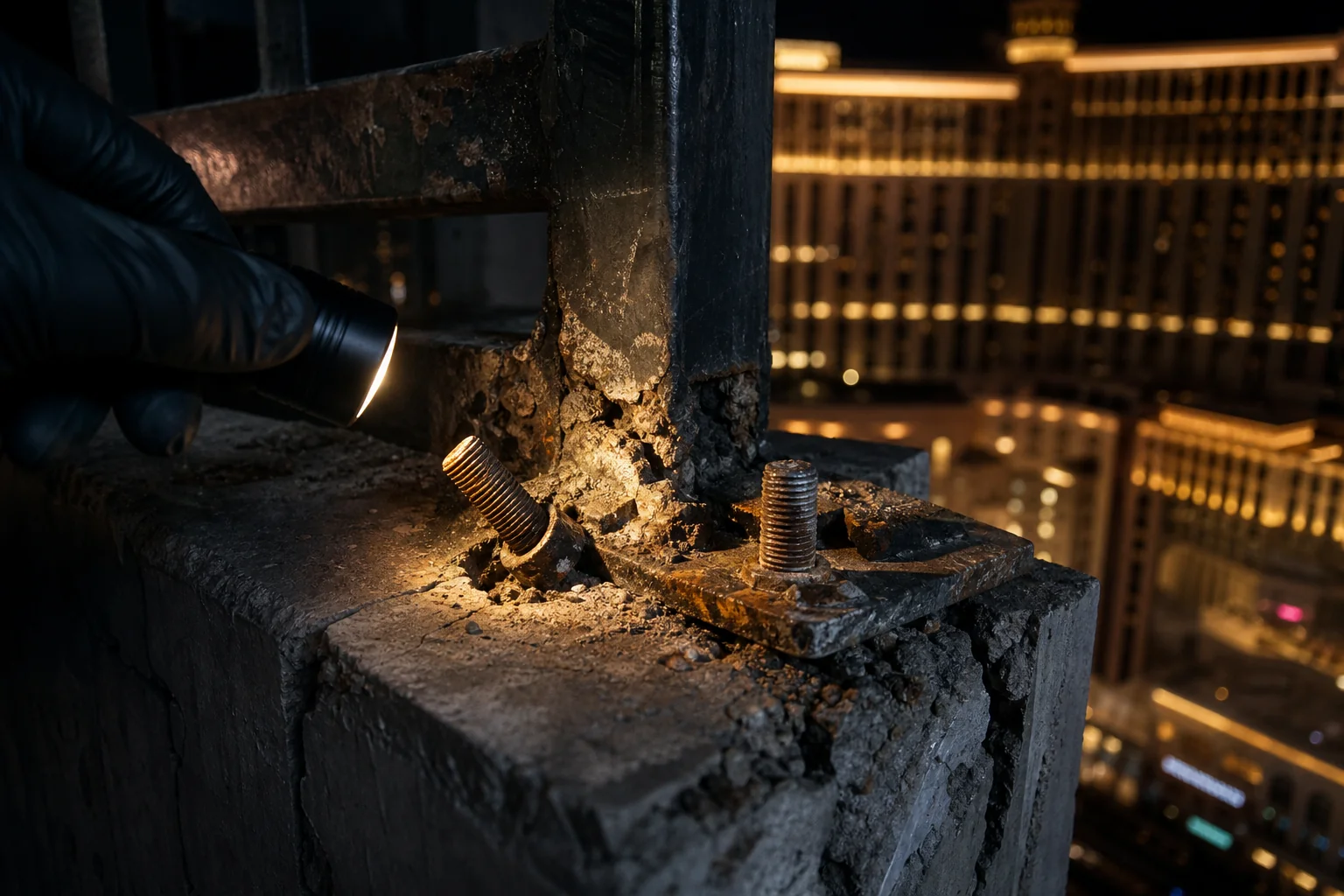
Nevada premises liability law requires a property owner to exercise reasonable care to keep the property reasonably safe for people lawfully on it, and that duty extends to structural elements like balconies, decks, and railings, not just floors and walkways. Clark County and the City of Las Vegas have adopted versions of the International Building Code, which sets minimum design-load requirements for guardrails and handrails, along with periodic inspection expectations for certain multi-family and commercial properties. A property owner who skips a scheduled structural inspection, ignores a tenant's complaint about a wobbly railing, or patches visible rust rather than replacing a failing support can be found to have breached that duty of reasonable care. Building permit records, inspection reports, and maintenance logs are often the single most important documents in a case like this, because they show what the owner knew and when.
Common Causes of Balcony and Railing Failures
- Corrosion of steel railing posts, brackets, or rebar inside concrete, often accelerated by water intrusion that was never addressed.
- Dry rot or structural decay in a wood-framed balcony, common in older Las Vegas apartment and condo complexes.
- Spalling concrete, where moisture causes the surface to crack and flake away from the embedded metal it was protecting.
- Original construction defects, including undersized supports, improperly spaced anchors, or a railing that never met code load requirements.
- Overcrowding during a party, event, or large gathering that exceeded the structure's designed occupancy load.
- Deferred maintenance after a known complaint, inspection finding, or prior near-failure was documented but not repaired.
Comparative Negligence and What It Means for Your Claim
A property owner facing a balcony collapse claim will often argue the injured person contributed to the accident, for example by leaning on a railing in a way that was not intended, ignoring a posted warning, or exceeding a stated occupancy limit. Nevada follows a modified comparative negligence rule under NRS 41.141: a jury can reduce the injured person's recovery by their percentage of fault, and the claim is barred only if that fault reaches 51 percent or more. A railing that fails under ordinary, foreseeable use — someone standing near it, leaning lightly against it, or simply being present on the balcony — is difficult for an owner to blame on the victim, because guardrails are built precisely to bear that kind of everyday load. Our guide on proving negligence in a Nevada slip-and-fall case covers the broader premises liability framework this same comparative fault analysis sits inside.
Evidence That Can Strengthen a Balcony Collapse Claim
- Photos and video of the collapsed railing or balcony taken as soon as possible, including close-ups of rust, cracked concrete, or sheared bolts before anything is repaired or removed.
- Building permit history, certificate of occupancy records, and any prior code violations tied to the property.
- Maintenance logs, work orders, and any prior tenant or guest complaints about the same balcony or a similar one on the property.
- Witness statements from anyone who saw the collapse or who had previously noticed the railing was loose, rusted, or damaged.
- An engineering inspection of the failed structure before it is repaired, replaced, or discarded, ideally performed by an independent structural engineer.
- Medical records establishing the fall-related injuries and connecting them directly to the collapse.
What to Do After a Balcony or Railing Collapse
- Get medical attention right away, even if the injury seems minor at first; a fall from height can cause internal injuries that are not immediately obvious.
- Report the collapse to hotel security, property management, or the HOA in writing, and ask for a copy of the incident report.
- Photograph the failed railing, balcony, or deck from multiple angles before it is repaired, removed, or roped off and forgotten.
- Get names and contact information for anyone who witnessed the collapse or who has complained about the same structure before.
- Preserve the clothing and any personal items involved in the fall, since they can sometimes carry physical evidence of the failure.
- Contact a premises liability attorney before agreeing to any recorded statement with an insurance adjuster, since an early statement can be used to minimize your claim later.
- Who is usually liable when a balcony or railing collapses? It depends on the cause. A hotel, landlord, property manager, HOA, contractor, or railing manufacturer can each be liable depending on whether the failure traces to deferred maintenance, defective construction, or a defective product.
- Can I still recover damages if I was leaning on the railing when it failed? Often yes. Nevada's comparative negligence rule under NRS 41.141 only bars recovery if you are found 51 percent or more at fault, and ordinary, foreseeable use of a railing is generally not considered negligent.
- What if the balcony was at a short-term rental like an Airbnb? The host and the underlying property owner can both potentially be liable, depending on who was responsible for maintenance and who knew or should have known about the defect.
- How long do I have to file a claim in Nevada? Nevada's statute of limitations for a personal injury claim is generally two years from the date of the incident under NRS 11.190, though exceptions can apply, so it is best to speak with an attorney promptly.
- What evidence is most important in a balcony collapse case? Photos of the failed structure before repairs, maintenance and inspection records, and an independent engineering assessment of why the balcony or railing failed are often the most persuasive evidence.
- Should I talk to the property's insurance adjuster first? It is best to speak with an attorney before giving a recorded statement, since early statements to an adjuster can later be used to argue you were partly at fault.
Speak With a Las Vegas Premises Liability Attorney
Thomas Boley has represented injury victims throughout Clark County for more than 18 years, including people hurt by defective balconies, railings, and other structural failures at hotels, apartments, and short-term rentals. These cases often move quickly, since property owners can repair or remove a failed railing within days, so early evidence preservation matters. Call (702) 435-3333 for a free consultation, or contact Thomas Boley online to discuss a balcony or railing collapse anywhere in Las Vegas or Clark County. Our premises liability practice handles falls and structural-failure claims of every kind. This article is informational only and is not legal advice. Every case is unique.
About the Author
Thomas Boley is a Nevada licensed attorney specializing in personal injury law and criminal defense. Since 2008, Thomas has represented thousands of clients in Las Vegas and Clark County, recovering millions of dollars in compensation for injury victims. He is a member of the State Bar of Nevada, the Clark County Bar Association, and the Nevada Justice Association.
Need Legal Help? Contact Thomas Boley for a free consultation: (702) 435-3333